


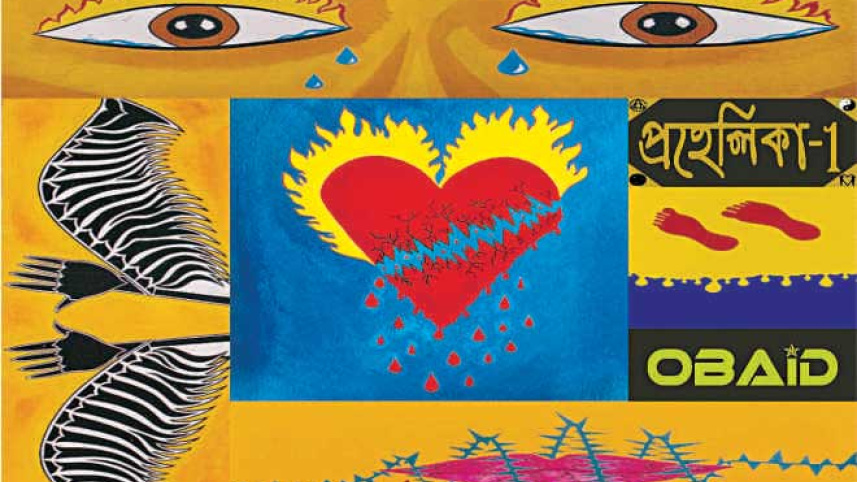
Obaid's “Prahelika -1”
While many musicians create a sense of excitement about their debut album through years of work in the underground scene, Obaid was someone I hadn't heard of at all.
The album was released as a pair (the other being “Prahelika-2”) and described itself as “probably the first example of exclusively acoustic guitar based double studio album” released in Bangladesh. My initial scepticism was blunted when I noticed that Samir Hafiz (of Power Surge and Warfaze) was involved with the mixing of the album. This album really is a solo effort. Everything from lyrics, music arrangement and art/illustration was all done by Obaid himself. Props to him for that.
The album has a total of 8 tracks. The first, “Ekakitto”, starts off with acoustic guitar doodling. While the passages are decent enough, the multiple layers of guitar sometimes overlap too much, creating a confusing barrage; not the calm acoustic guitar intros generally aim for. Obaid's vocals are very husky, like a live John Mayer performance a few days after his surgery when he's having a bad time at home and his vocal processor isn't quite working. The lyrics are predictable enough and talk about the loneliness of love and loss. The vocal pitch is surprisingly monotone, never really offering a rise or dip, or indeed anything interesting throughout the 4 minutes 40 seconds duration. Decent guitars, the rest of it is bland.
The second song “Chiromlan” is a song I felt had a lot of promise. There was a catchy guitar arrangement and the lyrics came together for what could have been a very decent acoustic rock song but Obaid's vocals once again let the song down. If you're listening with HD headphones at high volumes, it's almost unpleasant.
By the time you get to the fourth track it's clear that Obaid is a decent song writer and guitarist but singing isn't his forte.
The 5th track “Mounota” is very interesting. The guitar intro almost sounds like a modern take on Chicago Blues legend Robert Johnson, almost something Slash might play, and the chord progression is dark. The finger-picked sequences are also technically developed, which shows that Obaid has more up his sleeve than he'd hitherto displayed. He still sings though, so it doesn't work out.
The first thing that struck me about the 6th track, “Aguntuk”, is that the intro is heavily influenced by Oasis' “Wonderwall”. Apart from that, it isn't very different from any other track on the album. The same can be said for “Alo” and “Bhoi”, the remaining tracks.
Overall, this would have been an almost decent album if a better vocalist had been on it. It's clear from this album that Obaid can probably make it as songwriter but singing is something he should leave to someone else.
A below average debut effort. I give it a 4/10.

 For all latest news, follow The Daily Star's Google News channel.



Comments