


Childhood must not be trapped in screens
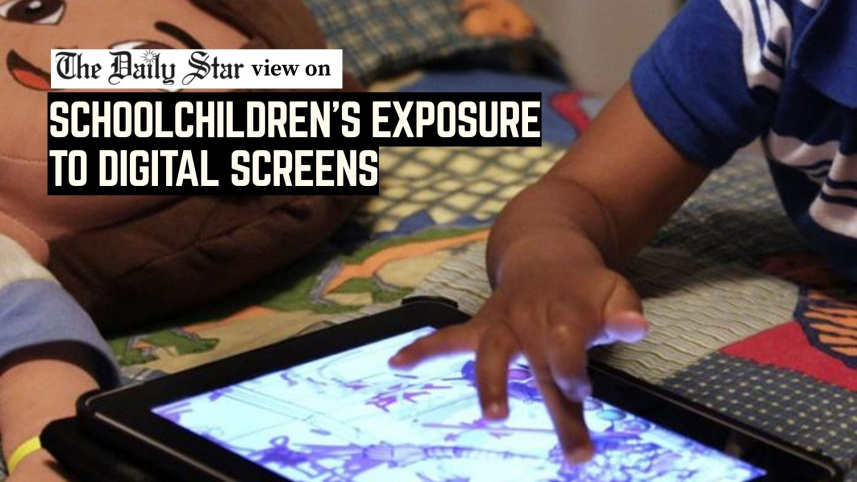
The findings of a new study by icddr,b on screen time and its impact on the health and well-being of children in Dhaka is quite distressing. According to the study, conducted between July 2022 and June 2024, a staggering 83 percent of the children surveyed spend over two hours on screens daily, which is the internationally recommended limit for recreational screen time. The study surveyed 420 children aged 6-14 years from six schools in the capital for the research, but it sheds light on a bigger social problem: our collective failure in engaging our children in mentally and physically stimulating activities.


The study found that, on average, the daily screen time of these schoolchildren was 4.6 hours on smartphones, tablets, gaming devices, televisions, etc. Such long hours exposed to screens affected the children’s mental health and might have led to obesity, eye problems, headaches, and sleep deprivation. Children with daily screen time averaging over two hours were getting about 7.3 hours of sleep at night, lower than the 8-10 hours recommended for the age group surveyed. Experts opine that persistently getting fewer hours of sleep can affect children’s memory, concentration and learning ability, emotional regulation, physical growth, and overall mental health. Perhaps that is why it is not surprising to see that about 31 percent of students surveyed reported at least one mental health issue, such as specific phobia, generalised anxiety, depression, deliberate self-harm, and hyperactivity. Besides, one out of three children reported having eye problems, and 80 percent mentioned headaches.
The sedentary lifestyle of most children in Dhaka and their attachment to screens are not entirely of their own choosing. A megacity of nearly 3.66 crore people does not even have 300 playgrounds. Let alone neighbourhood parks or fields, even many schools in the city don’t have a playground or a yard. Add to that our failure to ensure security for children. The high incidence of violence against children does not give parents the confidence to let their children play unsupervised in community spaces within residential buildings or on neighbourhood streets. For nuclear families with both parents working, ensuring supervised playtime for children is even harder.

Sadly, our governments and policymakers have focused solely on megaprojects and infrastructure development. Very little thought has been spared for children’s well-being, creating safe playgrounds and open spaces for them. The icddr,b study should be an eye-opener for all. We urge the government and city corporations to formulate and implement a detailed area plan for this megacity to make it child-friendly. Also, the government can follow in the footsteps of other countries that are enacting policies to limit children’s screen time and encourage families to spend more off-screen quality time together. We must make every effort to bring our children back from virtual spaces into the physical environments.
 For all latest news, follow The Daily Star's Google News channel.
Comments