


Time to fix the foundations of Islamic banking in Bangladesh

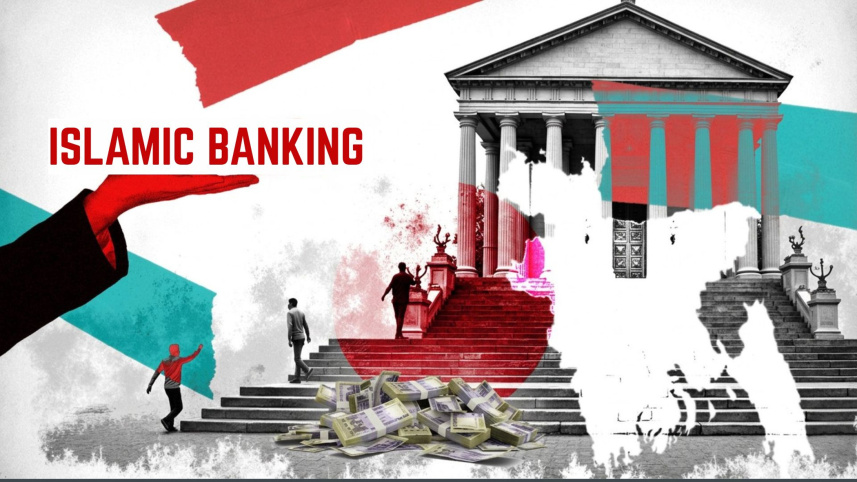
It is no secret that the Islamic banking industry in Bangladesh is under significant stress. State-backed takeovers during the Sheikh Hasina era have left a legacy of extremely high non-performing assets, while protests by depositors and dismissed staff that began during the interim period continue. There are also widespread concerns over the potential return of crony shareholders, particularly triggered by Section 18ka of the newly enacted Bank Resolution Act 2026, along with uncertainties surrounding leadership positions. However, these developments do not fully capture the underlying issues facing the industry, many of which are rooted in structural weaknesses that have accumulated over decades. While the sector has achieved impressive growth in scale over time, it has done so without establishing the necessary institutional and regulatory foundations for long-term sustainability.
Policy development for Islamic banking has so far been fragmented, driven largely by the preferences of officeholders rather than by a coherent long-term strategy. The role of Islamic banking within the country’s financial system also remains undefined, creating a structural paradox: a large industry with no clear strategic direction. The sector is often treated as conventional banking with a veneer of Shariah compliance, so long as it can be marketed as such. By contrast, jurisdictions that have advanced Islamic finance have relied on clear policy articulation, legislative backing, and coordinated institutional frameworks.

Closely related is the lack of a dedicated and well-designed legal framework. Although calls for an Islamic Banking Act are longstanding, there is limited clarity—even among its proponents—regarding its intended scope. Legislation alone, without being conceptually sound, operationally enabling, and recognising that Islamic banking is a distinct system with its own principles and requirements, would not deliver the desired benefits. Asset-based transactions, true ownership requirements, profit-and-loss sharing, and fiduciary relationships require tailored legal treatment. Replicating conventional laws risks distorting Shariah-compliant structures, undermining the system’s objectives, and constraining innovation.
Furthermore, shortcomings in tax laws, insolvency and resolution frameworks, depositor protection, property rights, and financial reporting standards continue to create inefficiencies, legal uncertainties, and barriers to effective Shariah compliance. This underscores the need for comprehensive and coordinated reform. Alongside this, dedicated judicial consideration for Islamic banking is essential to ensure that disputes are adjudicated with a proper articulation of Shariah principles, contractual structures, and their distinct legal implications.
The regulatory environment presents an equally pressing concern. Bangladesh Bank has, in many instances, issued unified regulations for both conventional and Islamic banks without sufficient adaptation for the latter, often creating trade-offs between regulatory and Shariah compliance in Islamic banking practices. These trade-offs are typically resolved in favour of the former. At the same time, Islamic banking-specific regulations remain limited and outdated. The 2009 Islamic banking guidelines, for example, no longer reflect current global standards and are even inconsistent with newer legislation such as the Financial Reporting Act 2015.
Although the establishment of the Islamic Banking Regulations and Policy Department (IBRPD) in 2025 marked a positive step, its capacity and structure require further strengthening. For the department to effectively deliver on its mandate, it should have specialised units for regulation, supervision, reporting, market development, and a Shariah secretariat to support the Shariah Advisory Board (SAB), with clear segregation of duties.
Perhaps the most consequential challenge lies in Shariah governance—where credibility is paramount—as Islamic banking’s legitimacy depends on strict adherence to Shariah principles, and any ambiguity or inconsistency carries systemic implications. One may recall how weaknesses in the central bank’s SAB functioning were exposed in January when the then governor attributed the decision to impose a “haircut” on depositors’ profits at five crisis-hit Islamic banks to SAB “recommendations,” which was later denied by the board’s own members and contested by other Shariah experts. So to establish credibility, there must be transparent disclosure of Shariah decisions, along with their underlying reasoning, while ensuring procedural rigour and clear documentation of deliberations. Furthermore, the lack of legal standing for Shariah opinions issued by appointed Shariah committees—both at the central bank and at individual banks—remains a significant limitation in establishing robust Shariah governance.

A wide gap also persists between the theoretical foundations of Islamic banking and its practical implementation. While Islamic finance emphasises risk-sharing, asset-backing, and real economic linkages, the sector in practice relies heavily on debt-like instruments, often accompanied by practices that fall short of ideal standards. The distance from foundational principles reduces the sector’s distinctiveness and its capacity to absorb shocks. This vulnerability is evident in troubled banks struggling to recover investments not linked to real assets. If their investments were genuinely tied to real trading and business activities, the current scale of non-recovery would have been far less likely. Reversing this trend requires targeted policy incentives and supportive regulations.
The position of depositors, particularly under Mudarabah arrangements, remains a critical concern. While they are expected to share profits and losses in principle, transparency around fund management, profit calculation, and risk allocation is largely absent in practice. Legal protections are also unclear, especially in cases of fiduciary failures. This creates a structural imbalance where depositors bear risks without adequate disclosures or safeguards. Addressing this requires clearer legal definitions, stronger disclosure standards, and enforceable accountability mechanisms.
The absence of robust Shariah-compliant liquidity tools and market infrastructure also continues to constrain the sector. In this context, Bangladesh Bank’s initiatives such as the issuance of Islamic investment bonds and sukuk, as well as recent steps to introduce an Islamic interbank money market and standing facilities, are welcome.
Meanwhile, human capital gaps also constrain Islamic banking. The sector requires skilled professionals to design, implement, and supervise modern financial structures while remaining true to Shariah requirements, yet present expertise remains limited across regulators, banks, and supporting institutions. Leadership development, as well as participation in advanced training and international exposure, also remains insufficient. There is an acute shortage of Shariah scholars with grounding in economics, finance, and operations, as well as board directors with expertise in Islamic finance.
Islamic banking in Bangladesh has strong potential to become a leading model of ethical, inclusive, and development-oriented finance. Realising this potential requires upholding its underlying principles in practice and strengthening the sector’s foundations through a clear national strategy, a comprehensive legal framework, and a specialised regulatory architecture. Such reforms would reduce operational vulnerabilities and reinforce public confidence. With coordinated reform, disciplined implementation, and decisive leadership, the sector can firmly position itself on an impressive growth trajectory.
Equally importantly, the banking industry must be insulated from all forms of political interference. No bank should give grounds for association with any political leaning. Rather, banks must be run solely on professionalism, sound governance, regulatory compliance, and—in the case of Islamic banks—unwavering adherence to Shariah principles.
Mezbah Uddin Ahmed is a research fellow at the International Shari’ah Research Academy (ISRA) Institute of INCEIF University, Malaysia. He can be reached at mezbah.u.ahmed@gmail.com.
Views expressed in this article are the author's own.
Follow The Daily Star Opinion on Facebook for the latest opinions, commentaries, and analyses by experts and professionals. To contribute your article or letter to The Daily Star Opinion, see our guidelines for submission.
 For all latest news, follow The Daily Star's Google News channel.
Comments