


Ensure justice for Rana Plaza victims
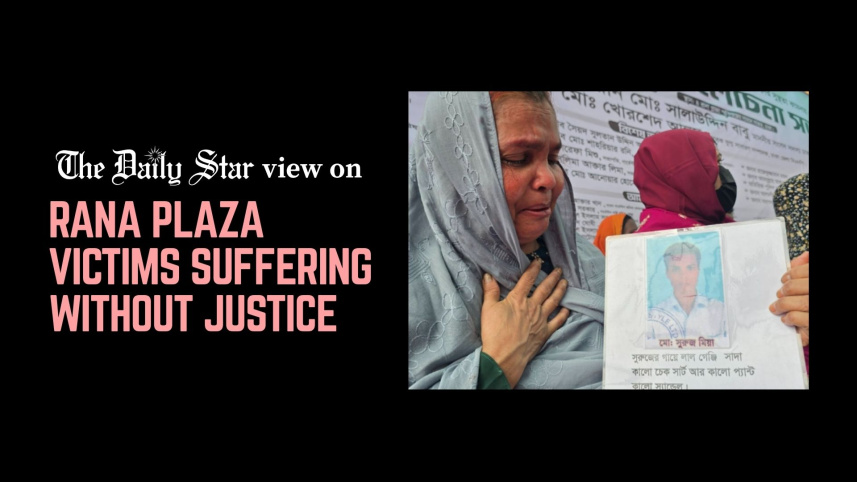
It is deeply frustrating that 13 years after the Rana Plaza tragedy, justice remains elusive for the victims and survivors. Reportedly, both key cases linked to the disaster continue to stall, largely due to the prosecution’s failure to produce witnesses. At the same time, those affected by the incident and their families are still struggling for basic compensation and dignified living conditions. The authorities must explain why, after all this time, these basic requirements of justice and support remain unmet.
The collapse of the nine-storey building in Savar on April 24, 2013 killed more than 1,100 people and injured over 2,500, most of them garment workers. It remains the deadliest disaster in the history of the country’s RMG sector. Multiple cases have been filed against those responsible, but progress has been painfully slow. According to the Bangladesh Legal Aid Services Trust, no case has reached a final verdict, and full legal remedies, including compensation in accordance with international standards, have yet to be secured.

In the murder case involving 41 accused, including building owner Sohel Rana, only 145 out of 594 witnesses have testified since the trial began in 2016. That leaves a staggering 449 witnesses still unheard. The building code violation case has fared even worse, with not a single witness testifying so far. Such prolonged delays are eroding public trust in the justice system and reinforcing a culture of impunity. For the victims and survivors, this is nothing short of a betrayal. Till today, thousands of the injured RMG workers continue to live in hardship, without adequate compensation, medical care or rehabilitation. Many are permanently disabled, unable to return to work, and struggling to meet even basic needs. Even when compensation has been provided, it has been insufficient to ensure a dignified life or long-term security for the survivors.
This is unacceptable. With a new elected government now in power, we think there is an opportunity to change the course. First, the government must ensure that the stalled trials are expedited by holding law enforcement accountable for producing witnesses and by prioritising these cases. Second, a comprehensive compensation and rehabilitation system must be implemented without further delay, including long-term medical care, income support, and employment opportunities for those affected. Third, compensation must be aligned with international labour standards.
Beyond Rana Plaza, there must be a renewed commitment to workplace safety across the industrial sector. This includes stricter enforcement of building codes, regular inspections, and meaningful penalties for violations. Workers must be empowered to voice safety concerns without fear, and regulatory bodies must be strengthened to act swiftly and independently. The country’s economic progress has been built on the back of these workers. Ensuring justice, dignity, and safety for them is a responsibility that should no longer be ignored.
 For all latest news, follow The Daily Star's Google News channel.
Comments