


Improve health services in the hills
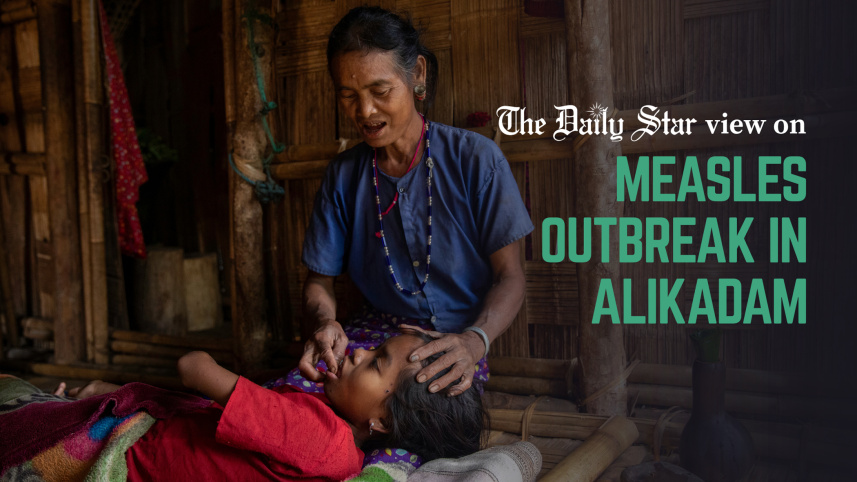
The ongoing measles crisis has exposed myriad gaps in our public healthcare infrastructure, especially in the most remote regions. One such case involves Bandarban’s Alikadam upazila where, as per a report by this daily, at least five children have died of measles-like symptoms since the beginning of this month. Tens of others have also been suffering severely from similar symptoms. The number of cases is also increasing, with 86 cases reported between April 25 and 30 alone.
Unfortunately, proper medical treatment remains inaccessible for most families in these hilly areas. The affected—most of them children—are being treated either at the upazila health complex or at a temporary medical camp set up at Bidyamoni Government Primary School near the remote Powa Muhuri Doripara area. Some critical cases are referred to Cox’s Bazar Medical College Hospital. The temporary camp is being operated by a volunteer team consisting of youth from the Mro community, along with students from various universities and colleges, working jointly with the local administration. However, due to the lack of electricity, only primary care is being provided at the camp, and all patients are being referred directly to the upazila health complex.
 For all latest news, follow The Daily Star's Google News channel.
 Meanwhile, given the recent rainy weather, and with the nearest medical services being miles away and costing thousands of taka, many families are having to stay at home and opt for homemade herbal treatments. Owing to their remote location, health workers rarely visit them to provide routine vaccination. Many of these families are also not fully aware of the seriousness of measles symptoms.
By now, it is an established fact that the measles outbreak has worsened due to vaccination-related missteps by the interim government. However, the outbreak has also exposed our persistently poor preparedness: despite its experience of the Covid pandemic, the health sector still struggles to respond effectively to sudden crises. That many in remote areas are still having to resort to traditional healing practices, or remain generally unaware of the danger of measles, is largely an institutional failure.
It is vital that proper medical treatment is made accessible across the country, both in terms of covering cost and distance. This means not only adding new health facilities and strengthening existing ones, but also deploying temporary health workers to address the measles situation in remote areas. The ongoing vaccination campaign is commendable, especially as it is reaching remote communities, but it is crucial that health services in rural and remote areas are strengthened to treat more severe measles cases, so that no more children die preventable deaths.


Comments