


Stop the use of toxic chemicals in plastic
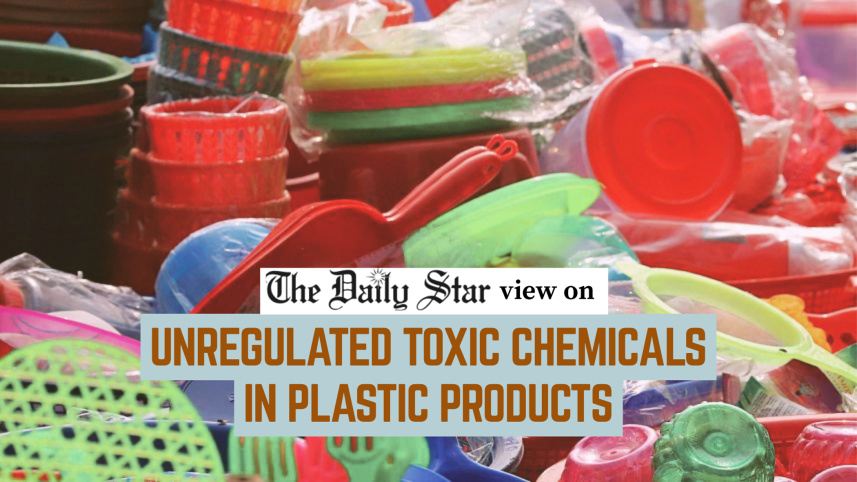
While the debate on plastic largely focuses on visible waste and pollution, the invisible chemical hazards present in everyday plastic products have received far too little attention. Now, a new report by the Environment and Social Development Organisation (ESDO) has underscored the risks of exposure to two unregulated toxic chemicals—phthalates and bisphenols—in plastic products. Found in food containers, children’s toys, school supplies, receipts, adhesives, and packaging materials, these substances can cause hormone disruption, reproductive disorders, developmental problems in children, and cancer. That such chemicals continue to be used freely in consumer goods should alarm both policymakers and the public.
Bangladesh produces more than three million tonnes of plastic annually, with the domestic market valued at over $3 billion and growing rapidly. The industry is heavily reliant on imported raw materials and chemical additives, with around 15 shipments of bisphenol A (BPA) imported in 2025 alone. Unfortunately, chemical safety oversight has failed to keep pace with this expansion. An earlier ESDO study found phthalates in 30 out of 47 erasers used by schoolchildren. Another joint study found BPA in a majority of thermal paper receipts collected from retail outlets in Dhaka. Research in industrial areas such as Savar and Tongi detected significant concentrations of phthalates, posing ecological and carcinogenic risks. A separate study by ESDO and BAN Toxics found hazardous chemicals such as lead, mercury, cadmium, and chromium in many plastic toys sold in Dhaka markets, with some items containing levels far above accepted international safety limits.

However, existing laws do not adequately address hazardous additives, mandatory labelling remains absent, while consumers are largely unaware of what they are handling or bringing into their homes. Over the past decades, poor regulation, weak monitoring, and lax enforcement have allowed plastic pollution to persist across the country. Although polythene bags were banned in 2002, they remain widely used. Likewise, the High Court’s directive to end the use of single-use plastic in hotels, motels, and restaurants in coastal areas has largely been ignored. Plastic pollution is choking our rivers, canals, and waterbodies, but existing regulations have done little to address the crisis due to a serious lack of political will.
This must change. We urge the government to take urgent policy action to protect people from the harmful impacts of plastic. It must regulate high-risk additives, introduce chemical-specific rules, and make labelling and disclosure mandatory. It must also set modern standards for plastic manufacturing, closely monitor imports of raw materials, and carry out regular product testing. Industries, too, must ensure that their growth does not come at the expense of public health and safety.
 For all latest news, follow The Daily Star's Google News channel.
Comments