


Strictly monitor edible oil prices and supply
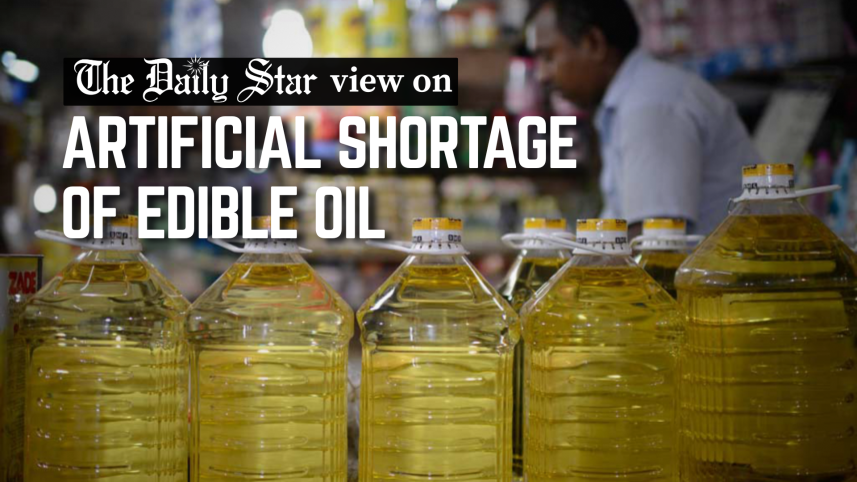
The apparent shortage of soyabean and palm edible oils in kitchen markets and retail shops across the country, which has pushed edible oil prices above maximum retail prices, appears opportunistic in light of the Middle East war and Ramadan-Eid festival period. According to media reports, the commerce ministry claims that the country has sufficient stock of edible oil, while domestic refiners say they are regularly supplying the usual quantities. Therefore, there should be neither a shortage nor a shortage-induced price hike.
Yet, chain super shops and large retail stores are limiting the number of five-litre bottled soyabean and palm oil an individual consumer can buy, while in many other places customers are having to pay Tk 5-Tk 10 more per litre for loose edible oil. Reports quote retail shop owners’ claims that wholesalers are charging higher prices. On the other hand, some wholesalers are blaming the refiners. Others are even blaming the US-Israel war on Iran for the shortage. What’s baffling is that Bangladesh imports crude soyabean oil from places such as Argentina, Brazil and Paraguay and palm oil from Malaysia and Indonesia—countries that are not directly affected by the war.

The war, nevertheless, has driven up freight costs, making almost all shipments costly, irrespective of the route used. Also, the global prices of both soyabean and palm oil have been on the rise. The World Bank’s commodity price data shows that in December 2025 the monthly average prices for palm and soyabean oil were $980 and $1,116 per metric tonne, respectively, while in February 2026 the prices were $1,042 and $1,270 per metric tonne. However, the current official prices in the Bangladeshi market do not reflect this rise in global prices, as per a report in Bonik Barta. As a standard procedure, the government approves adjustments to edible oil prices monthly to reflect global booking and import costs, but the interim government did not do so this year as a new government was set to take over soon. So, while refiners could not increase the official price of bottled oil, which is monitored more stringently, the prices of loose soyabean and palm oil have been increased.
The government must identify those responsible for the current situation in the edible oil market and take appropriate action against them. At the same time, it must revive the price review process, even if the outcome is not politically popular. In a free market, where the government cannot efficiently monitor every part of the supply chain, suppliers exploit gaps in oversight by raising prices or restricting supply to “correct” the market themselves. Such practices often harm consumers more than if official prices were set closer to actual market levels. Authorities should therefore establish an effective mechanism to prevent supply-chain syndicates from manipulating prices showing artificial shortages.
 For all latest news, follow The Daily Star's Google News channel.
Comments