


The women quietly building Bangladesh
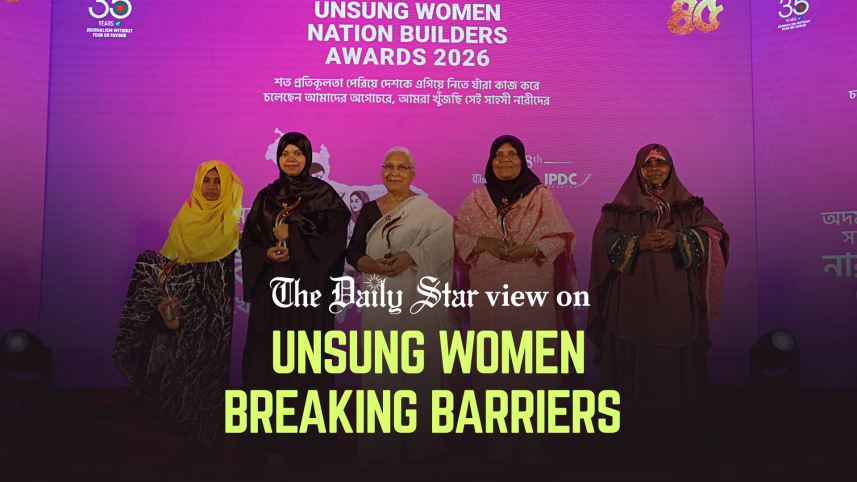
It is amazing to see how women across the country are quietly transforming their communities and their own lives despite facing poverty, disability, social prejudice, and institutional neglect. The Daily Star and IPDC Finance PLC recently honoured five such remarkable women at the eighth edition of the Unsung Women Nation Builders Awards. Their stories remind us how much society stands to gain when women have the opportunity to fulfil their potential.
The journeys of these women are as diverse as they are inspiring. Razia Samad Dahlia, an 83-year-old former teacher, used her personal wealth to establish a diabetic hospital, shelter street children, and support education, healthcare, and sports in Sherpur. Aleya Begum’s journey is equally remarkable. Married off at the age of 10 and having survived two suicide attempts, she has spent the past 14 years counselling people across villages and helping those at risk of suicide.

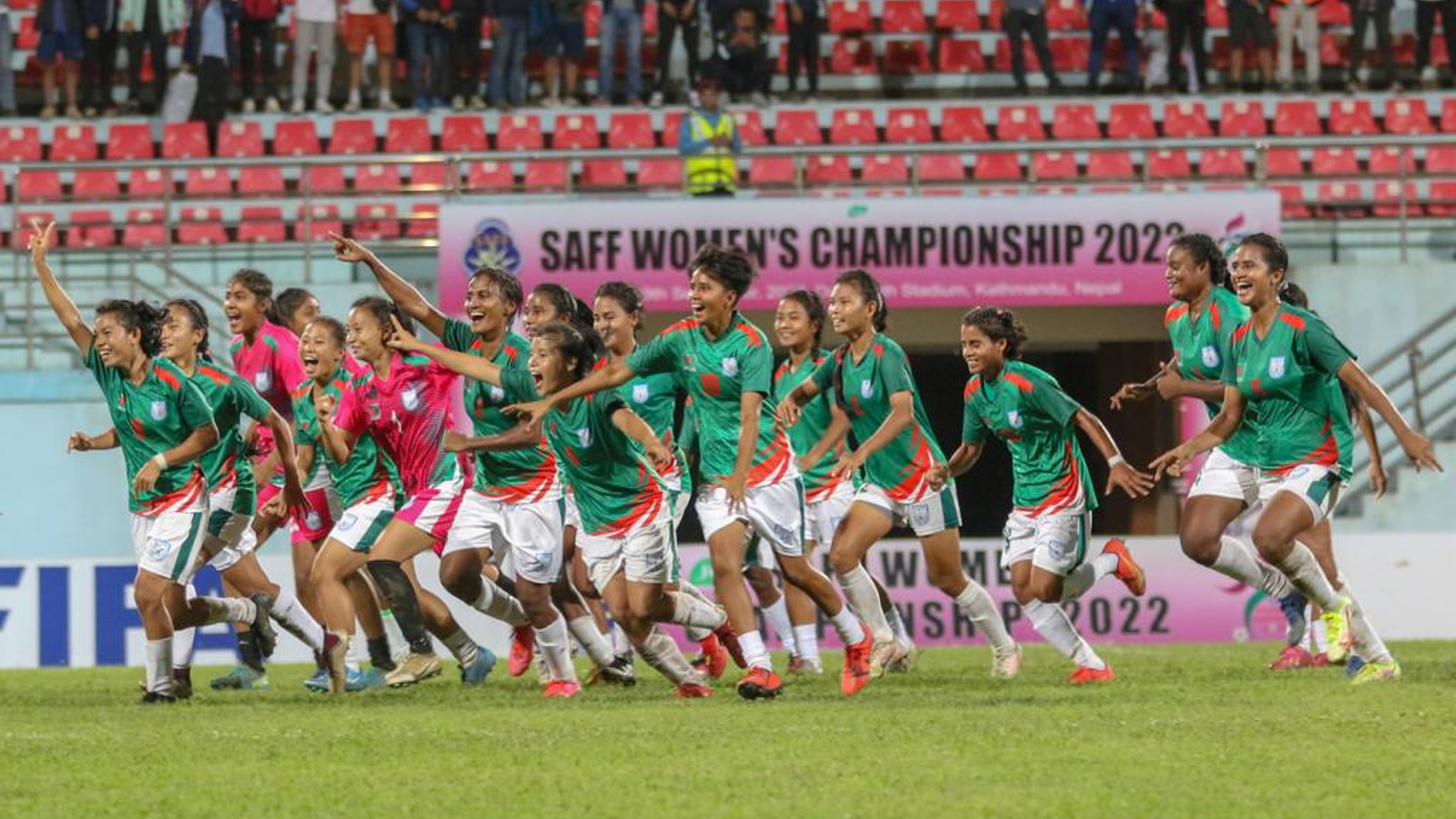
The other three women have also made a lasting difference in their communities. Suria Begum has trained hundreds of rural girls in football, cricket, hockey, and kabaddi, helping many reach divisional and national levels despite persistent social taboos around girls' participation in sports. Laboni Akhter, a zoology graduate, took an unusual path by pioneering scientific rodent farming for research laboratories. Her work shows that women can enter and excel in fields not traditionally associated with them. The fifth awardee, Ayesha Akhter, was born without upper limbs. Still, she taught herself to write with her toes, completed a master's degree, and secured a teaching job despite enormous physical and social barriers.
These women are extraordinary because it remains extremely difficult for women to achieve such feats in a society where they continue to face numerous barriers, including harassment, discrimination, child marriage, and domestic violence. But none of these women waited for ideal circumstances. They acted with the resources and opportunities available to them and, in doing so, created opportunities for others. Their hard work, dedication and resilience are truly encouraging and can inspire others to believe that change is possible. Their achievements also underscore the need to ensure that women and girls have access to quality education, decent work, finance, healthcare, and safe public and private spaces. Women with disabilities, in particular, require greater support to overcome the additional barriers they face in education, employment, and social participation.
Therefore, while we celebrate these women nation-builders, we also hope that their recognition will challenge harmful social attitudes towards women and girls and help make their lives safer and more productive. Families, communities, businesses, and the government must work to remove the barriers that continue to hold women back. More importantly, policies and programmes for women's empowerment must reach women outside the major cities and those facing multiple forms of disadvantage. Every woman in the country should have the opportunity to reach her full potential and contribute meaningfully to society.
 For all latest news, follow The Daily Star's Google News channel.
Comments