


Mohammadpur and the reality of urban crimes in Dhaka

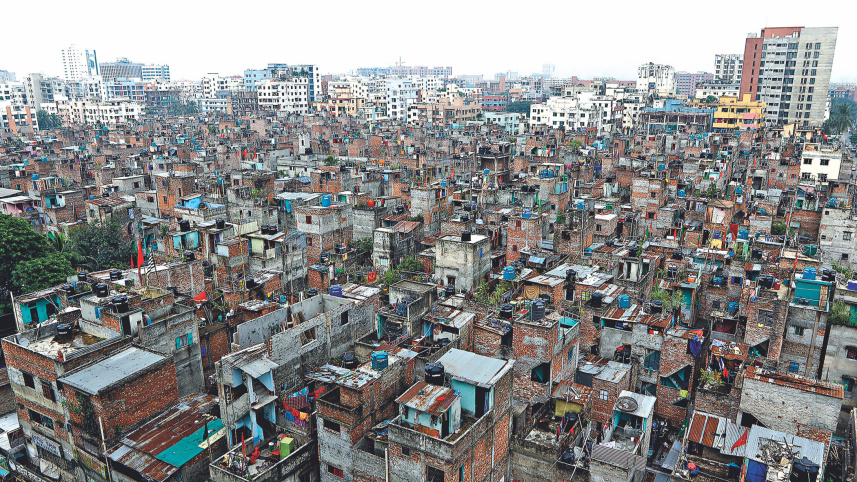
There is something quite catchy and seductive in the way Mohammadpur is branded as the “City of God.” The phrase is loaded with a Brazilian flavour, conjuring cinematic memories of gang fights in narrow alleys, muggers on motorcycles, the prevalence of narcotics among frightened residents, territorial youth gangs, occasional police raids, and political protection. Some national newspapers have used the phrase to reflect on extortion networks, murders, organised gangs, and the resurgence of Dhaka’s underworld economies in recent months.
Without condoning the violence, it is perhaps possible to point out the exaggeration in labelling Mohammadpur as Dhaka’s “City of God.” A more apt label can be found in Arundhati Roy’s maiden novel, The God of Small Things, where the caste system is unpacked to reveal the “small gods.” Roy’s novel pinpoints the intimate tyrannies, invisible humiliations, accumulated exclusions, and ordinary violences as sources for spectacular crimes. The spectacle witnessed in Mohammadpur is not unique. You find similar violence in other city areas on the outskirts, such as Jatrabari, Mirpur and Uttara. Applying the phrase “City of God” to Mohammadpur makes the area appear as a self-contained dystopia at the edge of an otherwise functioning city. The reality is, Mohammadpur is not outside Dhaka’s moral order. It is no different from many other parts of the city. Mohammadpur poses as a true mirror where violence has replaced local governance. Thankfully, the city has not yet reached the nadir of becoming the Brazilian favela where state authority has collapsed to make room for gang sovereignty.

Dhaka’s crisis consists of small things: local leaders patronising gangs, police conveniently overlooking crimes, landlords housing criminals, narcotics monitors tolerating political substance, students joining groups seeking protection, unemployed youth preferring territorial power to employment, media enjoying clickbait, and policymakers making promises without asking deeper questions. By extension, they become the “small gods” of the city. They manifest petty sovereignties and quietly regulate urban survival. In Mohammadpur, we have a heavy density that makes the near-dystopian violence more visible. The crime in the area is real, but so is the theatre around it. Locating the city’s crime in one area does not provide comfort; it only reflects an ostrich-like satisfaction in viewing the rest of the city as fine.
There are social media reels in which we have seen young muggers roaming the city terminals like sharks in shallow waters with their fins (read: machetes) exposed, snatching mobiles from bus passengers, mugging rickshaw riders and pedestrians, or nicking car parts in plain sight. These are sources of the same fear experienced by Mohammadpur residents. It will be wrong to assume that they enjoy living under the threats of mugging, drugs, gang recruitment, nighttime insecurity, and the erosion of ordinary civic trust. A series of police operations in response to the crime scene has brought Mohammadpur in the limelight. But we also need to be careful in projecting the neighbourhood as a narratively useful trope.
Mohammadpur has been useful in offering visual crime for television, viral geography for social media, and symbolic disorder for cities. CCTV monitors the heavily grilled houses in Mohammadpur. Yet, the urban density and the narrow lanes allow teen gangs with “funky’ names to thrive. The neighbourhood possesses all the necessary elements to be a visually compelling candidate for the “City of God.” However, the question persists as to why elite criminality is excluded from the purview of the omniscient being suggested by the metaphor. No upscale neighbourhood is permanently stigmatised because of loan default culture or financial fraud. The economic damage of these crimes may exceed the violence of street gangs many times over.
Street crimes bleed visibly, while elite crimes disperse to become invisible. The former produces spectacular headlines; the latter gets deposited in annual reports. As a daily traveller to Mohammadpur, I find the unequal moral geography of the area intriguing. There is no benefit in marginalising evil in the city’s outskirts. This was the same logic through which asylums and brothels were once parcelled out of the city core, as philosopher Michel Foucault has shown.
The challenge is to understand why the crimes of the poor and lower middle class occupy more public space. What programmes have we implemented to rehabilitate these disillusioned youths? Have there been any community-level interventions or integrated crime-fighting efforts? Neighbourhoods like Mohammadpur become morally contaminated through their repeated visibility. Class aesthetics often shield larger crimes. The elites continue to commit crimes inside systems and present them in abstract terms. Thus, the city gradually teaches its citizens to fear certain places while admiring others who may participate in quieter forms of violence: corruption, labour exploitation, institutional decay, environmental destruction, educational fraud, and exploitative capitalism. Mohammadpur becomes the city’s visible sin so that the rest of Dhaka may continue imagining itself innocent.
For a second, think how such portrayal negatively affects the middle class residents. Thousands of students, teachers, drivers, office assistants, vendors, and service workers live in or move through Mohammadpur every day. The area is not external to the intellectual life of the educational institutions there; it sustains it materially. Yet, these institutions face reputational anxiety because of the security advisories, transport warnings, and enhanced surveillance. The time has come to use value-laden terms, such as “City of God,” responsibly.
The most dangerous aspect of this metaphor is that it suggests inevitability. It tells us that this neighbourhood has become a natural disaster. But the fact remains: this condition is the result of structural failures contributed by unmanaged urbanisation, youth unemployment, narcotics economies, political patronage, weak local governance, informal settlement pressures, unequal policing, educational exclusion, and the collapse of public recreational and civic infrastructure.
Crime here is not simply moral failure. It is also institutional sediment. Instead of excusing violence, let us change the question. Let us problematise the question, “Why are these people criminal?”, and ask, “What urban conditions repeatedly manufacture such ecosystems?”
Mohammadpur has earned its scary reputation by revealing too much of its darker side. But once you shed light on it, it reveals what happens when inequality becomes normal, institutions become selective, youth become excess, and urban belonging becomes disillusioning. Metaphors like the “City of God” can create a safe distance to allow viewers to imagine the location of violence elsewhere. But Mohammadpur is not outside Dhaka’s order. It is one of the places where the “small gods” of Dhaka reside. They experience neglect, patronage, exclusion, fear, spectacle, and unequal morality on a daily basis. The ordinary lives of these “small gods” cannot conceal their extraordinary existence.
Dr Shamsad Mortuza is vice-chancellor at the University of Liberal Arts Bangladesh (ULAB).
Views expressed in this article are the author's own.
Follow The Daily Star Opinion on Facebook for the latest opinions, commentaries, and analyses by experts and professionals. To contribute your article or letter to The Daily Star Opinion, see our guidelines for submission.
 For all latest news, follow The Daily Star's Google News channel.
Comments