


Address learning gaps at primary level
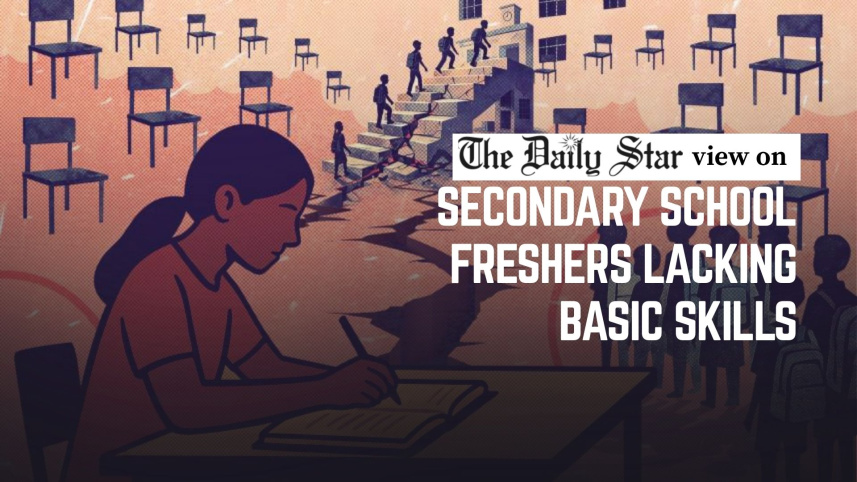
The latest Unicef-backed study on the country’s primary education system should serve as a wake-up call for everyone involved. According to the findings, an alarming 91 percent of Grade 5 students in mathematics and 65 percent in Bangla remain at the “novice” level, meaning they cannot answer even half of the questions appropriate for their grade. These are children entering secondary school without acquiring the most basic foundational skills expected at the primary level. Despite years of expanded enrolment and substantial public investment in education, such learning gaps are unacceptable, to say the least.
There is no doubt that, over the years, we have made commendable progress in bringing children into schools. But enrolment means little if students fail to acquire basic literacy and numeracy skills. A child who struggles to read fluently or do simple mathematics in Grade 6 is unlikely to cope with increasingly complex lessons in later years. This problem is, unfortunately, not new. National assessments have repeatedly shown weak learning outcomes at the primary level. A prolonged disruption caused by the Covid pandemic further widened the inequalities. The latest findings suggest that the system has failed to recover adequately from those setbacks. If a vast majority of primary students cannot read, write, or count at the expected level after completing five years of schooling, can the transition from primary to secondary education be considered meaningful academic progression?

For too long, our education system has remained overly dependent on rote learning, examination results, and certificate-oriented success, while classrooms remain ill-equipped to address differing learning needs. Teachers themselves frequently lack adequate training and support to identify struggling learners and provide remedial assistance. This situation must change. It is encouraging that the government and development partners have at least acknowledged the scale of the problem, which is the first step towards taking effective remedial measures. The Learning Enhancement Strategy piloted in secondary schools to identify and address learning gaps is also a welcome initiative. But far more needs to be done to rebuild foundational learning, including increasing the education budget and ensuring its effective utilisation.
Our education system must move away from rote learning and certificate-based success. Instead, schools should adopt participatory and creative teaching methods that help students develop real-life skills, values, and critical thinking abilities. Education policies should be based on research and the opinions of teachers, experts, parents, and other stakeholders. The government must work to reduce the gap in learning outcomes between rural and urban students. Student-centred teaching, practical teacher training, and curricula connected to real-life needs are all essential for improving learning outcomes. Good policies combined with proper implementation is what will ultimately make the difference. Unless these steps are taken urgently, our children will continue to move through the education system without gaining the basic skills they need.
 For all latest news, follow The Daily Star's Google News channel.
Comments