


Weak financial governance drives bad loan surge
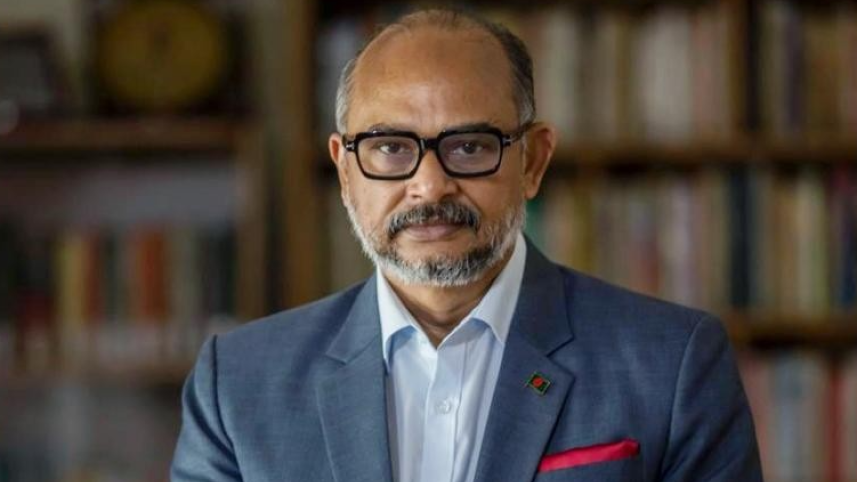
Non-performing loans (NPLs) in Bangladesh have built up over time due to weak financial governance, poor asset valuation, and a lack of accountability in professional institutions, said Rashed Al Mahmud Titumir, finance and planning adviser to the prime minister.
He criticised gaps in financial oversight and said auditors, valuers, and credit rating agencies must play a stronger role in ensuring transparency and discipline in the financial system.

“NPLs do not appear overnight. At different stages, someone certified these loans, assessed the assets, and approved the valuations,” he said, pointing to failures at multiple levels of financial decision-making.
Titumir made these comments yesterday at a pre-budget discussion in Dhaka, jointly organised by the Institute of Chartered Accountants of Bangladesh (ICAB) and The Financial Express.
His comments come at a time when rising NPLs continue to strain Bangladesh’s banking sector, while policymakers are considering stronger reforms in financial governance, auditing standards, and regulatory enforcement.
According to the Bangladesh Bank, defaulted loans stood at Tk 557,217 crore as of December 2025.
Titumir said there are still major gaps in financial governance that are weakening market efficiency and financial stability.
“Markets must be allowed to function properly. If they do not operate on sound market principles, these reforms will fail,” he said.
He also warned against excessive regulation.
“Overregulation itself becomes a barrier,” he said, stressing the need for balance between government oversight and market freedom.
He added that while government regulation is important, self-regulation by professional bodies is also essential for transparency and accountability.
He noted that statutory professional organisations were created by law to protect public interest in accounting, auditing, and healthcare, highlighting bodies such as ICAB and the Institute of Cost and Management Accountants of Bangladesh (ICMAB).
Titumir also pointed to structural weaknesses in the banking sector, saying long-term lending is often financed through short-term funding sources.
He said the main concern is weak certification and approval processes that allowed risky loans and financial statements to go unchecked.
“That is why your role is extremely important,” he told professional stakeholders, urging stronger governance and reform support.
He also said public spending in key sectors remains below required levels and that improved public service delivery is essential for better tax compliance.
“Citizens would be more willing to pay taxes if they could clearly see improvements in public services, social protection, and quality of life,” he said.
CALLS FOR DIGITALISATION AND TAX REFORM
At the event, Syed Ershad Ahmed, president of the American Chamber of Commerce in Bangladesh, called for faster digitalisation of tax, customs, and accounting systems to improve the investment climate and increase revenue collection.
He said, “Corruption, bureaucratic delays, and complicated tax procedures are still discouraging foreign investment,” and urged full customs automation, e-signatures, and a fully digital VAT and tax system under the National Board of Revenue (NBR) to reduce delays and revenue leakage.
 For all latest news, follow The Daily Star's Google News channel.
 He also supported cloud accounting, e-invoicing, and AI-based tax management, adding that informal digital and freelance incomes should be brought into the tax system through automation.
Showkat Aziz Russell, president of the Bangladesh Textile Mills Association, criticised inefficiencies in public spending, saying businesses need clearer information on how tax revenue is used for industry, jobs, and investment.
“The government’s tendency to spend beyond its income has to change,” he said.
He also warned that an excessive focus on revenue collection could undermine efficiency and industrial growth, and criticised reliance on high-cost imports such as fuel and vehicles, urging a more balanced policy approach.
Kamran T Rahman, president of the Metropolitan Chamber of Commerce and Industry, said Bangladesh must modernise its fiscal system to improve its low tax-to-GDP ratio.
He added that digital accounting is essential for transparency, reducing tax evasion, and strengthening trust between businesses and authorities.
NKA Mobin, president of ICAB, said digital accounting is now essential for a transparent and efficient economy.
He highlighted ICAB’s Document Verification System, saying it improves accountability through real-time verification and reduces fraud risk.
Md Farid Uddin, former member of the NBR; Taskeen Ahmed, president of the Dhaka Chamber of Commerce and Industry; Doulot Akter Mala, president of the Economic Reporters’ Forum; Sabbir Ahmed, council member of ICAB; and Shamsul Huq Zahid, editor of The Financial Express, also spoke at the event.
Comments