


Advancing Bangladesh’s energy sovereignty for a resilient future

Over more than five decades, Bangladesh has progressed reasonably well in socioeconomic terms compared to many of its peers among the least developed and developing countries. Strong economic growth over many years—largely driven by export-oriented industrialisation, especially the readymade garments sector, high remittances, and good agricultural harvests—has significantly reduced poverty. At the same time, it has led to accelerated urbanisation and increased energy demand across industries, transport, and households. Despite these achievements, Bangladesh’s energy infrastructure remains structurally weak and has not developed adequately to support the long-term needs of a growing economy.
Energy is no longer merely a sectoral concern. It is now at the core of macroeconomic stability, fiscal sustainability, and national security. As Bangladesh is set to graduate from its Least Developed Country (LDC) status in November 2026 and shift towards a more diversified and higher-value industrial base, the resilience of its energy system will increasingly shape the pace and quality of this transformation. The current energy model—characterised by dependence on imports, exposure to volatile global markets, and rising fiscal burdens—is becoming unsustainable fast.

Currently, Bangladesh’s energy portfolio is predominantly dependent on fossil fuels, notably natural gas, oil, and imported coal. Domestic natural gas production, once the foundation of the power sector, has been progressively declining relative to national demand. Domestic natural gas reserves are rapidly depleting as well. Consequently, Bangladesh has increasingly relied on imported liquefied natural gas (LNG) to supplement its energy needs. As a result, Bangladesh has become one of the emerging economies vulnerable to fluctuations in global gas prices.
This transition has incurred substantial costs. During the global energy crisis of 2022-23, LNG spot prices rose to unprecedented levels. Bangladesh was compelled to curtail LNG procurements, leading to gas shortages, loadshedding, and disruptions to industrial productivity. Foreign exchange reserves declined sharply during this period, from over $46.47 billion on November 3, 2021 to $26.42 billion on November 1, 2023. This was due to the combined effects of increased import expenses and macroeconomic adjustments. Besides, the fiscal burden increased as subsidies allocated to the power and energy sectors, particularly through the Bangladesh Power Development Board, expanded significantly to mitigate domestic tariff increases.
Recent geopolitical tensions in the Middle East have once again exposed Bangladesh’s energy security to renewed fragility. A substantial share of global oil and LNG trade passes through the Strait of Hormuz. Hence, the disruption in this corridor has immediate ripple effects on global prices and supply chains. For Bangladesh, which relies heavily on imported fuels from the Gulf region, such disruptions have translated directly into higher import costs, high price pressures, and increased fiscal strain.
These recurring shocks underscore a fundamental truth: Bangladesh’s current energy infrastructure is inherently fragile and increasingly unsustainable. The traditional discourse on energy transition, though important, primarily focuses on climate change mitigation and does not fully address the issue’s pressing nature. For Bangladesh, the transition must therefore be reframed with an emphasis on energy sovereignty.
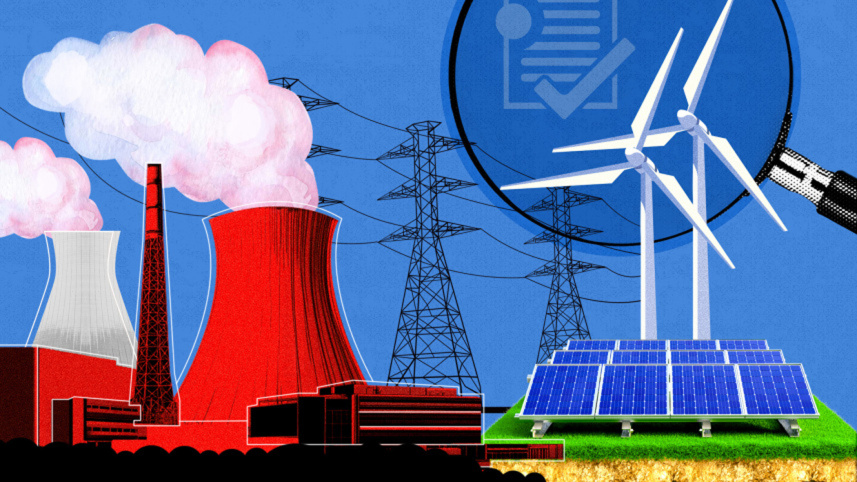
Energy sovereignty is the ability of a country to secure reliable, affordable, and sustainable energy with reduced dependence on external sources. It requires strengthening domestic energy production and building a resilient system that can withstand global shocks. In today’s world of geopolitical tensions, supply disruptions, and climate risks, energy sovereignty has become a strategic necessity rather than a privilege. This reframing of the perspective on addressing the energy crisis offers considerable analytical and policy benefits.
First, it strongly aligns with the principles of political economy. Energy sovereignty is closely linked to national security and economic independence, making it a persuasive narrative across the political spectrum. Unlike climate discourse, which is frequently viewed as externally influenced, the sovereignty approach directly corresponds with domestic priorities.
Secondly, it reinforces the economic justification for renewable energy. From the perspective of sovereignty, each megawatt of domestically generated solar or wind power diminishes reliance on volatile international markets. Over time, this will reduce import expenses, alleviate pressure on foreign exchange reserves, and enhance fiscal stability.
Third, it can help garner stronger public support. Energy policies in Bangladesh often focus on tariffs and subsidies, but linking renewable energy to price stability and reliability makes its benefits more visible to citizens. Renewable energy is not only environmentally friendly but also less vulnerable to sudden price shocks caused by global geopolitical crises.
Fourth, it aligns with long-term strategic goals. Bangladesh’s aspiration to become an upper-middle-income country will require a more diversified industrial base, including sectors such as electronics, pharmaceuticals, and light engineering. These sectors require reliable, competitively priced energy. A domestically anchored renewable energy system can provide that foundation while also supporting global commitments under the Paris Agreement.
Despite these advantages, Bangladesh’s progress in renewable energy remains modest due to structural constraints like limited land availability, grid integration challenges, financing barriers, and policy uncertainty. Addressing these constraints requires the development of a coherent, coordinated policy framework.
First and foremost, land-use planning should be re-envisioned. Given Bangladesh’s high population density, large-scale solar parks pose considerable challenges. Alternative models, such as rooftop solar installations, floating solar systems on water bodies, and the solarisation of public infrastructure, present substantial potential. Industrial zones, export processing zones, and public buildings can serve as significant energy generation centres.
Secondly, it is essential to modernise the grid. As renewable energy sources are naturally variable, a more flexible and responsive electrical grid is required. Investing in transmission infrastructure, smart grid technologies, and energy storage will be key to incorporating higher levels of renewables while maintaining reliability.
Thirdly, enhancing financing mechanisms is essential. Although renewable energy projects often need large initial investments, their operating costs are generally low. Bangladesh can leverage blended finance, concessional funding, and risk-sharing instruments to attract private sector investment. Institutions such as the World Bank, IMF, and dedicated climate funds can serve as catalysts to facilitate this transition.
Fourthly, consistent policies and clear regulations are crucial. In the past, frequent changes to tariffs, procurement procedures, and contracts undermined investor confidence. Creating a stable and transparent policy environment is essential to encouraging the growth of renewable energy.
Fifthly, regional cooperation should be explored to support domestic initiatives. Trading electricity across borders with neighbouring countries can improve energy security by diversifying supply. Simultaneously, collaboration on regional grid infrastructure and renewable energy projects can realise economies of scale. These initiatives require political will.
Finally, demand-side management should not be ignored. Energy efficiency initiatives—such as upgrading industrial processes, adopting energy-efficient appliances, and enforcing stricter building standards—can significantly reduce total energy demand and ease the burden on the supply system.
While achieving energy sovereignty demands substantial investment, institutional capacity, and political will, the repercussions of inaction will be much more severe. Bangladesh needs to reduce its reliance on imported fuels and accelerate its shift towards locally generated renewable energy to safeguard economic stability, enhance resilience to global disruptions, and ensure a sustainable, self-reliant development path for the future.
Dr Fahmida Khatun is an economist and executive director at the Centre for Policy Dialogue (CPD).
 For all latest news, follow The Daily Star's Google News channel.
 Views expressed in this article are the author's own.
Follow The Daily Star Opinion on Facebook for the latest opinions, commentaries, and analyses by experts and professionals. To contribute your article or letter to The Daily Star Opinion, see our guidelines for submission.
Comments