


More midwives can reduce reliance on unnecessary C-section

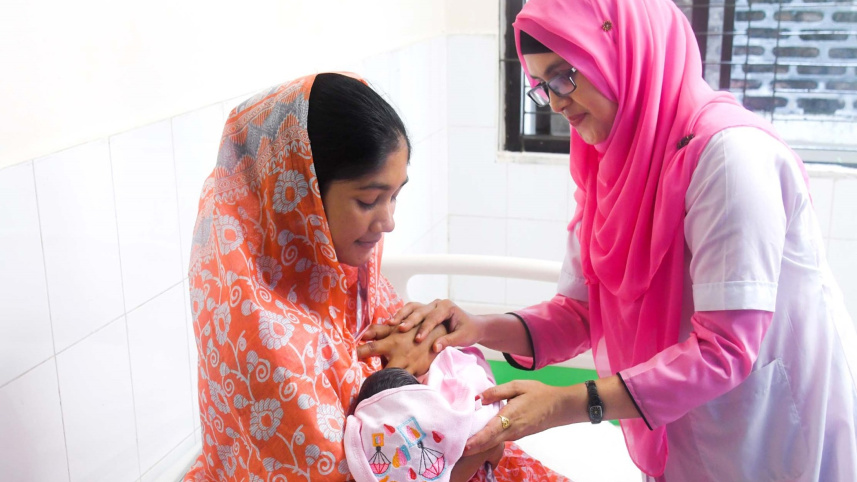
May 5 marks the International Day of the Midwife, with this year’s theme being “One Million More Midwives.” For Bangladesh, this is a call to complete a journey that began with great promise. The country has earned global recognition as a “Champion Country” for its rapid progress in reducing maternal mortality and establishing a professional midwifery cadre to offer high-quality sexual and reproductive health services, including safe, respectful maternity care. As the lead technical partner in this journey, UNFPA has been standing alongside the Government of Bangladesh for over 15 years, helping to build international-standard curricula, faculty, and regulatory frameworks that underpin this vital profession. Today, over 11,000 midwives in Bangladesh have graduated and are licensed to work.
Despite the strong foundational work, progress in deploying these professionals is taking too long. Maternal and newborn death rates still remain high, with approximately 4,000 women losing their lives every year during childbirth in 2023. The commitments made to midwifery in Bangladesh have yet to translate into enough professionals standing with women to save lives. To regain momentum, we must recognise that investing in midwives is not a health expense but an investment in women’s lives and a development best-buy to build a healthy, resilient, and prosperous nation. Here, we can cite what experts call the “triple impact” of midwifery.
 For all latest news, follow The Daily Star's Google News channel.
 The impact on health: Quality over medicalisation
The UNFPA’s technical expertise ensures that midwives are trained to international standards, capable of providing 90 percent of essential sexual and reproductive health services. When midwives lead care, we see a dramatic reduction in unnecessary medical interventions. Increasingly, we see health facilities over-medicalising childbirth. To counter this, we need midwives who can champion safe, natural delivery. By reducing the reliance on unnecessary Caesarean sections and other surgical interventions, midwives not only improve the health of mothers and newborns but also protect families from staggering out-of-pocket medical expenses.
The impact on the economy: A 16-fold return
The economic case for midwifery is undeniable. Midwives provide a cost-effective pathway to serving the hardest-to-reach communities, ensuring that high-quality care is available at the primary level closest to where women live and not in facilities that are overburdened with critically ill patients. Global evidence shows that in countries like Bangladesh, every dollar invested in midwifery can yield a return of up to 16 times that amount. By preventing long-term disabilities in newborns and keeping mothers healthy and productive, midwives directly contribute to the growth of Bangladesh’s human capital.
The impact on resilience: Climate and crisis
As one of the world’s most climate-vulnerable nations, Bangladesh faces constant threats from cyclones, floods, and rising sea levels. When disasters strike and hospitals become inaccessible, midwives remain steadfast with women and adolescents in their communities. UNFPA and the Government of Bangladesh have worked together to ensure midwives are the first responders to natural disasters and climate change, ensuring that a woman’s right to a safe birth is not disrupted during climate-related crises. Whether in a remote coastal village or the crowded refugee camps of Cox’s Bazar, midwives provide the continuity of care that saves lives.
For these benefits to be realised, a midwife needs professional training and a supportive workplace. This means she must be educated in accredited institutions, licensed, fairly paid, and given the authority to practise the full range of her skills. A midwife needs an enabling environment to perform her work of saving lives and bringing dignity to women. In practical terms, this means that health facilities need to be equipped with water and sanitation, electricity, communication and refrigeration equipment, and other required supplies. Life-saving maternal drugs and contraceptives must be available continuously without disruption.
The country needs an estimated 25,000 midwifery posts in primary health centres by 2030. The systematic creation of midwifery posts and the rapid deployment of these professionals into primary health centres represent the critical next chapter of this success story. Accelerating this process is not just a health priority; it is a vital step towards strengthening national resilience. Until every woman in Bangladesh, regardless of her income or location, has access to high-quality midwifery care, the country remains at risk of falling behind in meeting its ambitious development goals.
Investing in midwives means investing for the rights, dignity, and equity of every woman in Bangladesh. We need more midwives in posts, in health facilities, and in our communities. By placing just three midwives in each of the 3,500 union-level health facilities across the country, we can create a 24/7 lifeline for mothers. These facilities already exist; the infrastructure is there. By bringing midwives into these local hubs, we can move life-saving care from a distant hospital directly to each village’s doorstep.
The advancements achieved to date are a testament to the efforts of the government and people of Bangladesh. UNFPA will continue to support the Ministry of Health and Family Welfare in ensuring these new posts for midwives are filled by highly skilled professionals who are supported by a workplace that values their expertise.
When we empower midwives, we save women’s lives and the lives of their newborns. What better way can there be to secure a healthy and bright future of Bangladesh for generations to come?
Catherine Breen-Kamkong is UNFPA representative in Bangladesh.
Views expressed in this article are the author's own.
Follow The Daily Star Opinion on Facebook for the latest opinions, commentaries, and analyses by experts and professionals. To contribute your article or letter to The Daily Star Opinion, see our guidelines for submission.
Comments