


Our demographic challenges demand a functioning population council

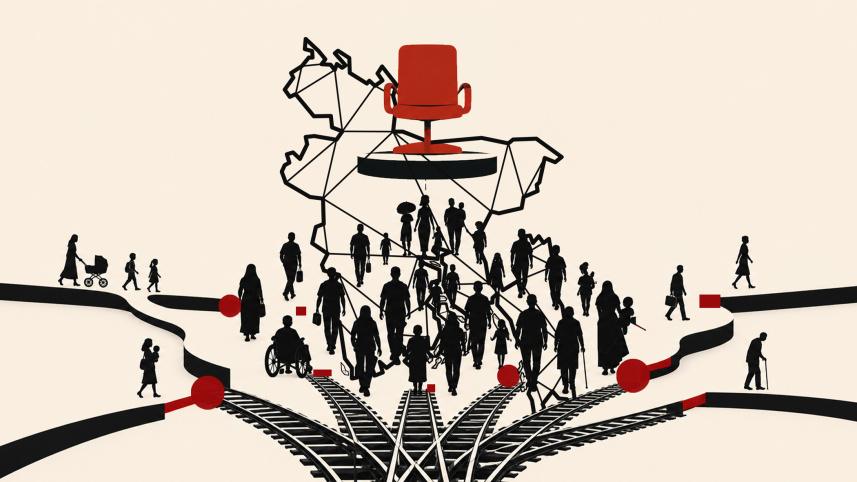
The population story of Bangladesh has long been regarded as a major development success. Fertility fell considerably, child survival improved, life expectancy increased, and the country entered a favourable period in which working-age people outnumbered dependants. However, this story can no longer guide the country’s population policy on its own. Bangladesh is entering a more complicated demographic period, while the institution intended to coordinate its response, the National Population Council (NPC), remains inactive.
The latest fertility figures should be a cause for concern. The country’s total fertility rate (TFR) was estimated at 2.4 in the Multiple Indicator Cluster Survey (MICS) 2025, compared with 2.3 in the Bangladesh Demographic and Health Survey (BDHS) 2022. The difference should be interpreted cautiously because the estimates come from different surveys, but after decades of decline and a prolonged plateau near replacement level, any indication of an increase deserves some scrutiny. Geographical differences are also substantial. MICS 2025 estimated 2.8 children per woman in Mymensingh and 2.7 in Chattogram, compared with 2.2 in Rajshahi. These variations reflect differences in poverty, marriage, women’s autonomy, contraception, education, migration, and access to healthcare services.

Child marriage, unintended pregnancy, and closely spaced births show how these factors interact. MICS 2025 found that 47.2 percent of women aged 20-24 had been married off before the age of 18. Around 22 percent had given birth before 18, while the adolescent birth rate was 92 births per 1,000 girls aged 15-19. Early marriage interrupts education, brings forward childbearing, and can restrict women’s economic opportunities. Unintended pregnancies reflect gaps in effective contraception and women’s reproductive choice. BDHS 2022 found that about 1 in 10 non-first births occurred less than 24 months after the preceding birth. Short birth intervals are associated with poorer maternal and child outcomes. Family planning programmes cannot solve fertility challenges alone, just as laws cannot eliminate child marriage without progress in education, women’s autonomy, social norms, and economic opportunities.
These patterns also affect survival. Bangladesh has made remarkable progress in reducing maternal and child deaths, but preventable mortality remains substantial. Unicef estimated under-five mortality at about 31 deaths per 1,000 live births in 2024, while MICS 2025 reported under-five mortality of 33 per 1,000. Maternal mortality remains an unfinished agenda. Adolescent and unintended pregnancies, inadequate birth spacing, poor maternal nutrition, and unequal access to quality maternity care all contribute to adverse outcomes. Hence, the population policy concerns much more than the number of births. It concerns when births occur, whether pregnancies are wanted, how safely women give birth, and whether mothers and children survive.
Bangladesh is also running out of time to use its demographic dividend, the economic opportunity created by a relatively large working-age population. This opportunity depends on people being healthy, educated, skilled, and productively employed. In 2022, around 41 percent of young people aged 15-24 years were not in education, employment, or training, rising to around 62 percent among young women. Meanwhile, the ageing population is growing. People aged 60 and older accounted for about 9.3 percent of the population in 2022, and their share will rise substantially. So, the country needs productive employment for young adults today while preparing healthcare, pensions, social protection, and long-term care for a much larger older population tomorrow.
Urbanisation and migration add further pressure. About one-third of the country’s population lives in urban areas, while internal migration continues to concentrate people in major cities, increasing pressure on housing, transport, sanitation, health services, education, and employment. Climate change is likely to intensify migration from vulnerable areas. But these challenges are divided across multiple government institutions. Family planning and reproductive health largely sit within the health system, while child marriage, education, employment, urban planning, migration, social protection, ageing, women’s empowerment, and climate adaptation involve different ministries. Separate mandates are necessary, but fragmented responses are inadequate when the problems share the same demographic roots.
This is precisely why the National Population Council was established. Population policy is inherently cross-sectoral, requiring health, education, women’s and children’s affairs, youth, employment, planning, finance, local government, social welfare, and environment sectors to work together. But the NPC has been on hiatus since 2010. During that period, Bangladesh adopted two national population policies. The Population Policy 2012 addressed fertility, reproductive health, maternal and infant mortality, women’s empowerment, urbanisation, and intersectoral coordination. Thirteen years later, the Population Policy 2025 replaced it, emphasising planned population management, rights, human development, and the demographic dividend. Adopting two major policies while the country’s highest population coordinating body remained inactive reveals a serious gap between policy formulation and implementation.
The NPC was reconstituted in 2025, creating an opportunity to restore population issues to the centre of national policymaking. But reconstitution on paper is not enough. The council has not met even once since its reconstitution, although it is supposed to meet twice a year. This matters because population management cannot be the responsibility of one ministry. Without the NPC functioning as intended, who ensures that ministries translate population policy into coordinated action, identify failures, and remain accountable for results?
The consequences are visible. Bangladesh promotes family planning while child marriage, unintended pregnancy, and short birth intervals persist. It seeks to capture the demographic dividend while many young women remain outside education and employment. Cities expand without demographic change being reflected in infrastructure planning. Maternal health, child survival, youth development, migration, climate vulnerability, and ageing are addressed through separate programmes although they are interconnected. If fertility increases, who determines why? If unintended pregnancy remains high, who connects it with contraceptive access and women’s autonomy? If young people cannot find productive work, who assesses the implications for the dividend?
The remedy to the prevailing situation is not another population policy. Bangladesh already has the Population Policy 2025 as well as substantial demographic data. What the country needs is a governance system capable of turning them into coordinated action. The NPC should meet regularly, supported by a technically capable secretariat and measurable national targets. It should routinely review the factors that affect the population, directly or indirectly, such as fertility and contraception, child marriage, adolescent pregnancy, maternal and child mortality, youth education and employment, women’s economic participation, ageing, and climate-related demographic change, among others. When indicators move in the wrong direction, the population council should identify why, assign responsibilities, and monitor the response.
Bangladesh’s demographic future will depend on more than its population count. Factors such as when people marry, whether pregnancies are intended, how safely and closely births occur, where people live, whether young people find productive work, and how society supports an ageing population will all shape that future. These questions are connected, so their governance must be connected too. The country still has important demographic advantages, but the window for using them is narrowing. Leaving the country’s highest population coordinating body inactive while demographic challenges accumulate is a policy failure with real human and economic costs. Reconstituting the NPC was a start. Making it function is now an urgent task.
Dr Nuruzzaman Khan is senior research fellow at the Melbourne School of Population and Global Health under the University of Melbourne in Australia. He can be reached at nuruzzaman.khan@unimelb.edu.au.
Views expressed in this article are the author's own.
Follow The Daily Star Opinion on Facebook for the latest opinions, commentaries, and analyses by experts and professionals. To contribute your article or letter to The Daily Star Opinion, see our guidelines for submission.
 For all latest news, follow The Daily Star's Google News channel.
Comments