


Public universities must not become instruments of political power


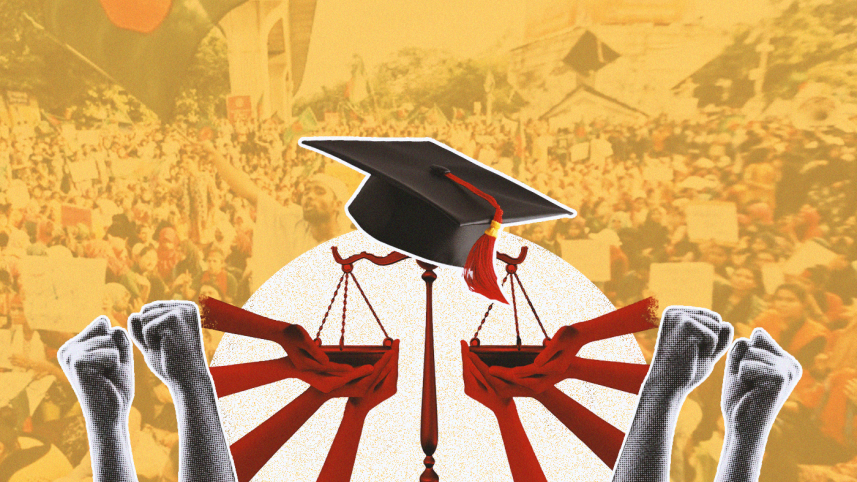
The recent suspension and disciplinary actions against some academics at Dhaka University should concern us for reasons that go beyond the individual cases. They raise a much larger question for Bangladesh: what kind of university do we want to build after the July 2024 uprising? Do we want universities that reproduce political power and reward conformity, or universities that protect critical thinking, disagreement and intellectual autonomy?
These actions cannot be understood only as isolated consequences of the July uprising. They need to be situated within the longer history of political intervention in Bangladesh's higher education system.

In our book, The Privatisation of Higher Education in Postcolonial Bangladesh: The Politics of Control and Intervention, we argued that Bangladesh's higher education system has developed through a significant contradiction. On the one hand, neoliberal reforms have encouraged privatisation and market-oriented approaches. On the other, universities have remained vulnerable to political and administrative intervention. They have inherited institutional arrangements in which authority, hierarchy, and political power can strongly influence academic life. One consequence is the gradual erosion of university autonomy and, with it, academics' autonomy and security.
Let’s focus on the Dhaka University case. On July 30, 2026, the university announced the temporary suspension of three teachers, including Professors Sadeka Halim, Md Shafiqul Islam, and Afroza Shelley, while other academics were relieved of academic and administrative responsibilities. It also referred the recommendation for Professor Halim's permanent dismissal to the University Tribunal.
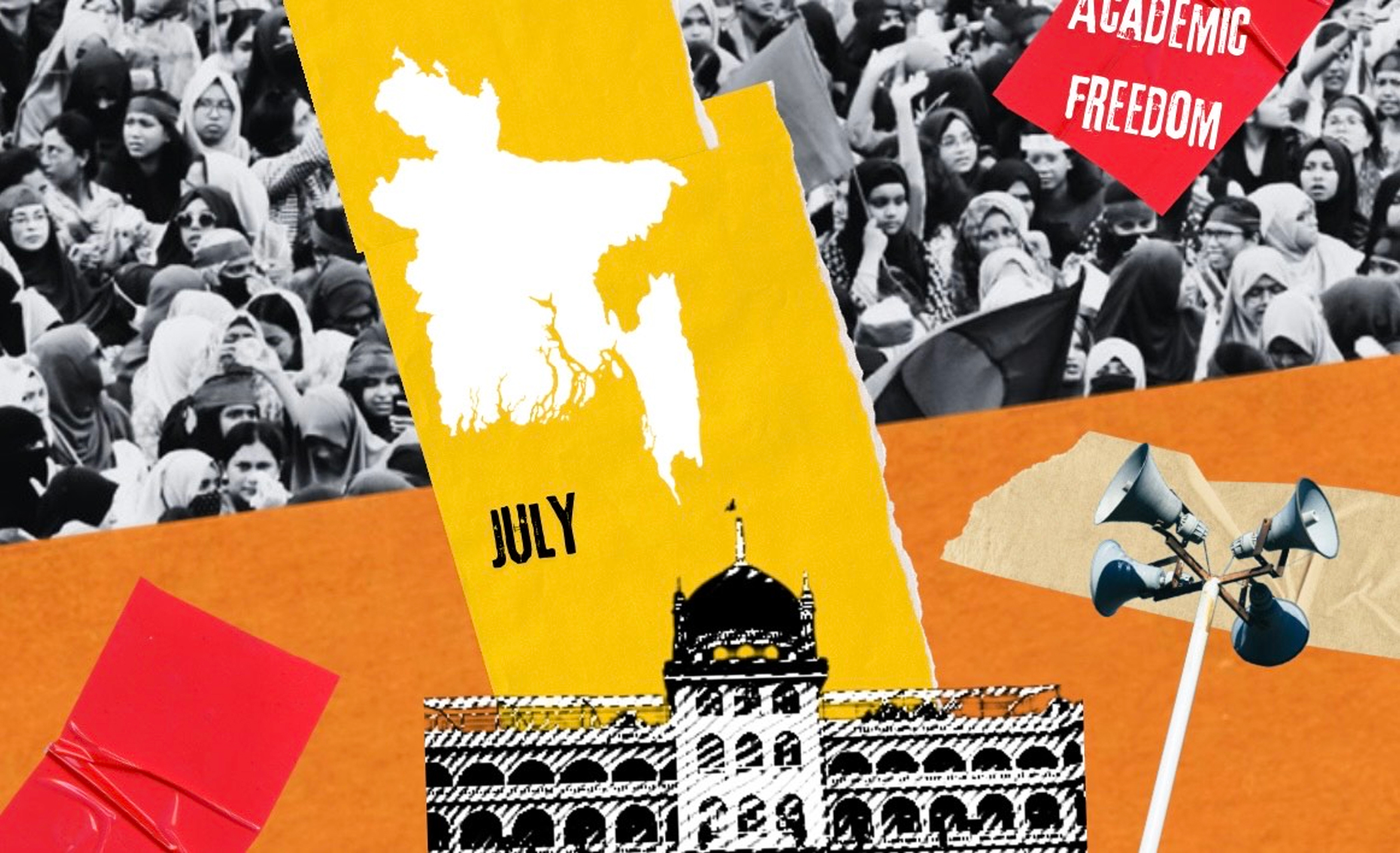
The wording of the allegations deserves attention. Professor Halim was suspended over “conduct unbecoming of a teacher” inside and outside the classroom and “offences involving moral turpitude”. Article 56(3) of the Dhaka University Order, 1973 permits dismissal on only two grounds: moral turpitude or inefficiency. Article 56(2) is more striking still, requiring that service conditions be determined without prejudice to a teacher's freedom to hold political views and to associate with any lawful organisation outside the university. The Order protects political opinion outright, which is precisely why political conduct must first be re-described as moral failure before it can be acted upon at all.
These are old and elastic categories. Moral turpitude entered modern statutory language through 19th-century immigration law and was never defined; the standard formulation asks whether conduct offends justice, honesty, modesty, or good morals. Conduct unbecoming comes from military discipline and judges a person by whether their behaviour befits what someone in their position is supposed to be, rather than by what they did. And the Dhaka University formulation reaches explicitly beyond the classroom into private life, the terrain on which women's respectability, rather than men's competence, has always been assessed.
The university has also established mechanisms to identify teachers alleged to have taken positions against students during the July uprising. According to reports, a list of 231 teachers submitted by a teachers' platform, organised as Anti-Fascist Teachers of Dhaka University, is being reviewed.
We believe universities cannot become spaces where professional responsibility is suspended simply because someone is a teacher. But accountability and political punishment are not the same thing. The crucial question is whether allegations are investigated through transparent, fair, and independent procedures, with due process and consistent standards applied to everyone. The Dhaka University Teachers' Association has made the same point on statutory grounds, arguing that the 1973 Order requires an inquiry committee and a tribunal before any penalty is imposed, and that the suspended teachers were given no opportunity to defend themselves.

The cases involving female academics deserve additional attention. Women academics operate within institutions and societies that have historically been shaped by patriarchal structures. Political vulnerability can therefore intersect with gendered expectations about authority, behaviour, public speech, and professional conduct. Men are among those facing these same provisions now, so the claim is not that these categories are reserved for women. The point is narrower and harder to dismiss: vague moral standards give authorities broad discretion, and in institutions shaped by patriarchal expectations, that discretion can reinforce existing gender biases.
The concern is not only about the individuals currently facing disciplinary measures. It is about the possible chilling effect on other academics. If teachers begin to believe that expressing an unpopular political position, criticising authority or taking a public stance could threaten their professional security, they may understandably become more cautious. For women academics this carries an additional edge. A charge of inefficiency has to point to work. A charge of moral turpitude needs to point to nothing in particular, and a woman who speaks publicly or holds authority has always been easier to fit to it.
Bangladesh has a long and complicated relationship with politics at and in universities. We should not romanticise this history. There have also been legitimate concerns about partisan politics within universities, political patronage, and the politicisation of academic appointments.
But this history should lead us to a more fundamental question: is the solution to replace one form of political control with another? We believe it is not. There is an important distinction between political academics and political universities. Academics are citizens. They have political beliefs, social commitments, and the right to participate in public life. The 1973 Order recognises this expressly in Article 56(2). Universities, however, should not become instruments through which a particular political party, government or ideological group determines who can teach, research, speak, administer or remain employed.
The problem, therefore, is not that academics have politics. The problem is when political power determines the boundaries of legitimate academic life. This requires us to look critically at ourselves as well. Have we sometimes allowed ourselves to become instruments of political or institutional interests? If the university is treated instrumentally, academics become instruments of whichever political order happens to hold power. Today’s politically favoured academic can become tomorrow's target when political authority changes hands.
What Bangladesh needs is a change in the relationship between political power and the university itself. University autonomy, transparent appointments, fair disciplinary procedures, academic freedom, and institutional accountability must become principles that apply regardless of who is in government. This is also where Walter Mignolo's decolonial idea of border thinking becomes useful: it invites us to move beyond rigid binaries and recognise multiple ways of knowing and understanding the world. We need to move beyond binaries such as pro-government and anti-government, loyal and disloyal, us and them. A university should be a place where ideas can be challenged without automatically labelling the person who expresses them as an enemy.
The question before us is not simply whether Professor Sadeka Halim, Professor Afroza Shelley, or any other academic is politically right or wrong. The question is what happens to the university when political power becomes the measure of academic legitimacy. Do we want graduates who simply learn to comply with the prevailing system, or people capable of questioning injustice, challenging authority, and imagining alternatives?
The future of our universities cannot be secured by replacing one political orthodoxy with another. It can only be secured by building institutions in which accountability is universal, academic freedom is protected, disagreement is legitimate, and knowledge is allowed to serve society rather than political power.
Dr Arif Kabir is lecturer at the Faculty of Arts and Education at Deakin University, Australia.
Dr Urmee Chakma is lecturer at the School of Education at La Trobe University, Australia.
 For all latest news, follow The Daily Star's Google News channel.
 Dr Raqib Chowdhury is associate professor at School of Education and Culture at Monash University, Australia
Comments