


The RMG paradox: Growth, global dependence, and sustainability

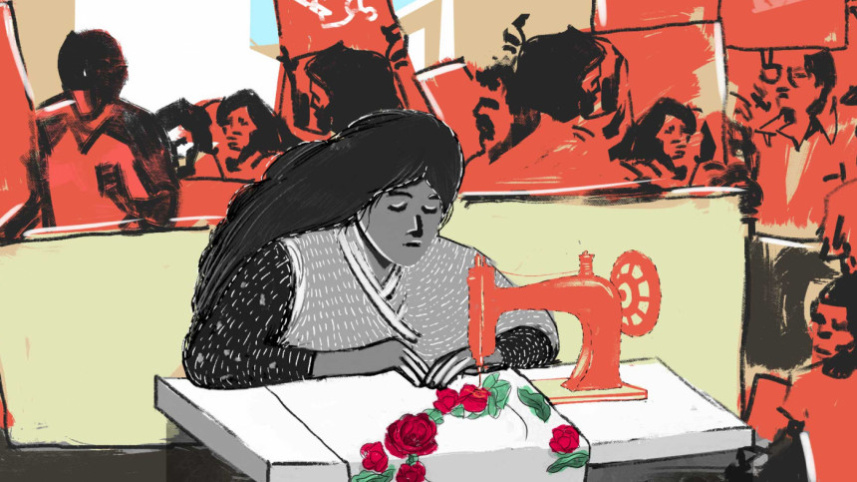
Bangladesh’s Ready-Made Garment (RMG) industry is a phenomenal example of economic transformation in the developing world. In less than five decades, a country synonymous with poverty, dependence on agriculture, and lack of industrial capacity has become one of the world’s largest apparel exporters. It has created millions of jobs, earned billions of dollars in export earnings, helped to speed up urbanisation, and played an important part in poverty reduction. More importantly, it brought millions of women into the formal labour market, changing their lives. But this success story conceals a complex reality. The RMG sector has created economic opportunities but also exposed structural weaknesses in terms of environmental damage, labour rights, human development, and reliance on low-cost production.
The challenge for Bangladesh is not about whether to continue garment production, but whether it can turn this industry into a sustainable, high-value, and human-centred economic model. The economic contribution of RMG is undeniable. The industry accounts for more than 80 percent of Bangladesh’s merchandise export earnings and employs some four million workers directly, while several million more depend on the sector indirectly. It absorbed millions of rural workers who had previously depended on low-productivity agriculture or informal work. Thus, the garment industry of Bangladesh is a mirror of the dual-sector development model of economist W. Arthur Lewis, where excess labour from the traditional agricultural sector is transferred to a modern industrial sector. Economic transformation has been initiated, and RMG has assisted in moving people from rural livelihoods to industrial jobs. But Lewis’s model is also a caution. The industrialisation that can produce economic growth can be based on the availability of abundant cheap labour without profound structural transformation. An economy can be trapped in a low productivity cycle if wages are low and productivity improvement is limited.
The story of women in Bangladesh’s RMG sector is one of progress and paradox. Women have traditionally made up 60-70 percent of garment workers in many factories, with more men joining the workforce in recent times. Nevertheless, RMG remains one of the largest providers of formal employment for women. In factories, millions of rural women found income, mobility, a greater voice in household decisions, and a higher social status. The challenges of Bangladesh’s RMG sector also need to be understood within the framework of a global political economy. Global fashion is driven by unequal value chains. Firms in developed economies largely control high-value activities such as branding, design, marketing, retail networks, and ownership of intellectual property. Bangladesh is concentrated in labour-intensive manufacturing and takes a smaller share of the final value of garments.

This is consistent with the concerns of dependency theory, which claims that developing countries often stay trapped in a dependent position in the global economy because they specialise in lower-value activities, while advanced economies control technology, finance, and markets. Environmental degradation in Bangladesh is an ecological problem and an economic threat. Rivers are the lifeblood of agriculture, fisheries, transportation, and community livelihoods. Pollution has implications for public health, food security, and long-term development. The environmental footprint of the global fashion industry also raises questions of international accountability. Cheap clothes are enjoyed by consumers in rich countries, and many of the environmental costs are concentrated in the manufacturing countries.
We need shared responsibility to create a sustainable fashion system. But global brands can’t demand cheaper production and leave suppliers to pay for costly environmental upgrades. A green transformation is a shared responsibility of international buyers, manufacturers, governments, financial institutions, and consumers.
Bangladesh has already moved in this direction. The country has emerged as a world leader in manufacturing green garments with hundreds of LEED-certified green factories. The factories show that sustainable and competitive practices can be compatible through energy-efficient buildings, improved water management, renewable energy systems, and cleaner production technologies. But green certification doesn’t mean the whole industry is sustainable. Another major concern is the future workforce. RMG has created employment for poor families, but overreliance on low-skilled labour creates a tough social dilemma. The short-term income may take precedence over long-term education for many poor families with the pressing demands of survival. There is no reliable national statistic to show the exact percentage of school dropouts that can be attributed to RMG employment, but the association between poverty, child labour, and disruption of education is well established.
The danger is not industrial employment per se; the danger is an economy where young people are entering into low-skilled work before they have acquired adequate education and skills. Bangladesh cannot be a high-income country by supplying cheap labour continuously. The children of garment workers also deserve the chance to become the engineers, entrepreneurs, managers, researchers, and innovators who will drive the next transformation of our country.
The other big thing is human rights. The 2013 tragedy of Rana Plaza, where more than 1,100 workers were killed, became a worldwide symbol of bad working conditions in the garment industry. Bangladesh has since strengthened its factory safety inspection and compliance systems. But there are still issues around wages, freedom of association, collective bargaining, harassment at work, and excessive work pressure.
The future of Bangladesh’s garment industry will be influenced by climate change, automation, artificial intelligence, environmental regulations, and changing consumer expectations. Countries that rely solely on cheap labour will come under increasing pressure. Moreover, relying on a single source of income is unwise. Skilled workers, technology, sustainability, and innovation are the ingredients for the economies of the future. This means Bangladesh must move away from a low-wage export model and towards a green, skilled and high-value manufacturing economy. Investment in education, worker skills, renewable energy, circular textile systems, digital technologies and responsible global partnerships will determine the next phase of development.
The RMG sector should not be termed a total success or failure. This is a complicated development experience. It lifted millions out of poverty, empowered women and built Bangladesh’s industrial base, but it revealed the limits of growth based largely on cheap labour and external dependence.
The real success of Bangladesh’s RMG industry will not be judged only by the volume of its exports. Its measure is whether it opens the way to a future in which economic progress enhances human dignity and protects the environment, and enables the next generation to transcend the constraints of low-wage development.
Md Zafar Alam Bhuiyan is senior research fellow at Centre for Climate Change and Environmental Research at Brac University. He’s a doctoral fellow in climate change at Bangladesh University of Professionals (BUP).
Views expressed in this article are the author's own.
Follow The Daily Star Opinion on Facebook for the latest opinions, commentaries, and analyses by experts and professionals. To contribute your article or letter to The Daily Star Opinion, see our guidelines for submission.
 For all latest news, follow The Daily Star's Google News channel.
Comments