


Who pays for a fossil-free future? Bonn talks must answer the question

As negotiators engage in Bonn, Germany for the ongoing UN climate talks, there is a risk that these meetings might be dismissed as being technical. But beneath all the procedural language lies a political question that will define the climate century: who pays for the transition away from fossil fuels, and who bears the risks if finance never arrives?
The science is clear, and so is the reality of communities facing floods, droughts, heatwaves, and displacement. The world must move beyond fossil fuels, and the question is whether governments are willing to finance this transition at the speed and scale required.

That is why Bonn matters. It is the first major test of whether commitments emerging from recent climate summits, including the political momentum from COP30 in Brazil’s Belém, will be translated into implementation. But there is a deepening gap between ambition and finance that becomes acutely apparent when developing countries that did little to cause climate impacts are asked to decarbonise while facing debt pressures.
Climate finance is now the central fault line. Adaptation finance remains far below what vulnerable countries require. Mitigation finance is insufficient for equitable energy transitions. And just transition finance also remains fragmented and underdeveloped.
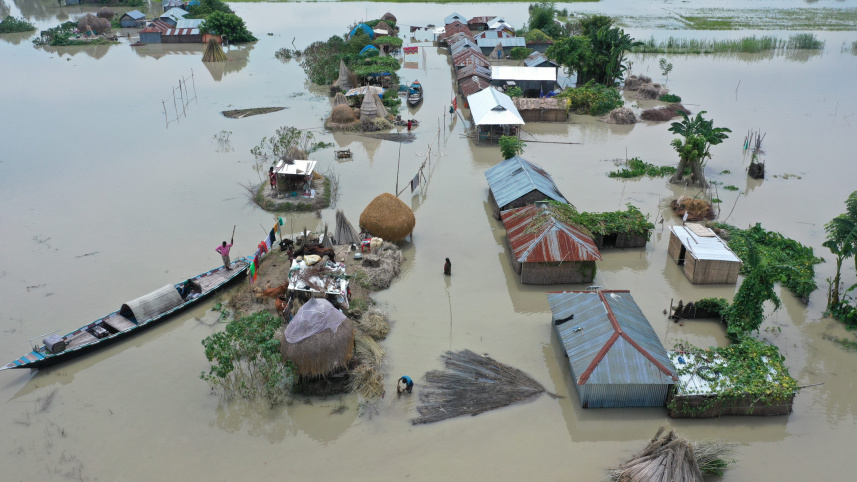
Bangladesh offers a stark illustration of these inequalities. Despite contributing a minute share of historical emissions, it faces intensifying cyclones, flooding, and salinity intrusion that strain public finances and livelihoods. Yet, it continues to invest heavily in adaptation, effectively paying twice for a crisis it did not create, while climate finance remains insufficient and difficult to access.
A feminist lens deepens this critique further. Climate finance too often flows to large infrastructure while bypassing women-led organisations, Indigenous networks, and local resilience systems. But these actors are often the ones sustaining the everyday work of climate survival through care, food systems, water access, and community health. It reveals how climate policy reflects deeper systems of inequality, where power, gender, and economic structures determine whose work is valued and whose lives are most exposed to risk. A just transition must therefore recognise care as climate infrastructure, not an invisible subsidy.
If finance continues to lag behind ambition, the transition to renewables will become politically unstable. Communities facing economic insecurity will resist change. Developing countries under fiscal pressure will struggle to invest in clean energy. Adaptation gaps will widen, and climate impacts will intensify, worsening inequality. The alternative is a well-financed, equitable transition that reduces poverty, creates jobs, strengthens public services, and builds resilience.
Belém should therefore be understood not as an endpoint but as a signal moment in a longer struggle over climate justice. It reflected a growing recognition that fossil fuel transition, adaptation, and transition cannot be separated in policy design. However, recognition without implementation risks begetting another cycle of deferred responsibility, where political language advances faster than financial commitments.
At the heart of the dispute in Bonn is not only the scale of finance but the architecture through which it is delivered. Many developing countries argue that existing systems reproduce dependency rather than enabling autonomy. Across negotiations, a broader coalition is emerging that links climate justice with gender justice, Indigenous rights, and economic transformation. Feminist movements, in particular, are reframing climate policy as a question of power: who decides, who benefits, and who is excluded. This shift is reshaping the moral language of climate negotiations, even when institutional change lags.
Global leaders must stop treating climate finance as a bargaining chip and recognise it as the foundation of collective climate action. As the talks in Bonn continue, the question is no longer what governments promise, but whether they are willing to pay for the future they claim to support. They will be judged by one test: who paid and who was protected.
We are now in a phase where credibility depends on delivery, and delivery depends on finance. Without this shift, climate promises will continue to accumulate while the political and ecological costs are pushed onto those least responsible for the crisis. Incremental ambition is no longer sufficient; what is required is structural alignment among climate goals, financial systems, and global equity if the transition is to hold politically and socially. That is the test Bonn must confront if it is to mean anything at all.
Farah Kabir is country director of ActionAid Bangladesh.
Views expressed in this article are the author's own.
Follow The Daily Star Opinion on Facebook for the latest opinions, commentaries, and analyses by experts and professionals. To contribute your article or letter to The Daily Star Opinion, see our guidelines for submission.
 For all latest news, follow The Daily Star's Google News channel.
Comments