


Why power corrupts, and how to keep it in check

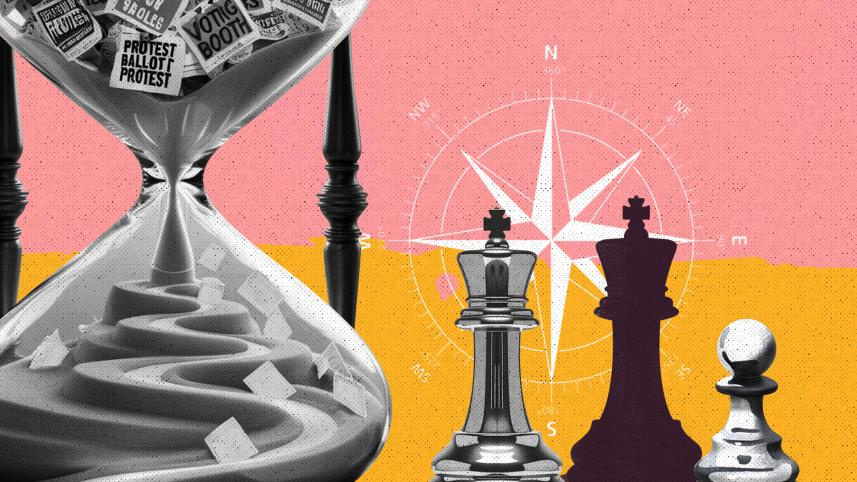
Lord Acton's warning, "Power tends to corrupt, and absolute power corrupts absolutely,” has been quoted so often that it has lost its edge. But behind it sits a genuinely unsettling body of science, and for a country like Bangladesh, where the gap between a leader's election day promise and their later behaviour has become a familiar and painful story, it is worth asking: is this corruption inevitable? Or is it something we, as citizens, still have the power to prevent?
Let’s start with what happens inside a person’s head when they gain power. Researchers, most notably psychologist Dacher Keltner at UC Berkeley, have found something remarkable: people who acquire power begin to behave like patients with damage to the brain's frontal lobes. They become more arrogant and ruthless, less attentive to others’ feelings, more willing to break rules they once respected. In the experiments, simply being made to feel powerful, even briefly, was enough to reduce people’s sensitivity to others’ emotions. Doctors have a term for this pattern when it follows a physical head injury: acquired sociopathy. The unsettling implication is that power alone, without any blow to the skull, can produce the same effect.

There is a telling detail here. Humans are among the few animals that blush—an involuntary signal of shame or unease. Study after study shows that the more power a person holds, the less they blush and the less shame appears on their face. Thus, political authority might literally strip away one of the few physical tells that keep social life honest.
A closer look at the evidence suggests something more useful. The first complication is that not everyone who climbs the ladder starts from the same place. Some seek power to serve themselves; others to serve a cause larger than themselves. Power does not create these motives; it amplifies or uncovers whatever was already there. Give an insecure, self-interested person authority, and watch the worst of them grow unchecked. Give the same authority to someone who has fought for something bigger than their own comfort, and the outcome looks very different. It is why Nelson Mandela walked out of prison after twenty-seven years and chose reconciliation rather than the score-settling many expected. And George Washington walked away from office after two terms when nothing but his own restraint stood in the way of staying longer. Power tested both men, and their convictions held.
But the second issue is even good convictions erode without support. This is not a matter of willpower; it is structural. The moment a leader operates without anyone watching closely—without a free press asking hard questions, courts that can rule against them, or an opposition allowed to exist and be heard—small compromises tend to compound. Today a minor favour to an ally goes unquestioned. Tomorrow a critical journalist is quietly sidelined. In a year, an inconvenient court ruling is ignored. None of these steps alone feels like tyranny. That is exactly the danger, and the deeper meaning behind “absolute” power corrupting “absolutely.” It is not that unchecked power makes bad people; it is that it removes the mechanisms that catch anyone, good or bad, before small ethical drift turns into entrenched abuse.
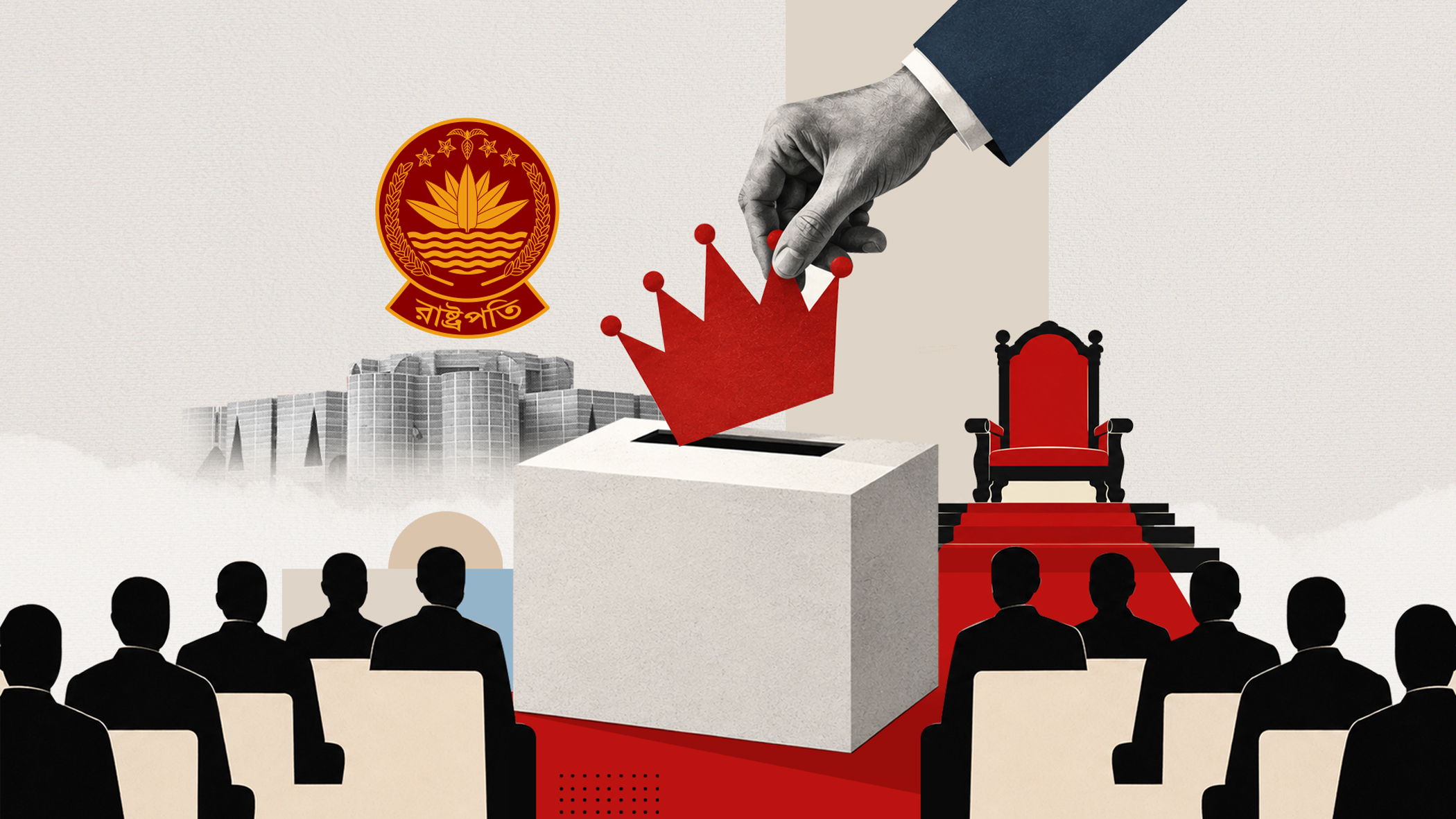
Is there something in our biology that makes this drift towards domination inevitable? Here the evidence offers hope. Humans share roughly 99 percent of their genes with chimpanzees—notorious for violent, alpha-male dominance hierarchies, where rank is won through aggression, intimidation, and shifting alliances. But we share almost the same percentage with bonobos, organised very differently: through cooperation, female-led coalitions, and remarkably little lethal aggression. In other words, our genes do not sentence us to tyranny. We carry the biological capacity for both extremes, and it is culture and circumstance, not DNA alone, that decides which one a society leans towards.
This reframes the entire question. Anthropologists who study early human societies, before the rise of civilisation, have found something striking: small nomadic bands were often fiercely egalitarian, and stayed that way on purpose. Anyone who tried to dominate the group was mocked, shunned, or in extreme cases driven out. Historians call this a reverse dominance hierarchy—ordinary people banding together to keep any single individual from accumulating too much control. If our ancestors could engineer restraint into small hunting bands with nothing more than social pressure, modern societies have far more powerful tools: constitutions, independent courts, a free press, the ballot box. We are not fighting our biology when we build these safeguards—we are doing, with better tools, exactly what our species has always done to survive the presence of power in its midst. This brings us to the question that matters most for a democracy like ours: what happens when the checks meant to restrain power are themselves the target?
Political scientists have a name for what many developing democracies experience: democratic backsliding. It rarely looks like a coup—no tank in the street, no midnight arrest of a president. Instead, it is slow and almost always technically legal, which is precisely what makes it so hard to resist. The pattern follows a recognisable sequence. A leader first wins power through a fair election, earning real legitimacy. Then, gradually, the institutions meant to referee power get reshaped in the leader’s favour—a court reorganised through convenient appointments, an election commission stripped of independence, an anti-corruption body defunded. Independent media face pressure not through outright bans but through advertising squeezes or selective prosecution of inconvenient journalists. Opposition politicians and civil society critics are recast, little by little, as enemies of the state rather than legitimate rivals. Finally, term limits or constitutional restraints are reinterpreted or amended away, through processes that look procedurally legal on paper. By the time the pattern is undeniable, the institutions citizens would need to reverse it—courts, watchdogs, a free press—have already been compromised.
This is precisely why the moment to act is before the drift becomes obvious. Citizens in a democracy are not powerless between elections, and the ballot box, while essential, is not the only tool available. A free press must be defended and supported, not merely consumed when convenient. The public must actively protect the independence of courts and election commissions, rather than treating them as political tools to be supported or attacked based on short-term partisan gains. Civil society acts as today's equivalent of the collective resistance our ancestors used in small tribes to keep power in check; it deserves protection, not suspicion. And perhaps most usefully, voters can judge leaders by how they behaved with small amounts of power long before they sought large ones, since character revealed early—in a local office, a party post, a student union—predicts future behaviour better than campaign promises.
None of this guarantees that power will stop corrupting. The temptation of power is undeniable, driven by an ancient, deeply ingrained evolutionary urge for social status that we inherited from our primate ancestors. But the same evidence that explains the danger also points to the exit. Power corrupts most reliably when it goes unwatched, untested, and unchallenged. It rarely corrupts a society that insists, patiently and persistently, on watching.
Hussain A Samad is consultant at the World Bank in Washington, DC and an independent researcher. He can be reached at hsamad2000@yahoo.com.
Views expressed in this article are the author's own.
Follow The Daily Star Opinion on Facebook for the latest opinions, commentaries, and analyses by experts and professionals. To contribute your article or letter to The Daily Star Opinion, see our guidelines for submission.
 For all latest news, follow The Daily Star's Google News channel.
Comments