


Were we close to a nuclear catastrophe?

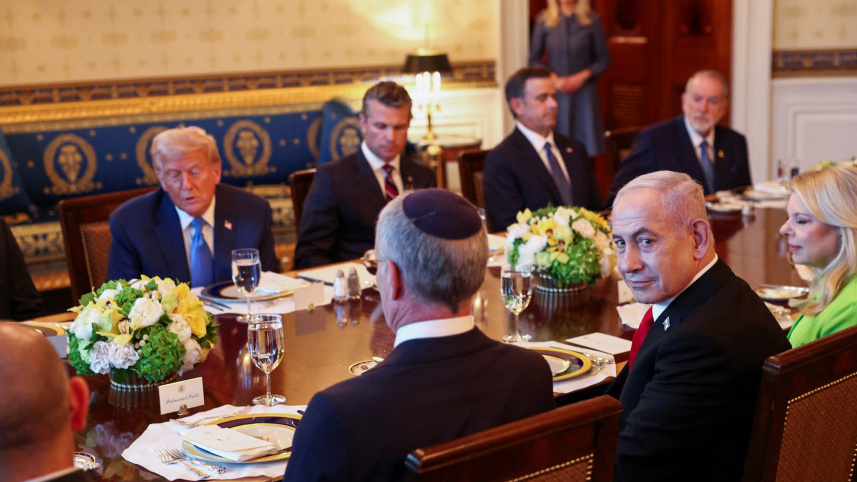
US President Donald Trump and Israeli Prime Minister Benjamin Netanyahu expected Iran to crumble when they launched the surprise attack on February 28 while negotiations were going on, killing the latter’s supreme leader and several others. The Israeli PM reportedly told the US president that, with the decapitation of its leadership, Iran would collapse and a US-friendly and Israel-compliant regime would take over.
But Iran surprised its attackers and gained the respect of the world through its resilience. Yes, it attacked several Gulf neighbours, but this was limited to US military installations hosted by them, and some energy infrastructure after the states in question continued to allow US-Israeli attacks from their territories. The people of Iran deserve our commendation for proving that, however militarily powerful a country or camp may be, without moral and ethical justification for its actions, the victim country can resist, survive, and even retaliate. This adds an interesting story for any society.

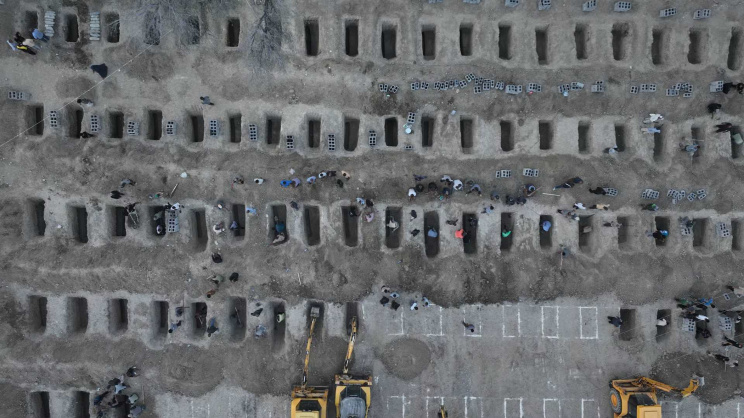
What was stopped through the recently agreed two-week ceasefire was not so much a war as it was madness. Madness that seemingly brought the world to the brink of a nuclear catastrophe that could lead to World War III. The people of countries that have nothing to do with the conflict had to suffer immensely. We, in Bangladesh, have had our economic activities severely disrupted, with a World Bank report released on Wednesday predicting a slowdown in our GDP growth, 12 lakh people remaining below the poverty line who were supposed to have risen above it, 600,000 jobs being lost, and public debt exceeding 45 percent of GDP by FY2028—all because of this madness.
“The Middle East conflict is likely to materially affect Bangladesh’s economy, compounding existing vulnerabilities,” the World Bank said in its report, adding that higher import costs, weaker exports, and falling remittances are expected to strain the current account balance, while rising energy prices and pressure on the exchange rate could intensify already elevated inflation.
Did Bangladesh and the many other countries in similarly economically vulnerable situations deserve this? Did even the developed countries deserve to come so close to a nuclear conflict?
The war that we saw was an instance of a superpower being unduly influenced by a blindly ambitious, expansionist power. The former being led by a man who follows instincts, not facts, logic, experience, or rationale, and the latter by a man who dreams of expanding his country by occupying others, even if it jeopardises its future security.
Pakistan seems to have succeeded in gaining the trust of both sides and is set to host the negotiations in Islamabad. As announced, the discussion is scheduled to start on Friday or Saturday. We sincerely hope that the negotiations will succeed and normalcy will return to the region and the world. But of course, Israel will try to disrupt it. Early signs are already visible.
Unfortunately, the US today appears to have become a believer in an international order that is based on raw power and physical dominance instead of a law-based international system. The kidnapping of the Venezuelan president, the open announcements to take over Greenland, and threats to “run” Cuba seem to have set the stage for the US president to think that the world is his “plaything” and that he can dictate it to run as he wishes.
On April 7, before the expiry of his arbitrary deadline to launch massive strikes against Iranian energy and transportation infrastructure, he declared, “A whole civilisation will die tonight.” How do you kill a civilisation without killing all its members? Was President Trump then planning to kill every Iranian man, woman, and child? This is only possible with the use of a nuclear bomb. Earlier, when he threatened to send Iran “back to the Stone Age,” he seemed to suggest that he would bomb the country so intensely that every infrastructure of modern life—houses, schools, hospitals, roads, water supply, food sources, and implements of ordinary livelihood—would be destroyed. All this is indicative of a deep-seated hatred for the people of Iran.
There is one argument of the Trump administration that merits some consideration: preventing Iran from possessing nuclear weapons. But attacking Iran when the US’s own top counterterrorism official, Joe Kent, publicly stated while resigning in mid-March that Iran posed “no imminent threat” to the United States creates Iran’s own justification for developing such a deterrent. Today, the US does not utter a single word about North Korea while its ally South Korea is living in constant fear of its northern neighbour simply because it possesses a nuclear bomb.
We should recall here how a treaty guaranteeing that Iran does not develop a nuclear bomb was signed in 2015 in Vienna between Iran and the US, the UK, France, Germany, Russia, and China called the Joint Comprehensive Plan of Action (JCPOA). The core idea was to limit Iran’s nuclear programme in exchange for lifting economic sanctions. The main goal was to stop Iran from building a nuclear bomb. Iran agreed to limiting uranium enrichment to 3.67 percent (far below weapons-grade levels of 90 percent), reduce its stockpile by about 98 percent, cut nuclear infrastructure, and allow strict inspections by the International Atomic Energy Agency (IAEA). This agreement was termed by experts as one of the strongest inspection regimes ever agreed to. In return, Iran was to receive sanctions relief and economic integration.
The JCPOA is considered one of the most important modern diplomatic efforts to prevent nuclear proliferation. Yet, years of collective efforts of all the permanent members of the UN Security Council—with the UK, France, and Germany being US allies and Nato members, who themselves do not want Iran to have a nuclear weapon—amounted to little. In 2018, when Trump was elected president, he withdrew from it, citing that the provisions were not tight enough and that Iran could produce a nuclear bomb in, say, 10 or 15 years, and that it did not include Iran’s missile capabilities. These reasons were Israel’s, and not of the US, the former being always thoroughly opposed to any peaceful deal and always wanting a relationship of conflict with Iran so that someday the US would act on Israel’s bidding. The fact that it was signed during Barack Obama’s tenure was also a factor behind Trump’s decision to scrap it. So, the US reimposed sanctions. Iran gradually moved away from compliance. This totally coincided with the Israeli position.
The Trump administration could easily have insisted on renegotiating with Iran instead of withdrawing from the treaty. But that’s exactly what Israel didn’t want. Thus, an important opportunity for a peaceful settlement was lost.
From then on, manipulated by Israel, there was a steep deterioration of relations with Iran and closer collaboration between Israel and the US. Between 2018 and 2019, the US put severe economic pressure on Iran, aiming to cripple its economy. From 2019 to 2021, the US indulged in indirect conflict, bringing both sides close to open conflict. Between 2021 and 2025, trust totally collapsed. On June 22, 2025, the US bombed Iran’s nuclear sites in Fordow, Natanz, and Isfahan. This was the moment that the US directly joined the Israeli military confrontation with Iran, saying it had “obliterated” Iran’s nuclear capabilities. This transformed US pressure and proxy actions into direct confrontation.
The real reason for all this, one can say with the benefit of hindsight, was that Israel never wanted any peaceful process to succeed. That way, it could always persuade the US towards military action.
In a very revealing report published on April 7 titled “How Trump Took the US to War with Iran,” The New York Times shows how, during a meeting at the White House on February 11, Israeli Prime Minister Benjamin Netanyahu persuaded President Trump to attack Iran, building a scenario that the CIA director present termed “farcical” and Secretary of State Marco Rubio called “bullshit.” Though many of Trump’s other team members were not persuaded by the Israeli PM’s narrative, they did not oppose or speak against attacking Iran.
The same report further states that the Israeli case was that, at the start, the Iranian Supreme Leader Ayatollah Khamenei would be killed along with some other senior leaders, which would lead to a mass uprising bringing about regime change and a return of Reza Pahlavi, the exiled son of Iran’s last shah, who would lead a post-theocratic Iran. In the meantime, US and Israeli forces would destroy Iranian military capabilities. Netanyahu and his team thus portrayed a scenario pointing to near-certain victory. Trump, reportedly, did not immediately agree but appeared far more persuaded than others present. On February 28, the sudden attack was launched, designed as a “decapitation strike” targeting Iran’s top leadership and command structure, killing Ali Khamenei and several others. The suggestion was for a full-scale war.
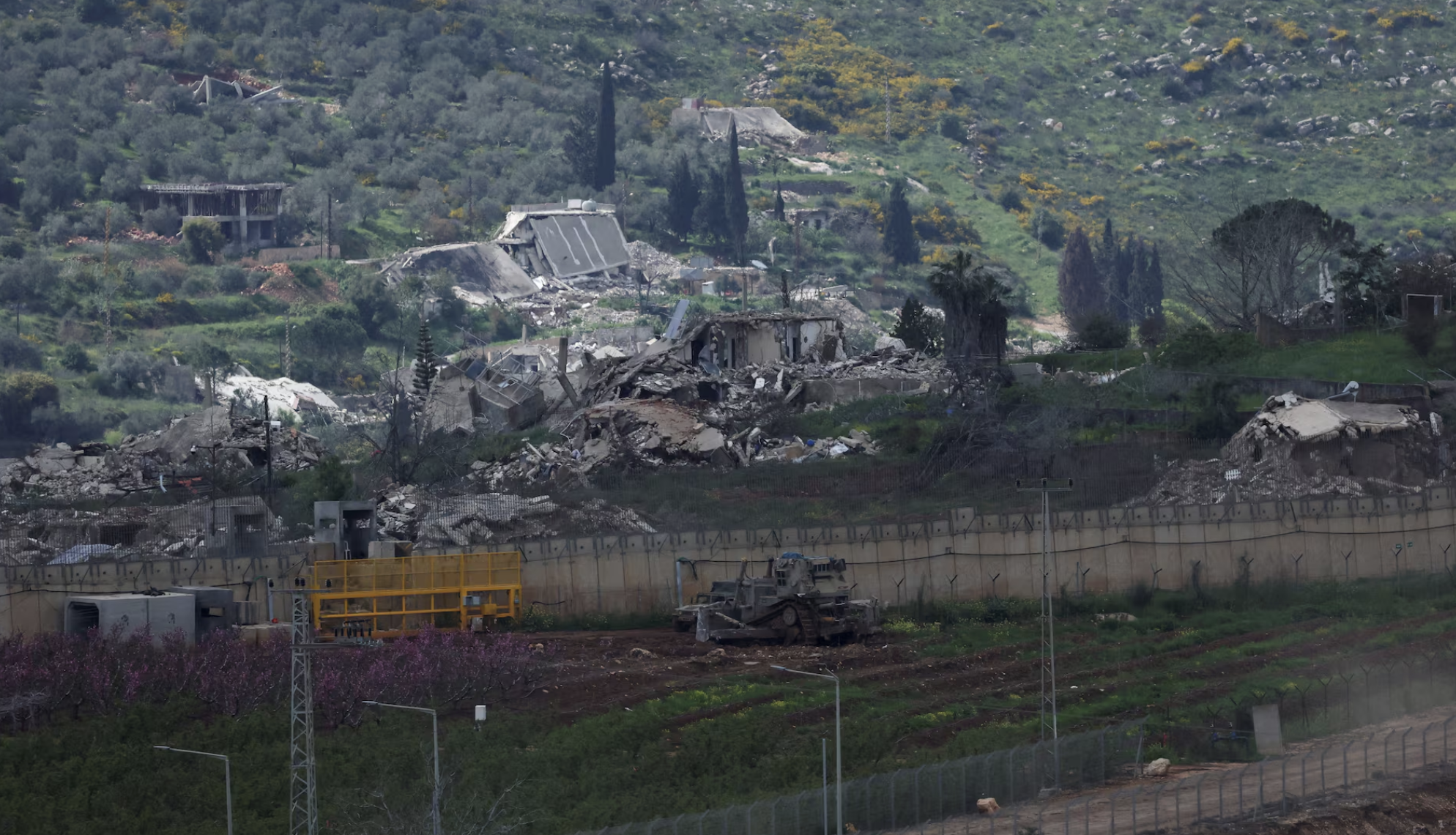
The attack was launched when negotiations on nuclear issues were ongoing and reportedly making progress, which made it shocking and inexplicable to the rest of the world. Within the first 12 hours, the US and Israel carried out 900 air strikes. While the world was focused on the US and Israel attacking Iran, Israel used the distraction to pounce on Lebanon and has been relentlessly bombing it since, declaring that the present stoppage of war does not apply to its savagery in that small and vulnerable country.
 For all latest news, follow The Daily Star's Google News channel.
 How far President Trump will allow Netanyahu to dominate the current negotiations, and how long he will allow Israel to use the US as a “pawn” for its own ambitions, will play a significant role in the success or failure of the current talks. The new reality today is that the world is a different place from when President Trump started the war. Whether or not he will be able to accept that change, and how far Israel will allow him to do so, will determine the immediate future.
We came very close to a possible nuclear confrontation. We must prevent it from happening in the future at all costs.
Mahfuz Anam is editor and publisher of The Daily Star.
Views expressed in this article are the author's own.
Follow The Daily Star Opinion on Facebook for the latest opinions, commentaries, and analyses by experts and professionals. To contribute your article or letter to The Daily Star Opinion, see our guidelines for submission.
Comments