Social media ban for young users: What would it look like in the context of Bangladesh?
In an unprecedented move, the Australian government passed a new law. It was an outright ban on social media for minors under the age of 16. It all started back in 2024 from a call to action by the wife of South Australian Premier Peter Malinauskas, who, after reading the book The Anxious Generation by Jonathan Haidt, urged her husband to take action. The book itself argues that smartphones have directly led to the deterioration of teenage mental health due to the various harms associated with them.
In response, social media platforms are offering a number of options to verify users’ ages. These include estimating age based on a photo or video. Additionally, users are also given the choice to use an ID.

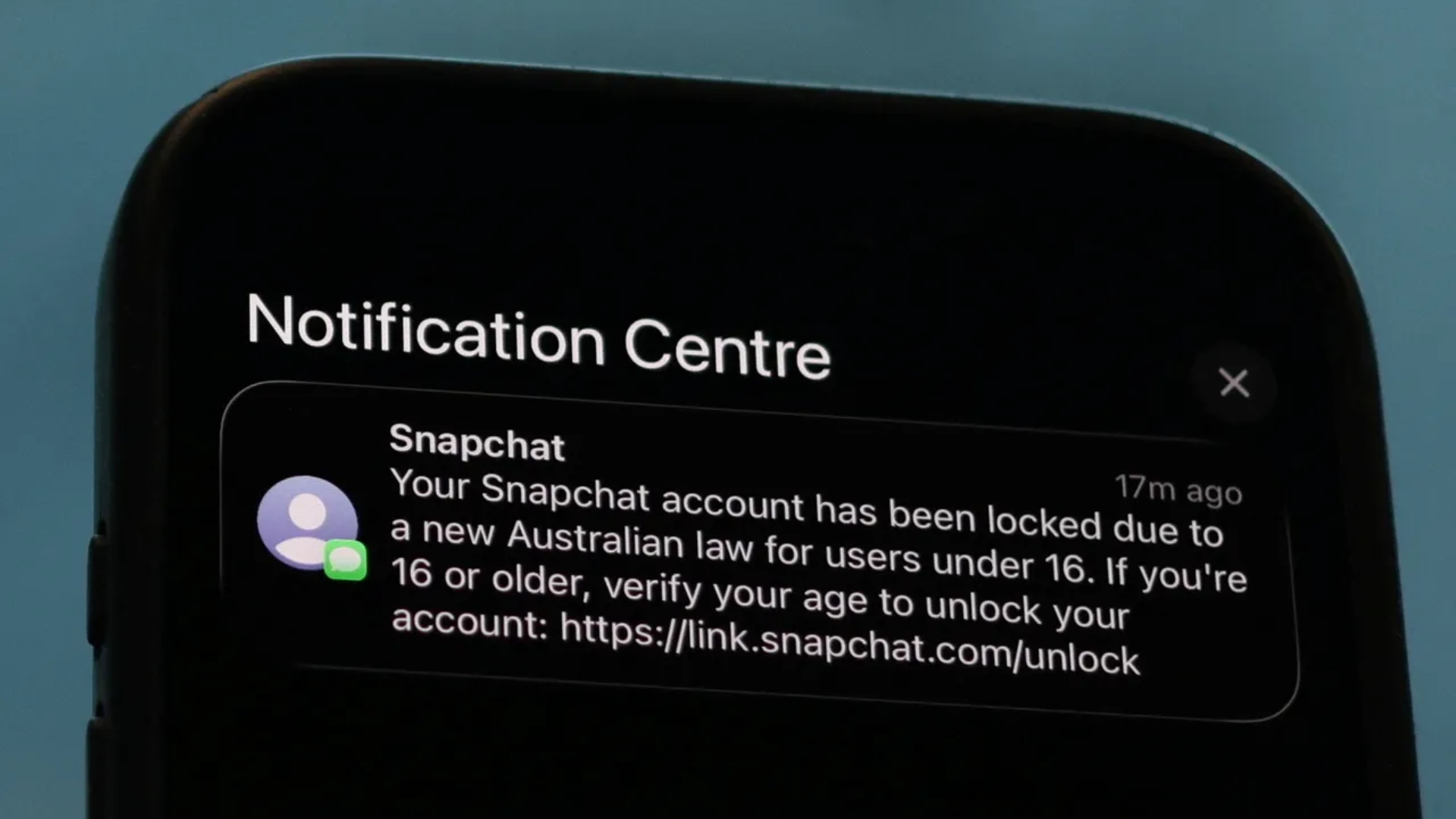
The catch for tech companies is that if they allow under-16s to remain on their platforms, they will be penalised, not the violators themselves. According to CNBC Australia, many children in the country are now seeking alternative avenues to spend their free time after the ban, while others are using alternative apps not covered by the ban or are attempting to bypass the restriction using tools such as VPNs.
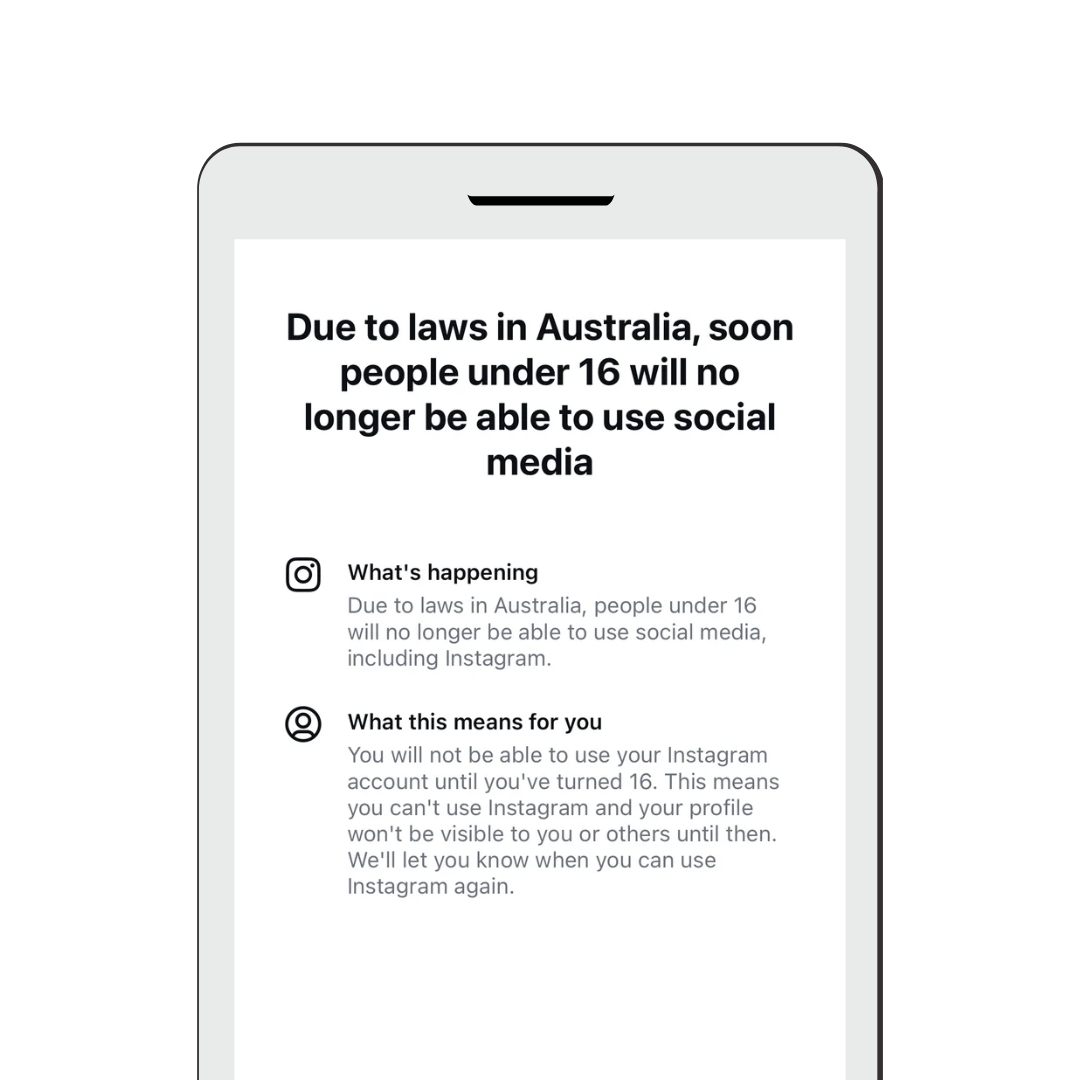
This Australian episode has sparked a global debate on the detriments of social media use by children and teens. Many other countries have followed suit, including France and Indonesia. Elsewhere, the prospect has gained significant momentum with a social media ban for under-16s being backed by the House of Lords in the UK. Similarly, the Indian state of Karnataka has also passed legislation banning social media for users under the age of 16, though the date of enforcement remains unknown.
Thus, we may ask: What would a similar ban look like in the context of Bangladesh?
After being passed into law, such a ban will need strong enforcement and compliance from technological companies. One possible scenario of how the regulation can be rolled out will involve the Bangladesh Telecommunication Regulatory Commission, which will need to request companies to enforce this ban themselves. Similar to the Australian ban, the ban may be executed using images and videos, national IDs such as a birth certificate, or a method known as “age inferencing”, which analyses online interactions to figure out a person’s age.
Meem Arafat Manab, a researcher on tech policy, argues that enforcement may be a can of worms. He says enforcing a ban will require monitoring, which could result in excessive monitoring of online activity and raise concerns about data privacy that may prove to be unpopular with the public. He remarks that “monitoring chats has opposition from a wide range of groups and is also very complex; thus, it is not practical in a country like Bangladesh”.
Manab also contends that using IDs may be ineffective because “the government does not have the necessary leverage over social media apps to force them to use IDs to verify age, as the social media companies aren’t local”.
The case for a ban
A ban’s main purpose would be to counter the detrimental effects of smartphone use, such as excessive screen time, safety, and mental health concerns for children.
Alfred D’Silva, a high school teacher at South Breeze School, says that social media platforms have grown into open and unrestricted avenues for all sorts of behaviour and activities that are detrimental to the safety and well-being of our children.
Besides being vulnerable to scammers and predators, children are also prone to being bullied online. Sanjana Afrin, a student at Viqarunnisa Noon School and College, points out, “It is a very common incident in our country that many predators coax children through social media.” She states that young kids then find themselves in troubling situations where they are taken advantage of. “I think enforcing this law (ban) could help solve such incidents and protect children.”
Another concern of unfettered social media access is excessive screen time. What is particularly concerning is that applications are designed with personalised algorithms to capture attention as much as possible. As such, users – regardless of their age – are vulnerable to spending long stretches of time on their devices. For young people, this can compound to poor academic performance, lack of sleep, and reduced social interaction.
According to a 2025 study published in The Journal of the American Medical Association, addictive usage of social media is linked to poor mental health and even suicidal ideation.
Besides helping school children, a main target of the ban may also include young children like toddlers and kindergartners. It is not uncommon for young children to be handed devices at a very early age by their parents in an attempt to keep them occupied. Though this practice has become quite normalised, it can have a negative effect on their speech development and even lead to problems of dependency in the future. Given just how many issues are associated with the use of social media, the case for a ban is by no means unfounded.
A ban could potentially diminish the likelihood of cyberbullying, online exploitation, and exposure to harmful content. Several interviewees emphasised the real risks faced by young children, including blackmail, grooming, and harassment. Teachers also noted signs of dependency and shortened attention spans due to constant digital engagement.
Aklima Akter Sumi, a teacher at Milestone School and College and a mother of two, states, “If a ban can be implemented in Bangladesh, then it will be a huge step in the right direction, as children are leaning more on the negative side of social media than the positive side.”
From this perspective, restricting access may help protect mental health and reduce early exposure to harmful content.
Mahira *, a university student, shares an anecdote about a relative, “Children are being highly affected due to these platforms. The closest example I know is of my relative, who is four years old. We are aware that YouTube Kids exists, which is great, but kids know where the general YouTube is. She always accesses it and watches videos that I don’t quite understand, as well as listens to songs that are not appropriate for her age.”
 For all latest news, follow The Daily Star's Google News channel.
 The concerns
However, respondents also emphasise the educational dimension of social media. Many students rely on tutorials, lectures, and discussion spaces for academic support. A blanket ban could therefore disadvantage motivated learners who use digital platforms responsibly.
Jannatul Ferdous, who tutors students from class six to college, further highlights that there are children who, out of curiosity, may venture into territory on the internet that is less supervised and thus poses more risks. Owing to their familiarity with technology, she alleges that they may be inclined to bypass restrictions through the use of VPNs, which is why Jannat believes that a ban will bring good results.
This raises yet another point of contention: an outright ban may not fully take children off smartphones due to alternatives and VPNs. Manab argues that to effectively mitigate smartphone addiction, children need to be offered alternative hobbies. He says, “There is a lack of playgrounds and parks in Dhaka. Many children don’t have the habit of reading or watching movies. Children need something to do, and so, they turn to social media. We need to give them more options.”
He adds that due to the competitive nature of the education system in Bangladesh, many teenagers may seek social media as a distraction and a form of entertainment to cope with onerous academic pressure.
Other policies or alterations
Alfred believes that apart from a ban, schools should provide “mandatory social media literacy programmes in educational institutions in the form of specialised workshops that would train youngsters on the responsible use of social media platforms”. Additionally, they should also be educated on diverse topics like cybercrime, cyberbullying, digital privacy, source verification for information and misinformation, and AI literacy. This is an imperative that could mitigate many of the concerns that are associated with the use of social media.
A direct transplantation of a foreign social media restriction model into Bangladesh would likely face structural and social barriers. Policy emphasis should shift from prohibition alone to strengthening digital literacy. Integrating proper and supervised education into school curricula could help children understand online risks, privacy concerns, cyberbullying, and responsible engagement.
Manab also believes that to protect children from the perils of social media usage, we need a strong social support system to support minors. He contends that a ban itself will not solve the problem wholly. Instead, he recommends that we have a strong social support system that can help teenagers tackle mental health issues.
He states, “In Bangladesh, we don’t have many social workers and social work is trivialised. Mental health problems are seen as weaknesses, and people are expected not to express them openly.”
A social media restriction policy for minors in Bangladesh could reduce certain risks, but its success would depend on how it is designed and implemented. The perspectives taken suggest that while protection is necessary, long-term effectiveness will rely less on bans and more on education, cooperation, and safe digital alternatives. In this sense, the challenge is not simply limiting children’s access to technology but ensuring that they learn to navigate around it safely and responsibly.
References
- CNBC (2026). Australia banned social media for under 16s a month ago — here’s how it’s going
- JAMA (2025). Addictive Screen Use Trajectories and Suicidal Behaviors, Suicidal Ideation, and Mental Health in US Youths
- The Daily Star (2025). From ‘mama’ to mute: The silent effect of screens on early speech development
*Name has been changed upon request
Events / Students from Australian International School pay a visit to The Daily Star

Interviews / Bangladesh's young mathematicians shine at WMI 2026

Education / The A level grading system explained

TV Series / The Wonderfools: Messy at first, but surprisingly worth the ride
Reader Submission / How society’s obsession with success harms young people’s mental health
Reader Submission / Smiles that changed my perspective

Movies / Nolan’s reframing of The Odyssey

Reader Submission / The piper’s solace

Movies / Backrooms is a liminal nightmare, until it isn’t