From 'wasteland' to Bhasanchar: Bangladesh’s ongoing experiment in governing uncertain land
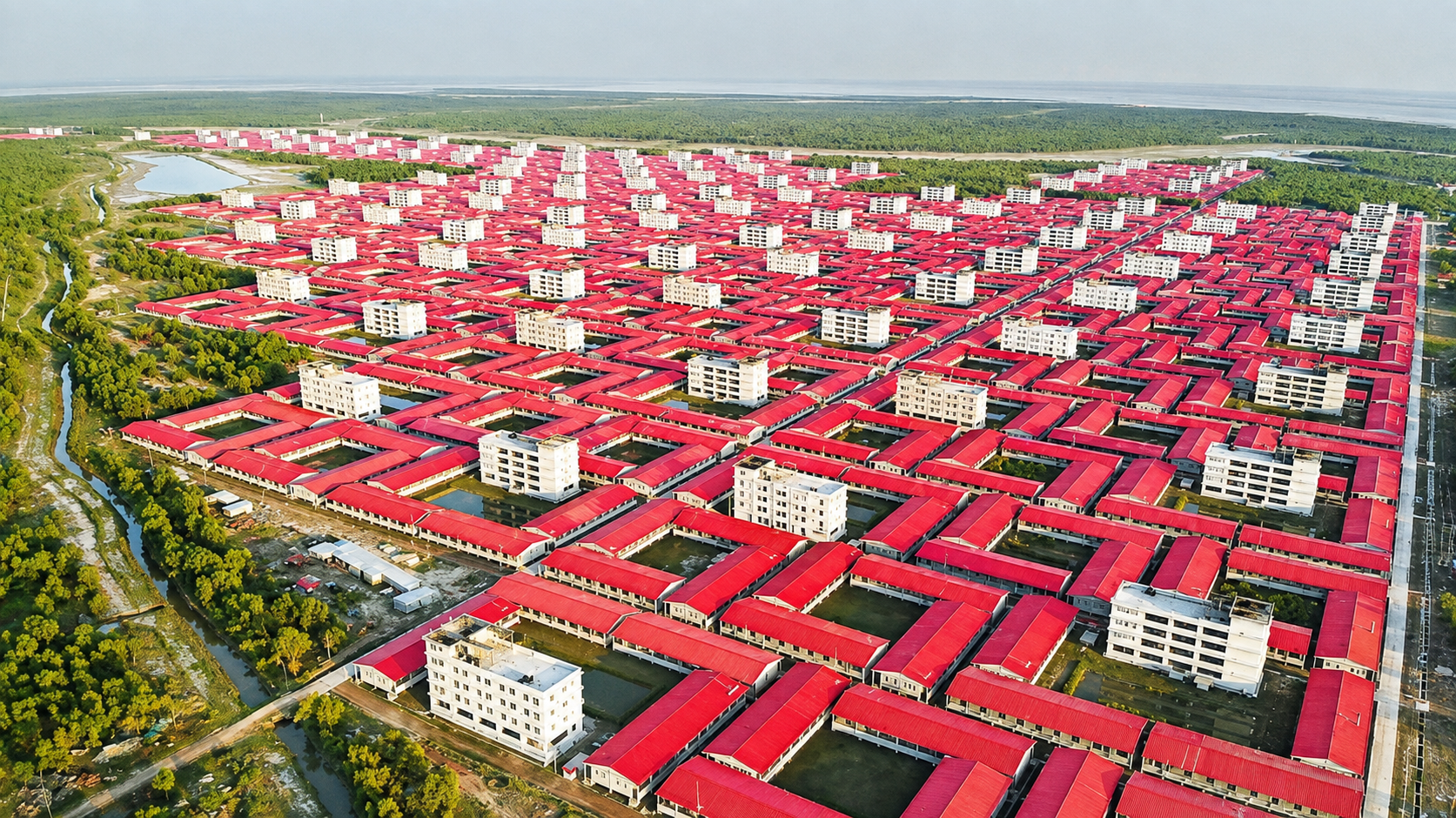
Approximately six kilometres off Sandwip, rising barely 17 metres above the tide, sits a roughly 5,260-hectare island that did not exist when many of today’s Rohingya refugees in Bangladesh were born. Bhasanchar ('floating island') emerged around 2006 from the silt of the Meghna estuary. Within two decades, under the supervision of the Bangladesh Navy during the Awami League (AL)–led government, it had been fitted out with 120 cyclone shelters, two hospitals, a helipad, a lighthouse, mosques, police stations, and more than 3,000 barracks-style housing blocks, at a cost of over $300 million. Since 2021, it has housed roughly 33,000–35,000 Rohingya people relocated from the overcrowded camps of Cox’s Bazar.
Since its inception, most commentary on Bhasanchar has treated it as one of three things: first, a humanitarian relief valve for an overcrowded refugee settlement and an achievement by a non-signatory host offering more space and mobility amid a protracted displacement crisis; second, an opportunistic attempt by the former AL government to monetise the Rohingya situation for international acclaim; or, third, in the reading favoured by international scholars, a Global South replica of the offshore detention practices that Australia and the European Union have used to keep asylum seekers at arm’s length. States—including Global South countries such as Kenya, Pakistan, and Turkey—have been known to use refugees as political leverage, and Bangladesh is no exception: it, too, has considered the geopolitical and financial gains that might be made from hosting the Rohingya. But reading Bhasanchar simply as a humanitarian valve, or as a copy of Nauru or Greece’s island camps, misses something. To understand it, one needs to look inward, to Bengal’s own history. This reading offers a different interpretation: Bhasanchar is the newest chapter in a longer history of colonial Bengal and its aftermath, in which unstable land and unwanted populations have, for two and a half centuries, been turned into the raw material used to consolidate and extend first colonial power and later the contemporary state’s own authority.
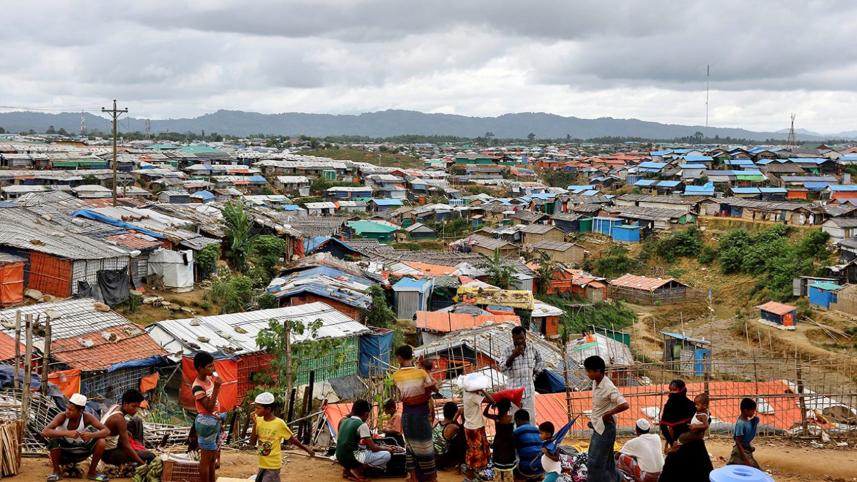
Tracing a line from British-era land law through the Sundarbans and the charlands of the Jamuna to Bhasanchar, one sees that Bengal’s—and later Bangladesh’s—rulers, colonial and postcolonial alike, have repeatedly discovered that ecologically unstable land and precarious populations are not obstacles to governing. They are opportunities. Every embankment that breaches, every char that appears and vanishes with the flood, and every resettlement scheme that only partly works generates records, expertise, precedent, and reputation, allowing the state to use those tools again, elsewhere, on the next uncertain frontier.
Legacy of a colonial practice
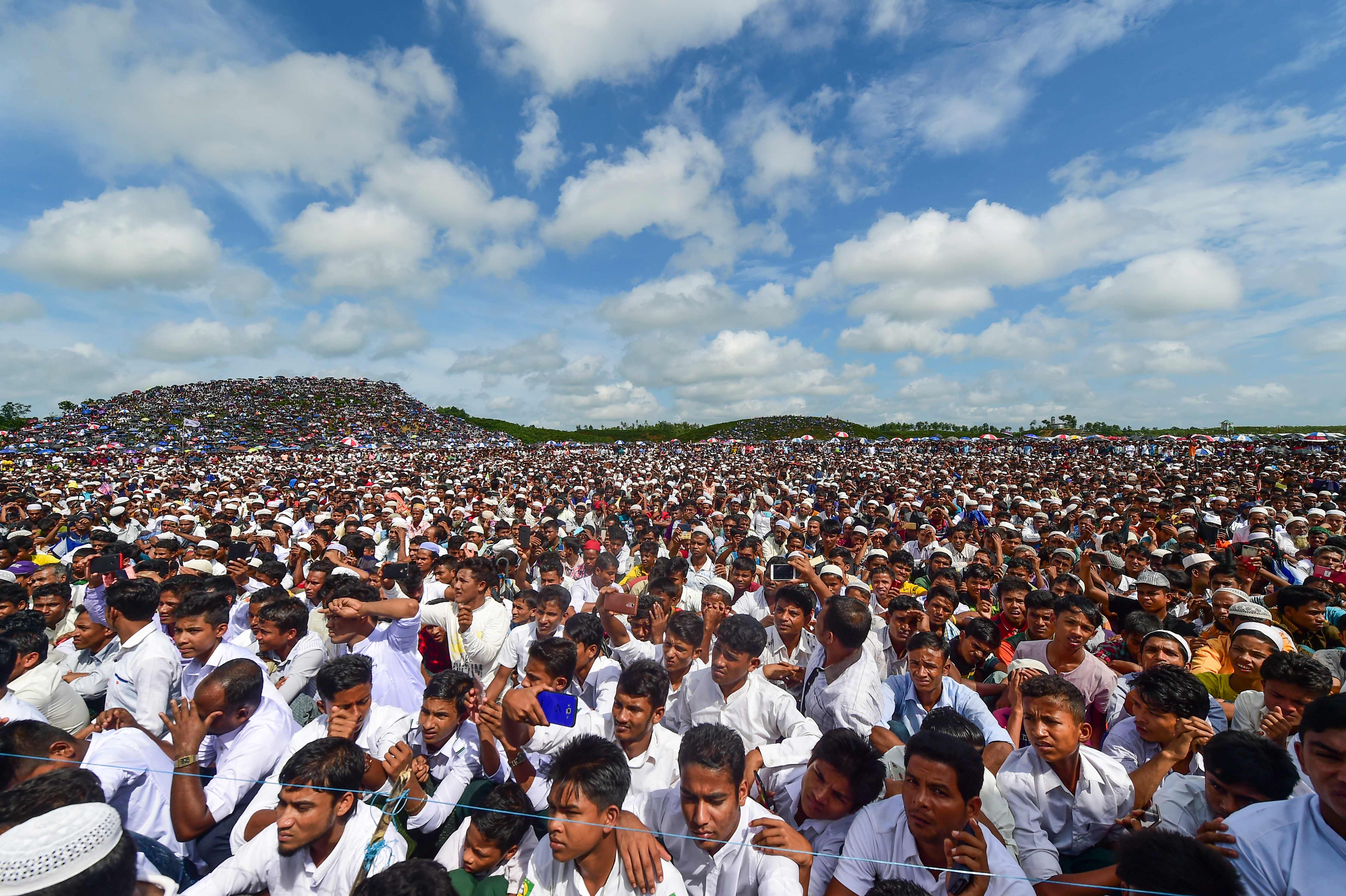
The story of Bhasanchar does not begin, then, in 2006; arguably, it begins in 1793. Nor does it begin with an island, but with the paperwork of the Bengal Permanent Settlement. British administrators, steeped in a Lockean idea that only cultivated land counted as 'improved', began classifying vast tracts of the Bengal delta—forests, seasonal grazing commons, and riverine floodplains—as 'wasteland'. Scholars such as Gidwani, Whitehead, Lahiri-Dutt, and Samanta have persuasively argued that these actions by British colonial authorities were never really about classifying barren soil. Land that was communally farmed, seasonally flooded, or fished rather than ploughed could be recoded, on paper, as underused and therefore available for the state to claim, tax, or hand over to someone who would 'improve' it. By some estimates, British authorities classified close to a third of Bengal’s territory in this manner. The 'wasteland' label—also used in other colonial contexts, including the seizure of Indigenous land in the Americas—did double duty. It converted the shifting deltaic ecology with which the British were unfamiliar—rivers that changed course, chars that rose and sank, and mangrove forests that resisted enclosure—into something a colonial bureaucracy could name and therefore govern. At the same time, it converted the population living on that land, however long they had farmed or fished it, into squatters on supposedly 'empty' territory: replaceable, expendable, and governable, rather than people who should be consulted and whose lives were rooted in the land.
Bhasanchar is the newest chapter in a longer history of colonial Bengal and its aftermath, in which unstable land and unwanted populations have, for two and a half centuries, been turned into the raw material used to consolidate and extend first colonial power and later the contemporary state’s own authority.
Such colonial logic, however, did not end with the collapse of British rule. The Sundarbans offer an illustrative example. After Partition, under West Pakistan, and even after Bangladesh’s independence, the Sundarbans continued to be governed through the same logic, layered beneath a succession of new classifications—forest reserve, wildlife sanctuary, Ramsar wetland, and United Nations Educational, Scientific and Cultural Organization (UNESCO) World Heritage Site—each adding fresh authority to the old colonial forestry department without disturbing the underlying architecture of control.
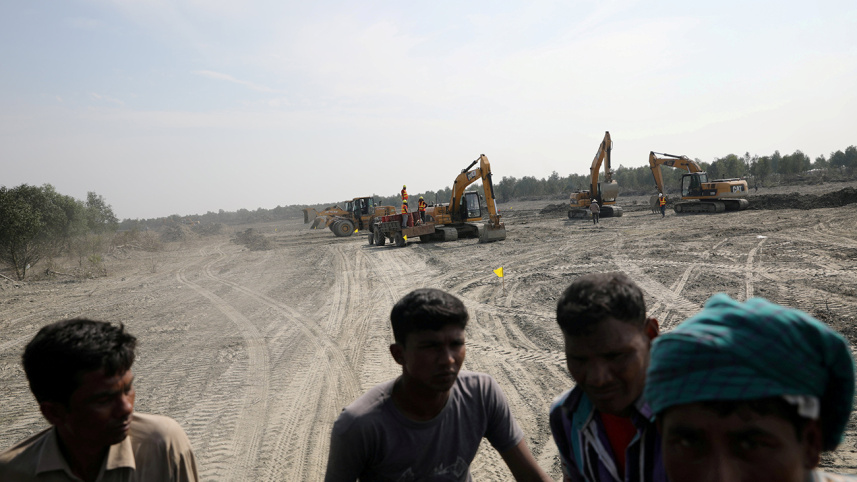
Charlands carried the same logic at a faster tempo. Because these river islands can vanish as quickly as they appear, the state of Bangladesh classified newly emerged land as 'khas land' the moment it broke the surface, allowing it to allocate and resettle almost as fast as the rivers could make new ground. Bangladesh also used these shifting islands as testing grounds in their own right—the Char Livelihoods Programme piloted asset transfers and savings groups for households the formal banking system had never reached, while an eco-engineering project at Kutubdia Char, modelled on Dutch coastal defences, tried to grow land back through sediment traps. Every trial, successful or not, fed into the same resettlement machinery—from Gucchagram and Adarsha Gram projects to, eventually, Ashrayan—that would later be applied to Bhasanchar itself.
Bangladesh as an 'aid lab'
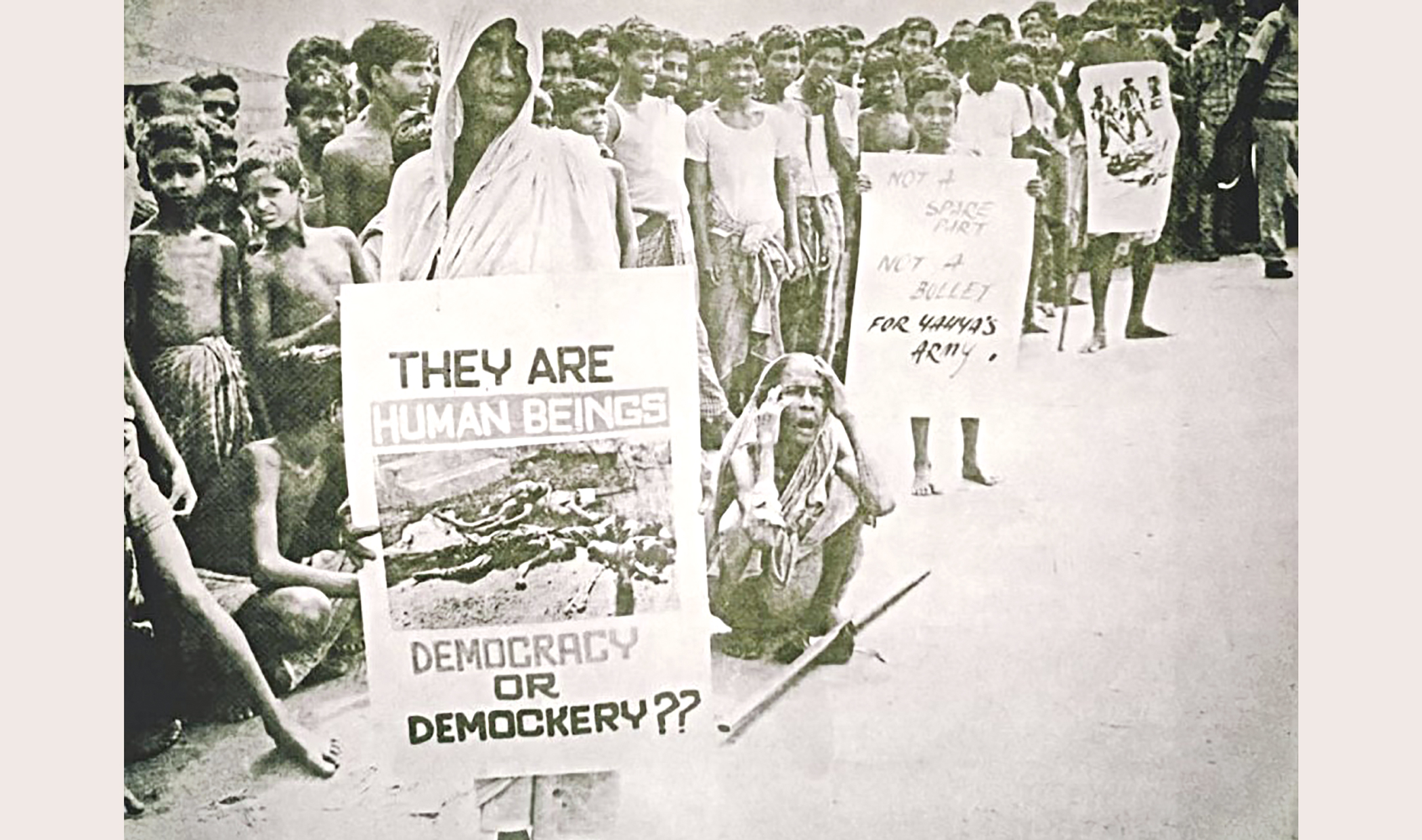
Independent Bangladesh inherited both the land and the colonial logic. Born in 1971, classified as the world’s second-poorest country, and hit within three years by a catastrophic famine, the new state became what scholar Naomi Hossain has called an 'aid lab': a place where donors, non-governmental organisations (NGOs), and government agencies tested and retested interventions in health, microfinance, and disaster response, refining them for export elsewhere. It is an identity Bangladesh has embraced in its continuing efforts to address socioeconomic precarity, health crises, gender inequalities, and climate catastrophe, while continuing to serve as a laboratory for international aid agencies. Resettlement was central to this identity from the start: after the 1970 Bhola cyclone, which may have killed half a million people, and the war and floods that followed, the state moved landless and displaced families onto khas land through a lineage of programmes that, by 2022, had rehoused more than half a million families—arguably the largest resettlement scheme in the world. This does not call the humanitarian intent of these projects into question. Yet, in effect, this lineage was also a slow-motion experiment in moving inconvenient populations onto unstable land that the state had just claimed as its own.
Bhasanchar as the logical next step
Seen against that backdrop, Bhasanchar looks less like an aberration and more like an intensification of business as usual. A char barely two decades old is designated khas land, folded into the Ashrayan programme as its third phase, engineered by British and Chinese hydraulic contractors, and built by the Bangladesh Navy into a grid of barracks, roads, and embankments that bears little resemblance to the sprawling, improvised camps of Cox’s Bazar. Where the mainland camps grew organically and chaotically, Bhasanchar is legible from the air: rows of identical housing, controlled roads, and a single administrative system that, on paper at least, presented a vision of an efficient, accommodating refuge for one of the world’s most vulnerable populations. The movement of Rohingya residents on and off the island remains tightly restricted.
Meanwhile, the Rohingya themselves occupy the same structural position that 'wasteland' populations have long held in this genealogy: present, but without any secure claim in either their host country or their homeland. Denied citizenship in Bangladesh and formal labour rights, and unable to return to a Myanmar that refuses to accept them as its citizens, they fit what scholars of racial capitalism call a 'surplus population'—not surplus in numbers, but surplus to the systems of citizenship and wage labour that would otherwise absorb them. That condition is what makes relocation to a remote island politically thinkable in the first place.
Bhasanchar is simply the most visible, most engineered version yet of a much older Bangladeshi habit: turning uncertainty itself into a resource for rule.
Beyond Bhasanchar: A story of more than an island
Across colonial and postcolonial Bengal, unstable land—mangrove forests, shifting river islands, and newly formed coastal ground—has served the same purpose: as a frontier where the state manages environmental chaos, disputed territory, and populations it finds hard to govern. The British 'wasteland' label turned complex delta ecosystems into land the state could classify and control. After independence, the same instinct resurfaced through development planning, disaster response, and climate adaptation, cementing Bangladesh’s reputation as an 'aid laboratory' that constantly tests and refines its own policies. Resettlement programmes such as Ashrayan carried this forward, tying land acquisition to the management of landless and disaster-hit populations.
Bhasanchar fits the pattern exactly. A newly formed island became a highly engineered settlement where infrastructure, law, and humanitarian language work together to make an unstable place governable. Overcrowding in Cox’s Bazar is not merely a problem being solved; it is what made this experiment possible. Rohingya refugees, denied citizenship and shut out of the labour market, are managed as a 'surplus' population, relocated onto newly claimed land as both a humanitarian and territorial fix.
This matters beyond Bangladesh. It challenges the idea that refugee policy in the Global South simply replicates trends from the North. Instead, it shows states building authority not only through diplomacy, but also by governing their own unstable frontiers—a pattern playing out from the Mekong to the Nile. Bhasanchar is not an anomaly. It is a clear window into how environment, displacement, and state power remain tied together, with roots in colonial history still shaping policy today. Since the fall of the AL government in 2024, Bhasanchar’s future, like much else in Bangladesh, has remained unsettled. But the island did not emerge from nowhere, and its underlying logic will likely outlast any single administration. From the Permanent Settlement’s 'wasteland' clauses through the Sundarbans’ shifting conservation regimes to the charlands’ endless cycles of appearance and resettlement, Bengal’s rulers have long treated unstable ground and unclaimed people as something to work with, not around. Bhasanchar is simply the most visible, most engineered version yet of a much older Bangladeshi habit: turning uncertainty itself into a resource for rule.
Tazreena Sajjad is Assistant Professor of Migration Politics in the Department of Peace, Human Rights and Cultural Relations (PHRCR) at American University’s School of International Service (SIS) in Washington, DC. A critical international relations scholar, her research examines how contemporary states govern mobility through the intertwined politics of race, humanitarianism, security, and borders.
Send your articles for Slow Reads to slowreads@thedailystar.net. Check out our submission guidelines for details.

Why Bangladesh's schools need financial autonomy
What the water knows: The unmaking of Bangladesh's haors

Who writes the history of the July Uprising?
How violence against women is normalised in Bangladesh's chars
Why Bangladesh must invest in community-led early childhood education

The moral architecture of Bangladesh’s parliament

Why Bangladesh innovates but rarely builds global companies
Beyond groundwater: Rethinking Barind's water crisis

The gods that we build: AI and the future of moral authority