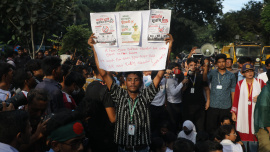
Who writes the history of the July Uprising?

Every mass uprising has two histories. One is written in the language of power; the other is preserved in the memories of the people who lived it. The first is established quickly, as states, governments, or newly empowered political actors construct a narrative that legitimises their authority. The second emerges more gradually—from eyewitness accounts, organisational records, news reports, and the lived experiences of those who occupied the streets. For that reason, the struggle that follows a popular uprising is never confined to control of the state. It is also a struggle over political memory. Those who seek to consolidate power often attempt to monopolise that memory, reducing a complex collective experience to a single official story.
Bangladesh's political history offers numerous examples of this pattern. The mass uprising of 1969, the anti-autocracy movement of 1990, and, more recently, the July Uprising were all followed by attempts to narrow the history of broad-based movements into the achievement of a single political force. Yet no popular uprising is born of the efforts of one party, one organisation, or one leader alone. Such moments emerge through the convergence of diverse political currents, sustained acts of resistance, and the participation of people from different walks of life. Like every mass movement, the anti-discrimination student movement advanced through periods of momentum and stagnation before being transformed by a series of decisive turning points. Organised political and social forces played a crucial role in giving spontaneous public anger a clearer direction, helping to shape scattered protests into a nationwide uprising.
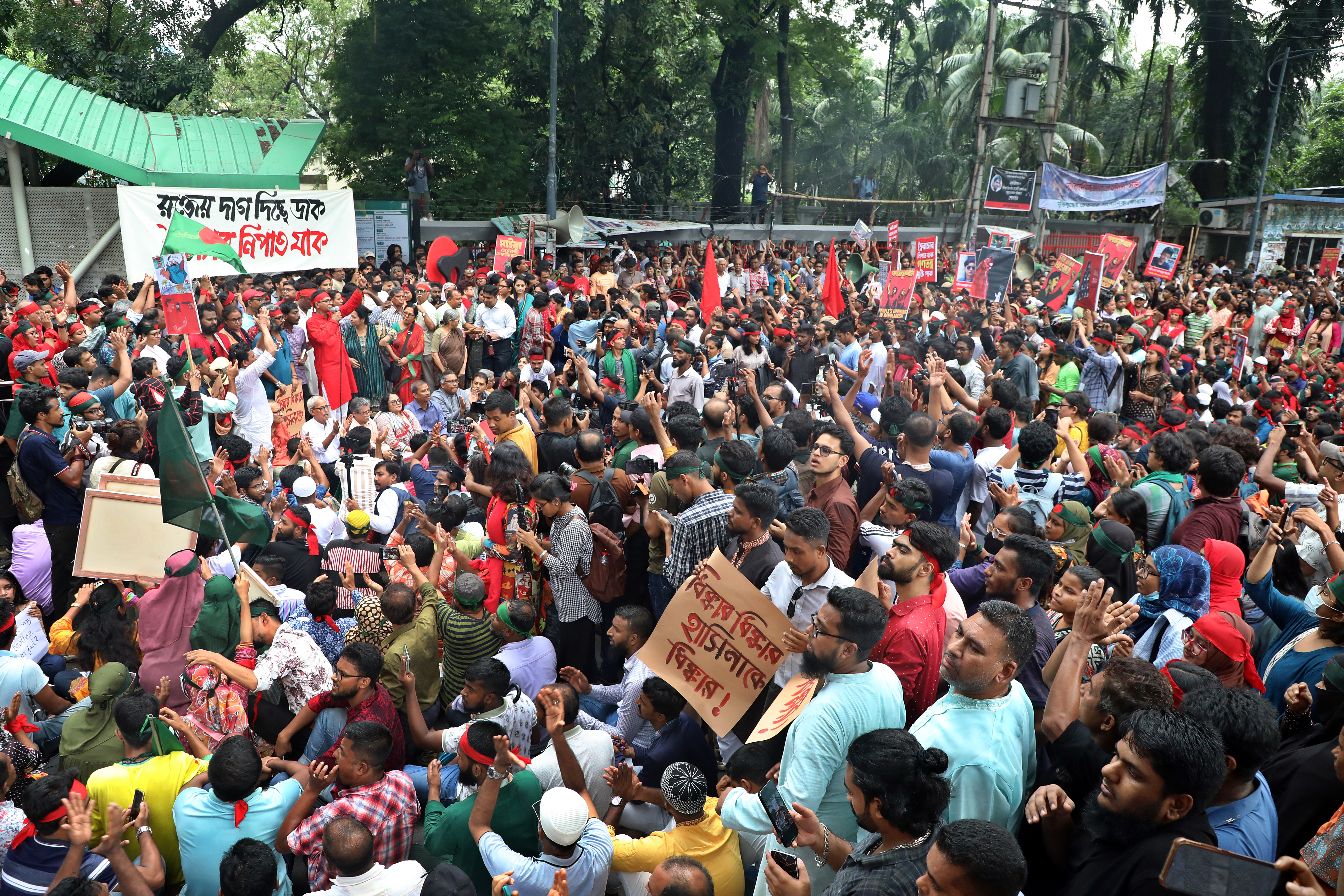
The debate over July has become particularly significant because the contest is no longer only about what happened during the uprising; it is about who gets to define its history. Recent articles and interviews have increasingly portrayed progressive and Left political forces as marginal to the events of 2024. Some have gone even further, arguing that the Left itself was responsible for the failure to build a broader anti-fascist alliance. Although political organisations should always remain open to criticism, these arguments share one common tendency: they diminish or erase the role of Left politics in the history of July.
Such claims deserve scrutiny. Historical evaluation cannot be separated from documentary evidence, contemporary records, or the actual political practices of those involved. Debates over the strengths and weaknesses of different political forces are both legitimate and necessary. But when they disregard organisational documents, press statements, field-level participation, and years of anti-authoritarian political activity, they cease to be historical analysis and become selective political narratives. The exclusion of particular actors from the history of democratic struggles has long been a characteristic strategy of the ruling class. Defending historical memory against political erasure is, therefore, itself a democratic responsibility.
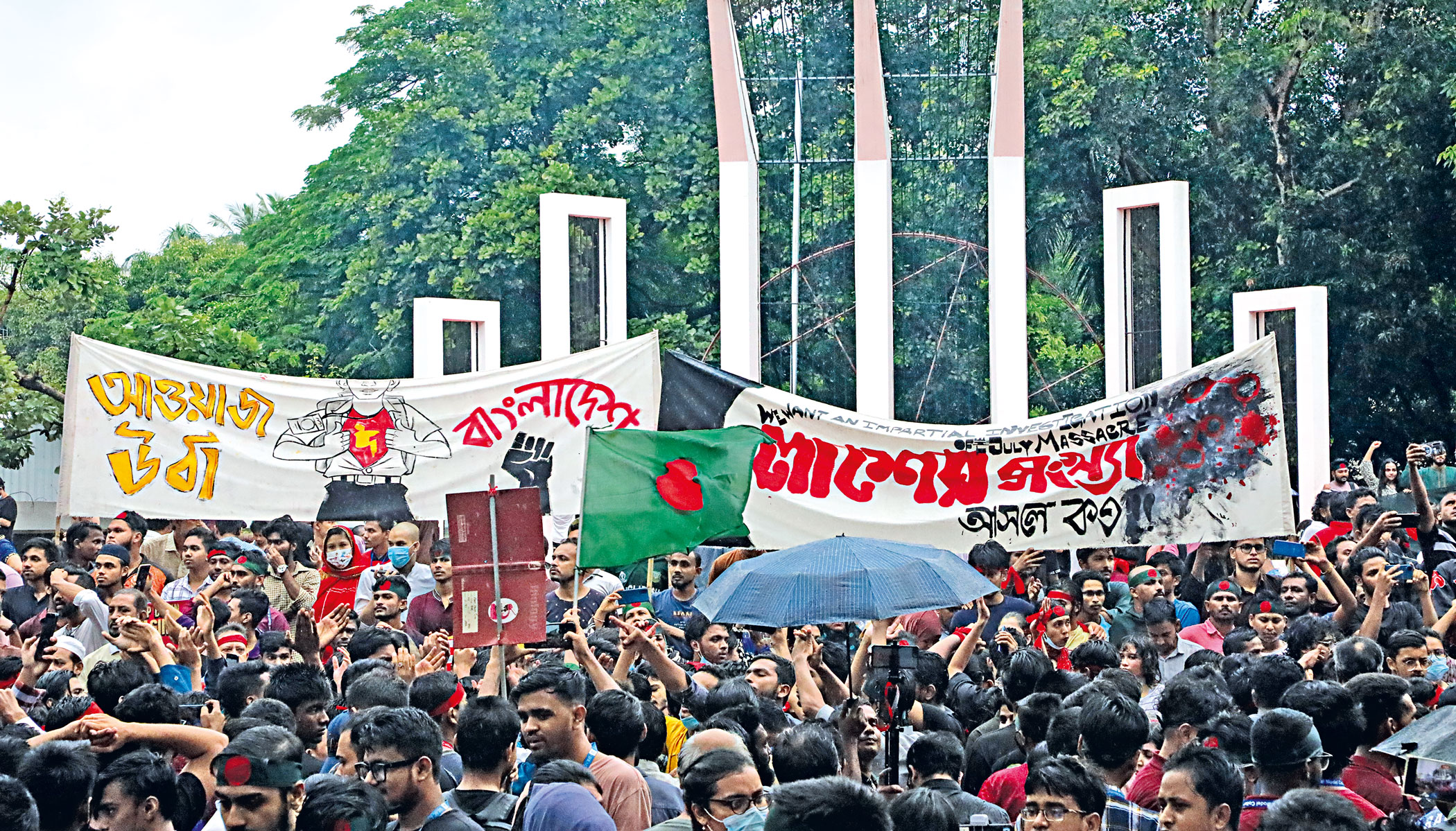
The assertion that the Left played only a negligible role in the July Uprising is difficult to reconcile with the documented history of the movement. From the earliest days of the quota reform protests, Left political parties and student organisations publicly declared their support. On 7 July 2024, the Left Democratic Alliance held a press conference demanding a rational reform of Bangladesh's quota system. The alliance argued that maintaining a thirty per cent quota for the third generation of freedom fighters no longer reflected the egalitarian ideals of the Liberation War and instead perpetuated inequality. Rather than rejecting affirmative action altogether, it proposed a quota system that would prioritise historically marginalised communities, disadvantaged regions, and underrepresented ethnic groups.
On the same day, the Democratic Student Alliance, a coalition of Left student organisations, held its own press conference at Madhur Canteen at the University of Dhaka. It similarly argued that the existing quota system should be replaced by a fairer framework based on social disadvantage rather than inherited privilege. These interventions are significant for two reasons. First, they demonstrate that the Left adopted a clear political position from the outset, rather than joining the movement only after it had gained momentum. Second, the Left sought not simply to support the movement but to broaden its political vision by connecting quota reform to wider questions of equality and democratic justice.
The strength of a mass movement is pruned until it resembles a bonsai—small enough to fit comfortably in the drawing rooms of a narrow political elite, admired as a decorative object rather than remembered as a living force that once shook the nation.
The movement soon entered a more confrontational phase. 16 July marked one of the movement's first decisive turning points, when members of the Bangladesh Chhatra League launched violent attacks on protesting students. The assault transformed the political atmosphere, shifting the movement from a campaign for administrative reform into a broader struggle against state-backed repression. In response, the Left Democratic Alliance announced nationwide protest programmes condemning the violence. Demonstrations and rallies were organised across the country, while central leaders led protest marches in Dhaka. When students later declared the Complete Shutdown programme on 18 July, Left organisations formally endorsed the call and simultaneously mobilised protests against the killings and repression carried out by the state.
As the number of casualties continued to rise and the political crisis deepened, the alliance organised nationwide mourning processions on 26 July in memory of those who had been killed and demanded the government's resignation. These were not isolated statements of solidarity. Contemporary news reports and organisational records document the continued presence of Left organisations throughout the movement.
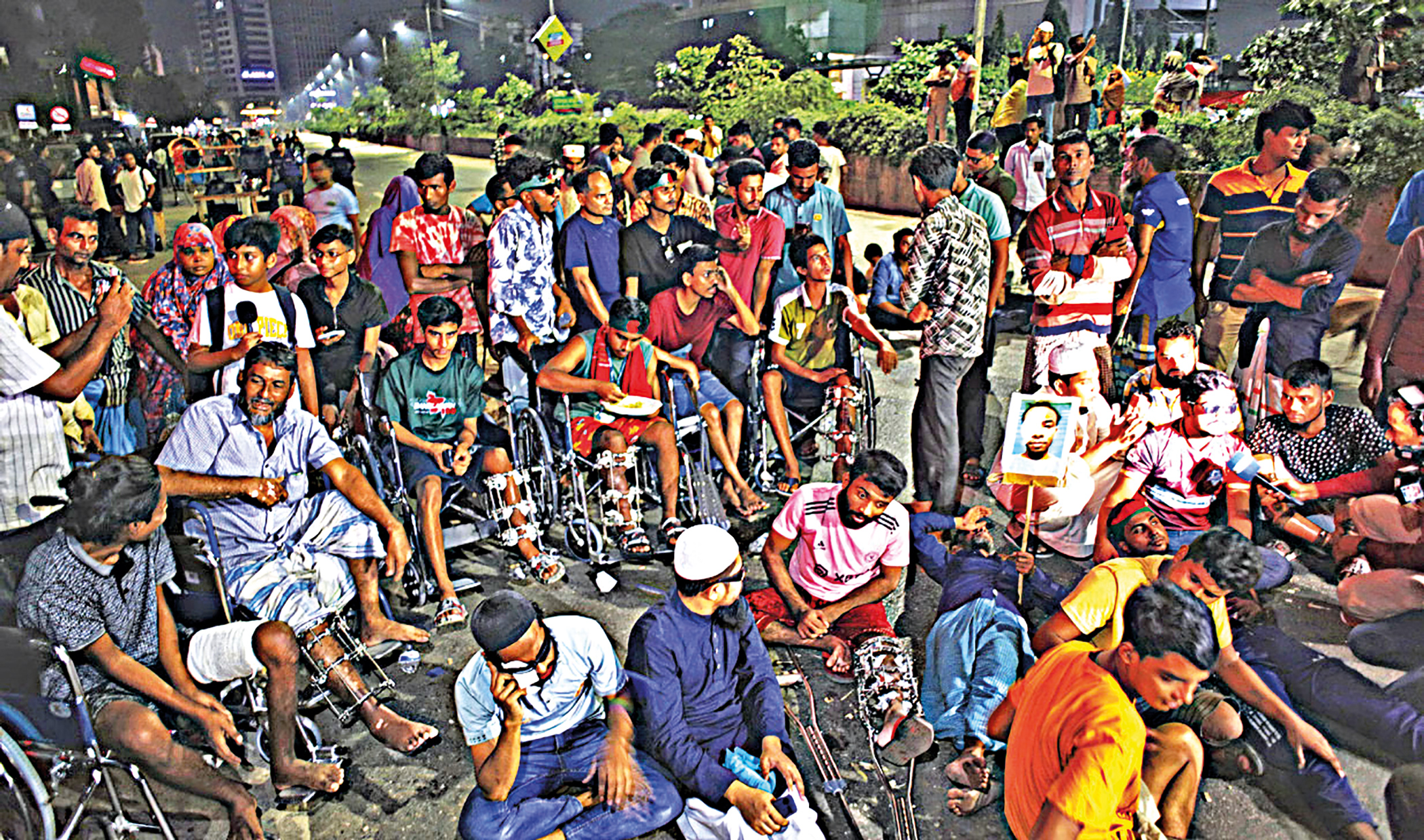
Yet the history of July cannot be written solely through press conferences or official statements. The defining question is not simply who declared support for the movement, but who continued to organise when repression intensified, campuses were emptied, curfews imposed, and political activity became increasingly dangerous. It is in those moments of crisis that the character of a political force is truly revealed—and it is precisely those moments that are now in danger of disappearing from the dominant narrative of July.
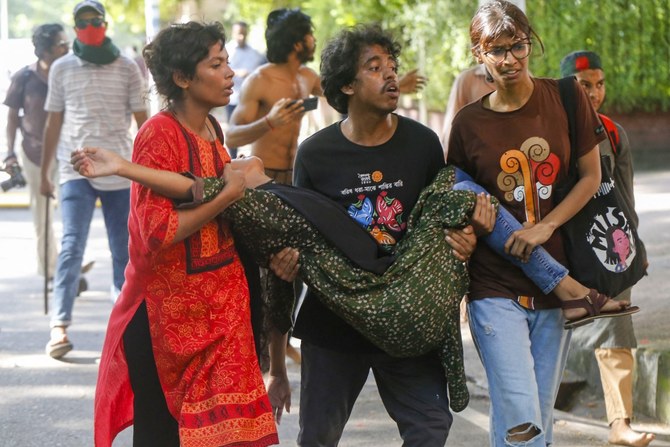
After 15 July, the movement entered precisely such a phase. Violence escalated rapidly. Even before the widely reported attacks on Dhaka University, a procession of students marching from Eden Mohila College towards the Raju Memorial Sculpture was assaulted at the college gate; among those attacked were women leaders from Left student organisations. The following day, the repression intensified further. Despite coordinated operations involving the police, the Border Guard Bangladesh (BGB), and the Bangladesh Chhatra League, leaders of the Democratic Student Alliance immediately organised a protest march from the National Press Club. Such actions were not merely symbolic. At a time when the state sought to drive the movement off the streets, they ensured that organised political resistance remained visible.
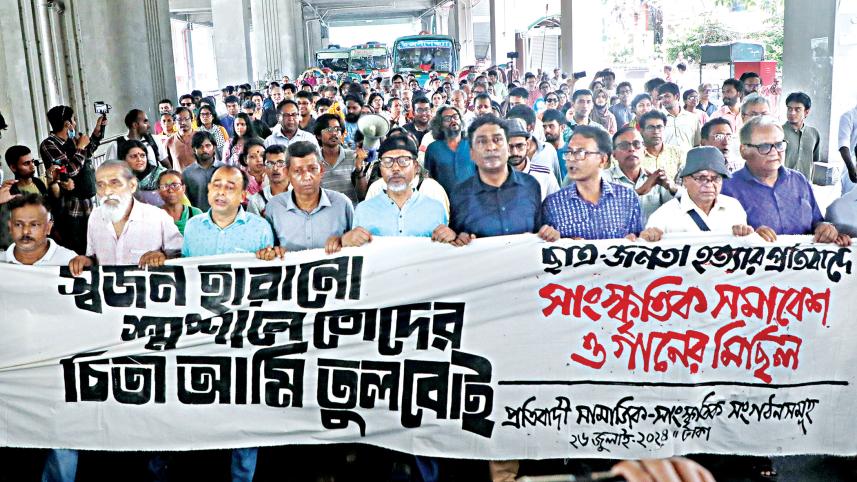
The final weeks of July became even more difficult. Curfew, mass arrests, and extensive surveillance made open political activity almost impossible. Yet resistance continued in new forms. On 28 July, defying restrictions on public assembly, the Democratic Student Alliance organised a black-flag procession. The following day, activists evaded police surveillance to stage a flash demonstration outside the Reporters Unity. Progressive cultural organisations also played an important role by organising protest performances and cultural programmes that helped sustain the political spirit of the movement when conventional forms of mobilisation were severely constrained. These initiatives alone did not determine the course of the uprising, but they reveal that organised political resistance persisted even under extraordinary repression.
The role of the University Teachers' Network also deserves greater recognition than it has often received. To describe the network merely as a sympathetic supporter of the movement is to overlook its practical contribution during one of the uprising's most critical phases. After students were forced to vacate the residential halls of Dhaka University on 17 July, many believed organised resistance on campus had effectively come to an end. Yet on 1 August, a programme organised by the Teachers' Network enabled protesters to return collectively to the university. Once again, the road stretching from the Raju Memorial Sculpture to the Shaheed Minar echoed with slogans of resistance, demonstrating that the movement had not been silenced despite weeks of repression.
The Teachers' Network also intervened at another critical moment. On 27 July, its members went to the Detective Branch office in search of detained student coordinators. Their visit did not alter the balance of political power, but it carried immense symbolic significance. It reassured protesters that those who had disappeared into state custody had not been abandoned, and reaffirmed a broader culture of solidarity at a moment when fear threatened to isolate activists from one another.
These events do not suggest that Left and progressive forces were the sole driving force behind the uprising. The July Uprising was far too broad and diverse to be claimed by any single political tendency. Students, workers, teachers, cultural activists, and countless ordinary citizens all contributed to its momentum. Yet the documentary record also makes it difficult to dismiss Left organisations as passive observers or marginal participants. During the movement's most dangerous phase, they continued to organise under their own banners, sustaining political resistance when repression had made collective action extraordinarily costly. The Droho Jatra (March of Defiance) on 2 August, organised under Left and progressive leadership, became one of the moments through which the demand for a One-Point Movement crystallised into a nationwide political call.
This historical record also challenges the common claim that the Left was the principal obstacle to building a broader anti-fascist alliance before July. Such an interpretation overlooks the political realities of the preceding years. Throughout Sheikh Hasina's rule, progressive student organisations remained among the most consistent critics of authoritarianism on university campuses. Following the 2018 quota reform movement, discussions on building a broader democratic alliance intensified, particularly around the Dhaka University Central Students' Union (DUCSU) elections. Ideological differences, strategic disagreements, organisational priorities, and mutual distrust among various political actors marked those efforts. The failure to achieve complete unity cannot, therefore, be attributed to any single political current. Coalition politics is rarely so simple.
The claim that the Left prevented anti-fascist unity flattens a complex history into a convenient political narrative. Historical interpretation is meaningful only when it rests on the totality of events rather than on selective memory. To ignore documentary evidence while assigning blame to one political tendency is not to write history but to construct a convenient story.
Ultimately, the debate over July is not simply about the role of the Left. It is about who will own the political memory of the uprising. Increasingly, a movement shaped by students, workers, teachers, cultural activists, political organisations, and countless unaffiliated citizens is being compressed into a narrative centred on a handful of individuals or a single political current. Such attempts diminish the collective character that gave the uprising its strength. Once that plurality is erased, a popular movement ceases to belong to the people and instead becomes a source of legitimacy for new centres of power.
Bangladesh's political history offers repeated examples of such historical revision. Moments of political transition have often produced new elites eager to rewrite the past in ways that secure their own authority. In the process, former participants in popular movements have sometimes abandoned their democratic commitments to become beneficiaries of the very power they once opposed.
That is why the struggle over the memory of July matters. The future of Bangladesh's democracy depends not only on political institutions but also on an honest engagement with its recent past. To write the history of July responsibly is to acknowledge its plural character—to recognise that criticism, disagreement, and competing political visions can coexist without erasing those who stood on the streets when it mattered most. The strength of a mass movement is pruned until it resembles a bonsai—small enough to fit comfortably in the drawing rooms of a narrow political elite, admired as a decorative object rather than remembered as a living force that once shook the nation.
Nuzia Hasin Rasha is a freelance writer, student activist, and finance secretary of Biplobi Chhatra Maitree.
Send your articles for Slow Reads to slowreads@thedailystar.net. Check out our submission guidelines for details.
How violence against women is normalised in Bangladesh's chars
Why Bangladesh must invest in community-led early childhood education
The moral architecture of Bangladesh’s parliament
Why Bangladesh innovates but rarely builds global companies
Beyond groundwater: Rethinking Barind's water crisis

The gods that we build: AI and the future of moral authority
Remembering Mahbub ul Haq: A pioneer of human development ideas
What would make Dhaka a good city?
How Chattogram can end its recurring waterlogging crisis