What Bangladesh and Tuvalu teach the world about climate justice

Climate change is a profound threat to Bangladesh and to Tuvalu; indeed, it is the one thing that unites these two otherwise vastly different countries. Both civilisations developed during the Holocene, when sea levels and the climate were relatively stable. But the climate and sea level upon which their stability has depended are now changing and will change dramatically in the future.
A significant level of global warming is now inevitable. The Climate Action Tracker shows that, if every country were to meet all its pledges and targets to reduce greenhouse gas emissions, there would still most likely be warming of 2.2°C above pre-industrial levels by the end of the century. This would result in sea levels rising by at least 50 cm along the coast of the Bengal Delta, much of which is less than 50 cm above mean sea level. A similar rate of warming would result in around 80 cm of sea-level rise in Tuvalu, whose islands are no more than 2 metres above sea level.
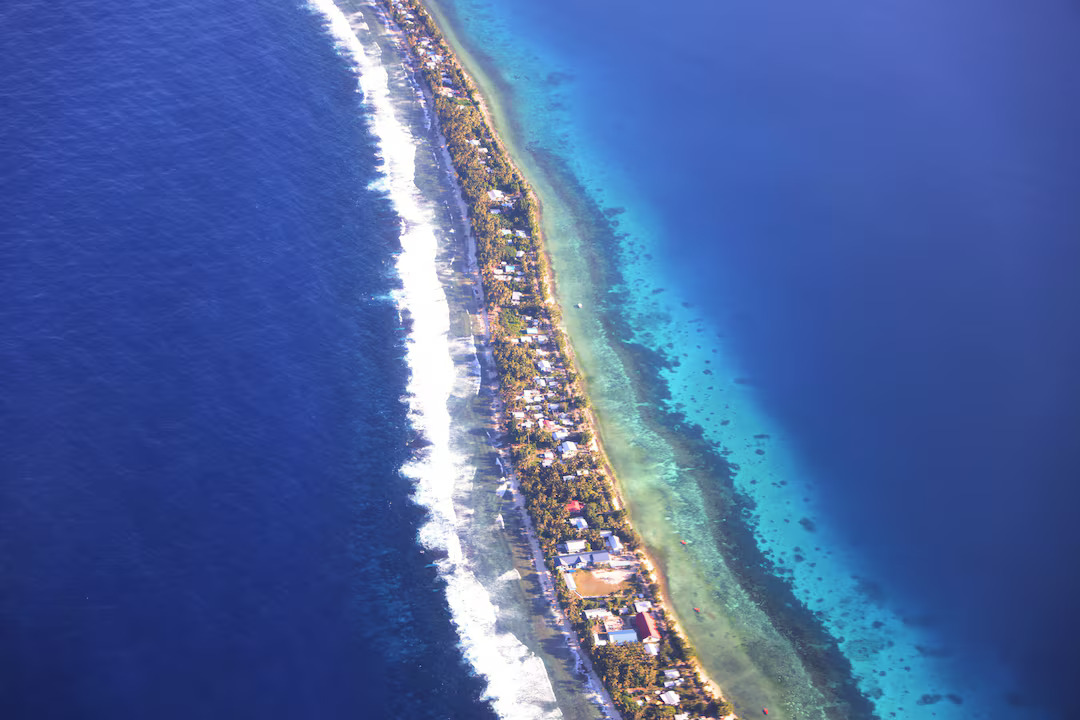
As well as being highly exposed to climate change risks, Bangladesh and Tuvalu share development challenges that restrict the choices their people and governments have for adaptation. Vulnerability to climate change arises when people and institutions do not have options to adapt. Development typically increases those options. Consider Singapore, for example, which has the means to reclaim land that sits well above future mean sea levels and to develop it to a high standard, something that Tuvalu cannot afford to do. Or consider farmers in the Yangtze River Delta, who can change commodities, lease their land to industry, or migrate to work in Shanghai—options that are not available to many farmers in the Bengal Delta.
Everything in the Bengal Delta and on Tuvalu's atolls may no longer be suited to the climate that is emerging and therefore requires adaptation to reduce the risks posed by climate change. This challenge is unprecedented: no country has faced such an implacable and all-consuming threat to its territory and people, and there is no repository of experiential evidence to guide action. Even if adaptation proves highly successful, there are—and will continue to be—losses and damages. Should adaptation fail, the consequences for both countries will be catastrophic.
Of course, the problem is not one of either country's making. Bangladesh is responsible for around 0.2% of the total stock of greenhouse gas emissions in the atmosphere, while Tuvalu accounts for no more than 0.001%. In contrast, the United States is responsible for 20.3% of all historical emissions and the UK for 3.0%. Moreover, the limited adaptation options available to Bangladesh and Tuvalu can also be laid at the feet of the largest emitters, whose emissions-intensive imperialist and capitalist development has been built upon the extraction and accumulation of resources from developing countries on unfair terms, together with their continued failure to meet development assistance targets. At the same time, the wealth generated through this process gives developed countries a far wider range of options for adapting to climate change, if not necessarily their own marginalised populations.
Climate change is therefore a matter of justice. Nancy Fraser argues that there are three dimensions of justice. One dimension is redistribution, which is concerned with redressing economic inequalities. Applied to climate change, the ideal would be a restructuring of wealth so that all countries have equal opportunities to adapt. Perhaps because they have no other choice, the governments of both Bangladesh and Tuvalu are world leaders in climate change adaptation, having implemented systemic, broad, deep and transformative measures to reduce the risks that climate change poses to human well-being and national stability. But neither country can do it alone, nor should it have to, given that the problem is not of its making.
Analysis of the adaptation gap shows that the adaptation financing needs of developing countries are at least 12 times greater than current flows. Bangladesh's National Adaptation Plan (NAP) estimates the annual cost of adaptation at US$8.5 billion, whereas current annual international adaptation finance amounts to around US$0.4 billion. The World Bank conservatively estimates that adaptation in Tuvalu will cost US$1 billion, more than 20 times its annual aid receipts for all purposes. Clearly, wealth is not being restructured in a way that allows for equal rights to adaptation.
Redistribution would also entail an equal allocation of rights to a share of the emissions that can be produced before the world's climate is stabilised at an acceptable level. This would mean a large contraction in emissions from some countries and an increase in emissions from others. If countries were allocated a fair share of the greenhouse gases that can be emitted before the climate stabilises at 1.5°C of warming, Bangladesh's per capita emissions could triple, Tuvalu's could increase fifty-fold, and the United States and the UK would have to cease all emissions immediately.
The current leaders of developed countries have a historic opportunity to transform the world system to achieve justice. Their failure to do so will rank them among history's most notorious villains.
A second element of justice, according to Nancy Fraser, is representation. This is about who is included in political processes and the rules that determine their power. In climate change, the main political process is the United Nations Framework Convention on Climate Change (UNFCCC), in which every country has the right to participate. The UNFCCC is, in many ways, a remarkable treaty that has achieved much, but it falls far short of delivering the kind of representational justice that countries like Bangladesh and Tuvalu need, despite both countries being historically very influential actors whose work has shaped the Convention to a degree disproportionate to their diplomatic, economic or military power.
One important reason why the UNFCCC does not deliver climate justice is that there are no rules governing decision-making. This means decisions are based not on the consensus of the majority but rather on near-unanimity, making the objections of any single country a de facto veto. But not all objections are equal, and those from countries and blocs of countries that are major emitters, aid donors, military powers and funders of the UN system constitute a significant impediment to final decisions and can stall progress on issues for many years, while objections from less powerful countries are far less influential. In such a system, Bangladesh and Tuvalu do not wield the same influence as, say, the United States or China.
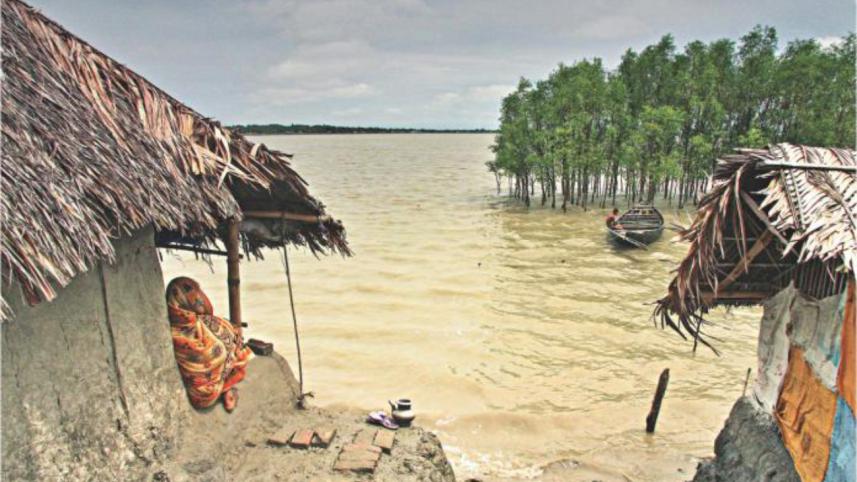
A third element of justice is recognition, which concerns the due acknowledgement of injustices and treating those who have been wronged as full partners in processes of restitution. It is the injustices of climate change that form the basis of much of Bangladesh's and Tuvalu's influence in the UNFCCC; they wield a moral legitimacy that gives them standing and influence, and which garners the support of non-governmental organisations.
The UNFCCC recognises that 'low-lying and other small island countries', 'countries with low-lying coastal areas or areas liable to floods', and 'developing countries' are 'particularly vulnerable' to climate change, and it calls for parties to act on the 'basis of equity and in accordance with their common but differentiated responsibilities and respective capabilities'. In this way, recognition is written into the UNFCCC, but it extends recognition across a wide range of countries and is specific to none. This creates tacit competition among countries to be 'the most vulnerable' for the purposes of prioritising funding, which leads to disempowering narratives and erodes solidarity and collective action among vulnerable parties.
The establishment of the Fund for Responding to Loss and Damage (FRLD) in 2024–2025 can be interpreted as a manifestation of recognition justice. Developing countries, including Bangladesh and Tuvalu, have been passionate advocates for this fund, which is intended to help them respond to the impacts of climate change. Its establishment was the result of a hard-fought battle within the UNFCCC process, which was, at one level, a struggle to formalise recognition of the harms caused by climate change. The FRLD can therefore be interpreted as a form of recognition, and it should not go unnoticed that it signals the UNFCCC's failure to meet its ultimate objective of 'avoid[ing] dangerous climate change'. Yet even here, recognition justice remains limited. The fund has not been well supported by donors, and developed countries continue to insist that it neither involves nor provides a basis for liability or compensation for climate-related harms.
If countries were allocated a fair share of the greenhouse gases that can be emitted before the climate stabilises at 1.5°C of warming, Bangladesh's per capita emissions could triple, Tuvalu's could increase fifty-fold, and the United States and the UK would have to cease all emissions immediately.
Indeed, in all their interactions with countries like Bangladesh and Tuvalu within the UNFCCC and through other bilateral processes, developed countries avoid directly recognising the injustices of climate change. Rarely, if ever, does a representative of an OECD country look a counterpart from Bangladesh or Tuvalu in the eye and acknowledge the injustices of colonisation, capitalism and climate change, perhaps out of shame or for fear that such recognition would bring to the fore a moral imperative to act that they would rather keep hidden. In this sense, recognition justice may be an important enabler of more ambitious action to avert climate harms.
So, there are fingerprints of justice in the UNFCCC process, but no tangible institutions that bring it into effect. The search for climate justice has thus taken new directions. In 2024, Tuvalu and Bangladesh both provided written and oral submissions to the International Court of Justice's hearing on the obligations of states in respect of climate change. Its subsequent 2025 Advisory Opinion is a landmark statement on climate justice, confirming that states have a legal obligation to prevent harm to the climate system and a legal duty to support adaptation for the most vulnerable. The consequences of this are yet to be seen, and while the decision is not binding on states, it nevertheless sets a new standard for recognising the problem of climate (in)justice that may encourage some states to adopt stronger emissions reduction targets and make litigation between states for failure to act a more viable strategy.
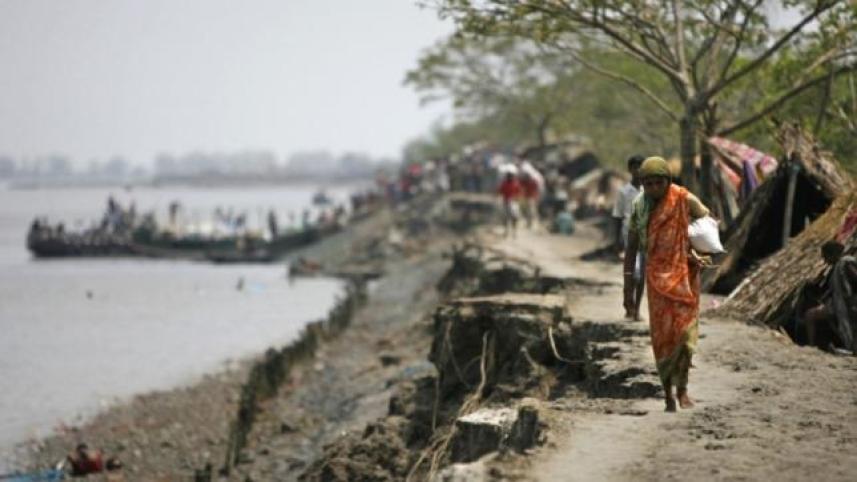
Given the scale of the risk that climate change poses to Bangladesh and Tuvalu, and the legal benchmark provided by the ICJ Advisory Opinion, a formal political apology for the harms that have been and may yet be caused by climate change may be constructive. A political apology can help acknowledge the reality of imposed climate harms, establish that climate impacts are not acceptable, and, in turn, add impetus to actions to reduce emissions and support adaptation. To be clear, an apology is by no means a sufficient condition for climate justice, but it may be a necessary and enabling one.
In summary, for Bangladesh and Tuvalu, climate justice is key to national and human security, but despite their best efforts, it remains an elusive goal. Time is short, the scale of action required is immense, the consequences of failure are enormous, and responsibility for the problem is clear. The current leaders of developed countries have a historic opportunity to transform the world system to achieve justice. Their failure to do so will rank them among history's most notorious villains.
Jon Barnett is a Professor in the School of Geography, Earth and Atmospheric Sciences at the University of Melbourne. He is a political geographer whose research investigates the social impacts of, and responses to, environmental change.
Send your articles for Slow Reads to slowreads@thedailystar.net. Check out our submission guidelines for details.
From colonial wasteland to refugee settlement / The history behind Bangladesh’s Bhasanchar project

Why Bangladesh's schools need financial autonomy
What the water knows: The unmaking of Bangladesh's haors

Who writes the history of the July Uprising?
How violence against women is normalised in Bangladesh's chars
Why Bangladesh must invest in community-led early childhood education

The moral architecture of Bangladesh’s parliament
Why Bangladesh innovates but rarely builds global companies
Beyond groundwater: Rethinking Barind's water crisis