How the British shaped the way we dress today
“Finally, there was the abolition of their sartorial identity altogether. Captain Johnstone, assuming that he knew best how these ‘wild timid creatures’ should be dressed, persuaded them to submit their native clothing to the flames and accept his generous offer of saris, woven in Manchester."
—Emma Tarlo, Clothing Matters (1996)
Rooted in visions of their own cultural superiority, European imperialists often saw themselves as agents of a “civilising mission.” In this evocative passage from Tarlo, the bodies of colonised subjects in India became battlefields in their missions against barbarism. Defining native attire as wild and bestial, the colonisation of bodies included the abolition of native ‘sartorial identities’ and the promotion of new civilising ones, no less woven in Manchester. Native attires, moreover, symbolise gaps in imperial hegemony. They represent unceded identities, cultures, and life-worlds. Attire is tied to the visual politics of community by denoting insiders and outsiders, an uneasy fact in settings of colonial rule. In this essay, I survey and analyse how clothing is used as a hegemonic tool by imperial powers to subjugate colonised people. I consider how such tactics changed clothing patterns in British India. This essay is parsed into three sections: first, I theorise the relationship between clothing and the colonial project; second, I examine early British attitudes towards Indian clothes; and third, I explore how colonialism altered the sartorial identities of Indians.
I. Clothing’s centrality to the colonial project
Colonial powers rationalise their dominion over the natives through ideologies of cultural, racial, and industrial superiority. Defining Europe as civilisation itself, sartorial identities beyond its codes of dress were rendered backward. Colonisers saw bodily practices, from clothes to cuisine to physiognomy, as indices of the inferiority of others. Mariselle Melendez (2005), for instance, describes how Europeans justified their colonisation and extermination of Native Americans, in part, due to their lack of clothes, symbolic, therefore, of their barbarism. The rhetorical binary between civilised and uncivilised thus manufactured consent for colonial violence. Victoria Rovine (2009) has shown how the differences between attire in Africa and that in Europe were used to measure the “evolutionary” progress of “primitive” natives against “civilised” colonisers. E. M. Collingham (2001) historicises English perceptions of the Indian body and the conquest of it through civilising clothing.
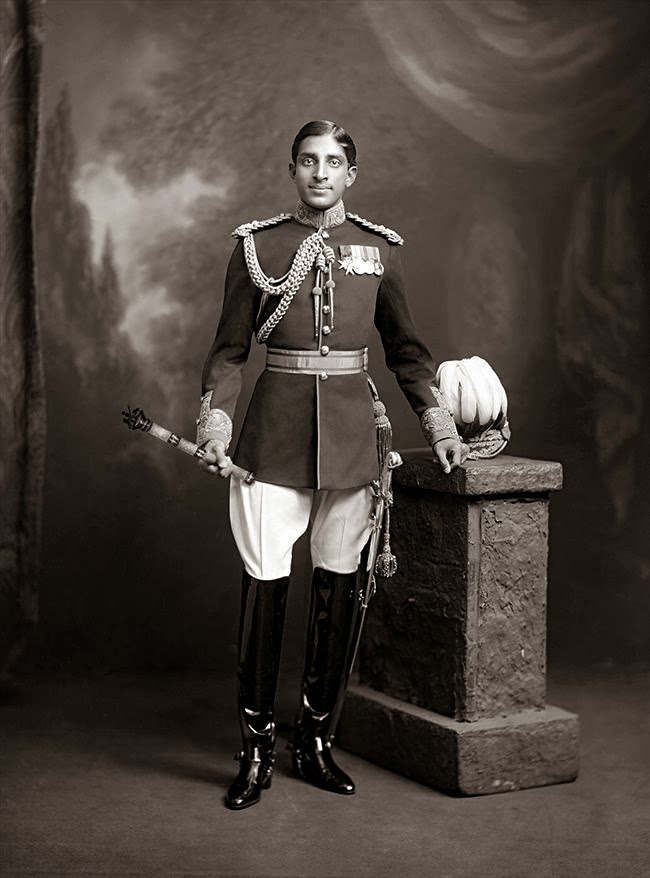
In other words, European attire stood in for the identity of a modern, rational, civilised world, whereas attire in the colonies symbolised a primitive, emotive wilderness. Emulation of European attire was thus a means of progress, but also an approving measure for the subjugation of the colonised. By changing the sartorial appearance of Indians, the British were able to distance their subjects from the markings of their own culture. Such methods of hegemony strengthened the rhetoric of the empire, which saw the colonial body as a source of its power.
Colonialism is also a historical process that achieves its legitimacy through both consent and coercion. Colonial hegemony is created when the colonised believe in their inferior status. The empire not only tries to own the colonised’s labour, land, and resources, but also achieves power by colonising its subjects’ material cultures and psychologies. The colonial project gains legitimacy by presenting its own culture as the superior one and controlling native bodies. In A Dying Colonialism, Frantz Fanon (1965) argued that “the way people clothe themselves, together with the traditions of dress and finery that custom implies, constitutes the most distinctive form of a society’s uniqueness, that is to say the one that is most immediately perceptible.” Since an item of clothing denotes a cultural identity and is symbolic of that group, clothing can even be viewed as a form of resistance to the coloniser’s violence.
II. British reaction to Indian clothing
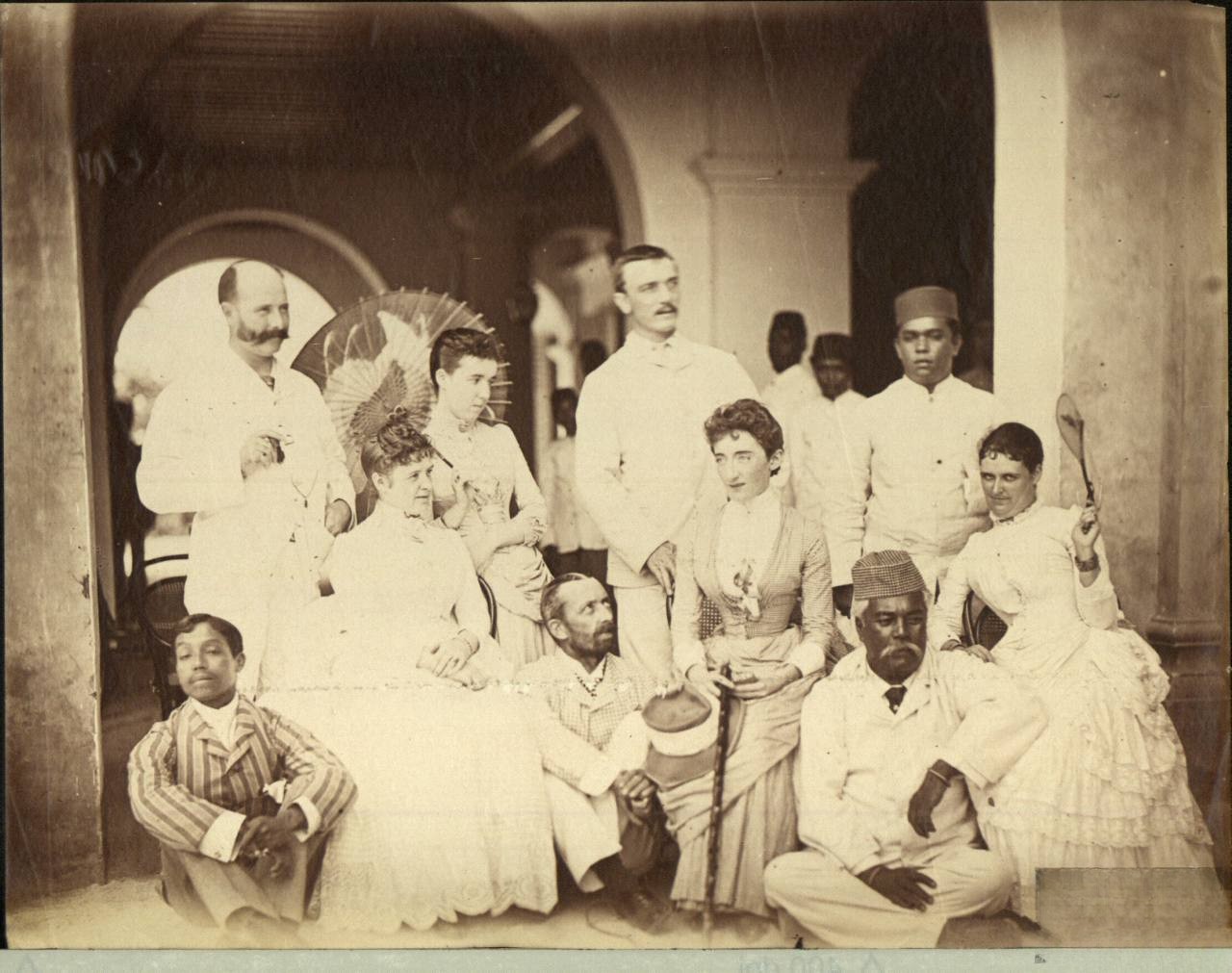
British attitudes to Indian attire vacillated between appreciation and ridicule. These attitudes were historically contingent, though we can note that, with time and the deepening of British rule in the subcontinent after 1757, the tendency towards dismissal grew. Bernard Cohn (1990) described a pattern in early European merchants’ and traders’ accounts of India: the shock of the semi-naked bodies of Indian boatmen. Yet, perceptions of ‘nakedness’ were countered by discovering the variety of clothes around them. These variations were no doubt tied to contexts of caste, religion, occupation, geographic location, etc. Whereas elite Muslim women wore angarkhas, gharara, and sharara, elite Hindu women adorned themselves with silk and cotton sarees. While the men of Bengal may have worn dhutis and turbans, Scottish transplants may have worn shirts and pith helmets.
Although the Englishmen were receptive to Indian dress, especially that of men, they also maintained a strain of repulsion towards Indian clothing, a tendency which grew amongst generations of East India Company rule after Warren Hastings. By referring to men’s clothing as “effeminate” and “childlike,” a rhetoric developed around the sartorial identity of Indian rulers and elites as decadent Oriental despots, a visual rhetoric which justified their presence in India and moralised their domination thereof.
It must also be acknowledged that Christianity, incorporated into British nationalism, was an important element in reforming attire in the colonies. Cohn (1983) mentions how the process of “civilising” native dress was a concern of missionaries. Tarlo (1996) particularises Verrier Elwin’s missionary activities, in which he made it compulsory for newly converted Christians to wear trousers. “‘Advancing refinement and civilisation’ was producing in Indians ‘an instinctive desire to be more fully clothed’,” proclaimed Elwin.
While early British officials adopted Indian garments, legislation after 1830 formally stipulated that East India Company employees were banned from doing so in public. They also prohibited Indian subjects from wearing sahib clothes. It was a deliberate attempt at disciplining attire and distancing a superior European visual economy from the contamination of native culture (Cohn, 1989). It was also determined by the British who could wear what kind of shoes.
III. Colonial changes to Indian clothing
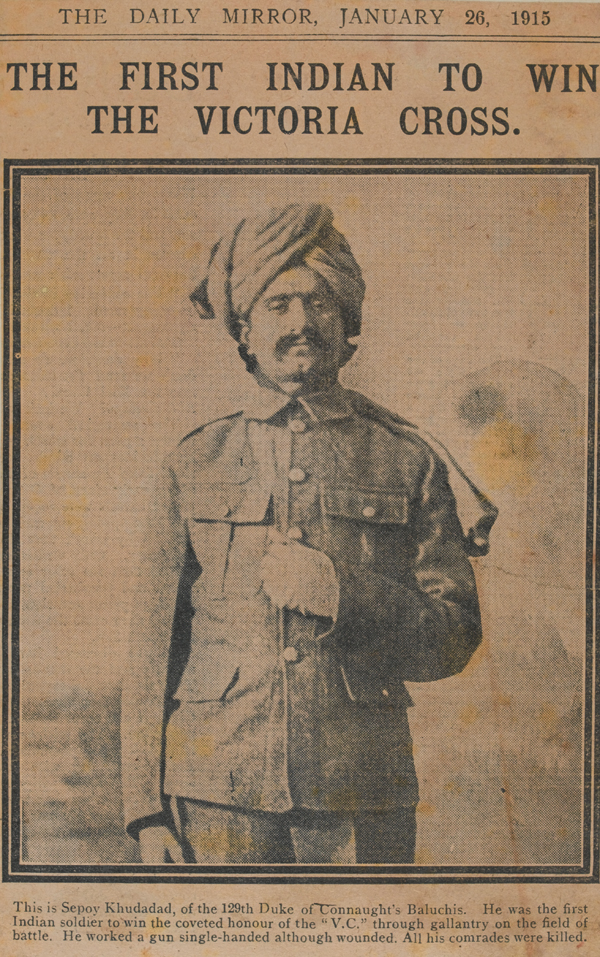
One of the earliest and most systematic influences of English attire in British India is seen through the uniforming of sepoys, or soldiers. Their uniforms were modelled on British military uniforms with English tailoring, but as a form of spectacle to Indians themselves, the “lal captan” uniforms worn by soldiers sought to appeal to local aesthetics. Parsis and Bengalis were some of the first to sartorially adapt to these changes. At first, it began with the inclusion of buttons, pockets, and coats. Even though it was Bengali elite men who adopted the English mode of dress at first, these changes soon spread all over India. European fashion came to invoke “modernity” and the Indian elite class adapted to it as a means of self-fashioning. Gupta’s (2016) essay tells us that many Indian princes let go of their traditional attire and wore Western suits, both at home and abroad in London. Sharar (1975) suggests that the modern sherwani was an alteration of the achkan with Western tailoring. After the 1880s, the sherwani became a formal code of dress and started to gain prominence in the subcontinent. Interestingly, the use of the turban by Sikh men emerged out of colonial context as well. By the First World War, the Sikhs had come to see their headgear, the uniform pagri, as part of their religious prescriptions when this was rather a colonial intervention.
During the late nineteenth century, in the context of the Bengal Renaissance, Victorian ideals of womanhood among elite classes were also changing sartorially. The sari played a crucial role in gendering the colonial other and rendering Indian womanhood as both appropriately “traditional” and sufficiently “modern”. The most prevalent drape of the sari worn by women of the subcontinent today is also a colonial-era invention: the “nivi” drape, popularised by Jnanadanandini Devi. Belonging to the Bengali elite, she adopted the Parsi style of sari with a blouse and petticoat to wear at social events. But instead of wearing the achol over the right shoulder, as per classic Bombay Parsi style, she wore it over the left shoulder.
The blouse or choli is yet another colonial invention. Since the new ideal of womanhood rested on following the Victorian sense of modesty in attire, blouses were adopted by most regions and especially by upper-caste Hindu women. Kamis too was modelled on European-styled frocks and shirts for pubescent girls in the Indian household.
While upper-caste Hindu and Muslim women had to follow strict codes of modesty and remain in the andarmahal most of the time, it was nevertheless common for women of lower caste and class not to adhere to such rules. In fact, they were sometimes prohibited from dressing as they liked. In Travancore, a princely state in Southern India, specified modes of behaviour were to be followed by the Nadars, an occupational caste whose members were deemed “untouchable.” Nadar women, in particular, could not cover the upper part of their bodies, and if they did not follow such a code of dress, their upper-caste masters levied a tax on their breasts. When missionaries granted them provision to wear a Nair-styled covering over their upper bodies, it resulted in localised violence against them and was interpreted as British meddling in the Indian caste hierarchy and traditions.
IV. Clothing as a cultural tool of subjugation
This essay has explored the relationship between colonialism and clothing in British India. Fashion was not a frivolous or neutral matter. Rather, it was a colonial battleground. It represented the conquest of the native body and was central to the visual economy of the empire. When the elite Indian class began to copy their British masters, it was partly due to their rejection of their own “inferior” status and in hopes of gaining access to their colonial masters. Postcolonial theories have accounted for this phenomenon by asserting that this can be a strategy to challenge legitimacy. However, this essay does not fully agree with this premise. By reconsidering Homi Bhabha’s theory of mimicry and man, one sees that the emulation process of the colonised has a tangible effect in dispelling the supposed power of the coloniser. Mimicry does not make any major impact, however, in dispelling the colonised other’s status. While this emulating process can help the subjugated group to replicate the powerful role of the coloniser, they still remain powerless to utilise their native sartorial identities as a means of displaying themselves as modern, universal, rational, and dignified agents. The whole process becomes performative in order to gain the status and power of the coloniser, instead of completely resisting it. Therefore, clothing was a significant cultural tool in achieving imperial hegemony in the everyday lives of the colonised.
Bibliography:
- Bhabha, H. K. (1994). The Location of Culture. Routledge.
- Bhushan, J. B. (1958). The Costumes and Textiles of India. Taraporevala’s Treasure House of Books.
- Cohn, B. S. (1996). Colonialism and its forms of knowledge: The British in India. Princeton University Press.
- Collingham, E. M. (2001). Imperial bodies: The physical experience of the Raj, c. 1800-1947. Polity Press ; Blackwell Publishers.
- Fanon, F. (1965). Haakon Chevalier. A Dying Colonialism. Trans. Haakon Chevalier. (1994). Grove Press.
- Government of India, Proceedings of the Committee on the Obligations Developing on the Army in India, Its Strength and Cost I-A: Minority Report. (1913).
- Gupta, T. (2016). The Birth of the Sherwani: An Influence of the British Raj. [Masters thesis, The University Of Glasgow] https://www.researchgate.net/publication/308902032_The_Birth_of_the_Sherwani_An_Influence_of_the_British_Raj
- Meléndez, M. (2005). Visualising Difference: The Rhetoric of Clothing in Colonial Spanish America. In R. A. Root (Ed.), The Latin American Fashion Reader (pp. 17-30). (Dress, Body, Culture). Berg Publishers. https://doi.org/10.2752/9781847881052/LAFR0007
- Sharar, A. H. (1975). The Last Phase of an Oriental Culture. Translated by E S Harcourt & Fakhir HUssain. Oxford University Press (2000).
- Sharma, K. (2019). The Orientalisation of the Sari—Sartorial Praxis and Womanhood in Colonial and Post-Colonial India. South Asia: Journal of South Asian Studies, 42(2), 219–236. https://doi.org/10.1080/00856401.2019.1577700
- Tarlo, Emma. (1996). Clothing Matters: Dress and Identity in India. The University of Chicago Press.
- Terneus, J. S. (2016). The Empire’s New Clothes: The Politics of Dress in Mulk Raj Anand’s Untouchable. South Asian Review, 37(2), 109–121. https://doi.org/10.1080/02759527.2016.11933065
Nawshin Flora is a researcher and writer based in Dhaka.
Send your articles for Slow Reads to slowreads@thedailystar.net. Check out our submission guidelines for details.
Dadabhai Naoroji: The man who exposed the economics of British colonialism

Untold stories of 1971 through private letters
The extraordinary journey of Atish Dipankar Srigyan

Forgotten story of Jeanette Van Tassel, the American woman who flew over Dhaka in 1892
Beyond 1947 / A personal essay
Abul Mansur Ahmad / A global quest in search of a nation

Chand Bibi and the forgotten history of Muslim women’s political resistance
Women’s voices in Nazrul’s Dhumketu
How Milad-un-Nabi shaped Muslim cultural life in colonial Bengal