Reading Bengal beyond religious boundaries
Every year, as Eid al-Adha arrives across the Bengal delta, a question surfaces that no festival prayer quite settles: is Islam of this land, or did it come from outside? Across the western part of Bengal, the answer is being voiced with growing certainty: that this soil was Hindu before it was anything else, and that Islam arrived as an intrusion upon its purity. Today, that answer is no longer merely argued; it is administered. Historic mosques are contested as Hindu sites. Governments move with quiet determination to restrict the Eid qurbani of cows, framing a centuries-old practice of Bengali Muslim life as an offence against the sacred. The question, in other words, has left the realm of history and entered the realm of power. It demands, therefore, not a defensive reply, but a serious historical response.
There is a persistent tendency in the way Bengal is understood, and it is this tendency that makes such political projects possible. Bengal is rarely permitted to speak in its own historical voice. Instead, it is repeatedly interpreted through civilisational frameworks produced elsewhere: its Islam measured against Middle Eastern orthodoxy, its history folded into North Indian Brahmanical narratives, and its pluralism evaluated through European secular assumptions. Each of these perspectives captures part of the story. Yet none adequately explains Bengal. When a civilisation is not understood on its own terms, others will define it on its behalf, and they will do so, as we are witnessing today, with consequences that extend far beyond academic debate, reaching from the archive to the street.
The problem is not merely historical. It is methodological, and its origins lie much deeper than most accounts are willing to acknowledge.
For too long, Bengal has been treated either as a frontier of another civilisation or as a derivative regional culture lacking its own interpretive logic. Yet Bengal’s historical formation followed a profoundly different trajectory. It evolved through deltaic ecology, vernacular adaptation, porous religiosity, linguistic hybridity, and negotiated coexistence. It was shaped as much by rivers, forests, migrations, folk traditions, and agrarian expansion as by courts, empires, or scriptural orthodoxy.
But to understand why Bengal absorbed and transformed every incoming civilisational current, whether Brahmanical, Islamic, or colonial, one must look further back. Bengal did not begin with the arrival of Sanskrit. It did not begin with the arrival of Islam. It carried within itself, long before either, a civilisational logic of its own: rooted in the Ganges-Brahmaputra delta, in an earth-centric cosmology that venerated water, fertility, the feminine divine, and the cyclical rhythms of a great alluvial world. That deep substrate, pre-Vedic, proto-Prakrit in language, matrifocal in social organisation, tantric in spiritual sensibility, is what gave Bengal its extraordinary capacity for civilisational absorption without civilisational erasure.
When a civilisation is not understood on its own terms, others will define it on its behalf, and they will do so, as we are witnessing today, with consequences that extend far beyond academic debate, reaching from the archive to the street.
This matters because civilisations are not abstract theological systems floating above geography. They emerge from lived environments. They are shaped by land, climate, labour, memory, and social interaction. Bengal’s history cannot, therefore, be understood merely by importing explanatory models developed for Arabia, upper Gangetic India, or post-Reformation Europe.
To understand Bengal and Islam historically, we need what might be called a syncretic cultural history. Not syncretism in the simplistic sense of religious mixing, but as a method of reading layered civilisational formation, a way of understanding how cultures interact, absorb, negotiate, adapt, and transform over time without losing their historical continuity.
The civilisational substratum: What Bengal carried before
To understand how Bengal absorbed Islam, it is necessary to understand what Bengal already was before Islam arrived.
The Bengal delta, at the convergence of the Ganges and the Brahmaputra, nurtured a civilisation of extraordinary antiquity and sophistication, one that predates the consolidation of Brahmanical orthopraxy and the codification of Vedic Sanskrit as the dominant cultural medium of the subcontinent. Its people were masterful hydrologists and navigators of the deltaic channels. Their cosmology was deeply interwoven with the rhythms of earth, water, and the celestial canopy. They venerated the feminine creative force, a primordial Shakti, as the animating principle of the universe. Their religion was not yet what we call Hinduism. It was older: chthonic, earth-rooted, organised around serpents and rivers and the mother goddess, around the body as a microcosm and the landscape as a living theology.
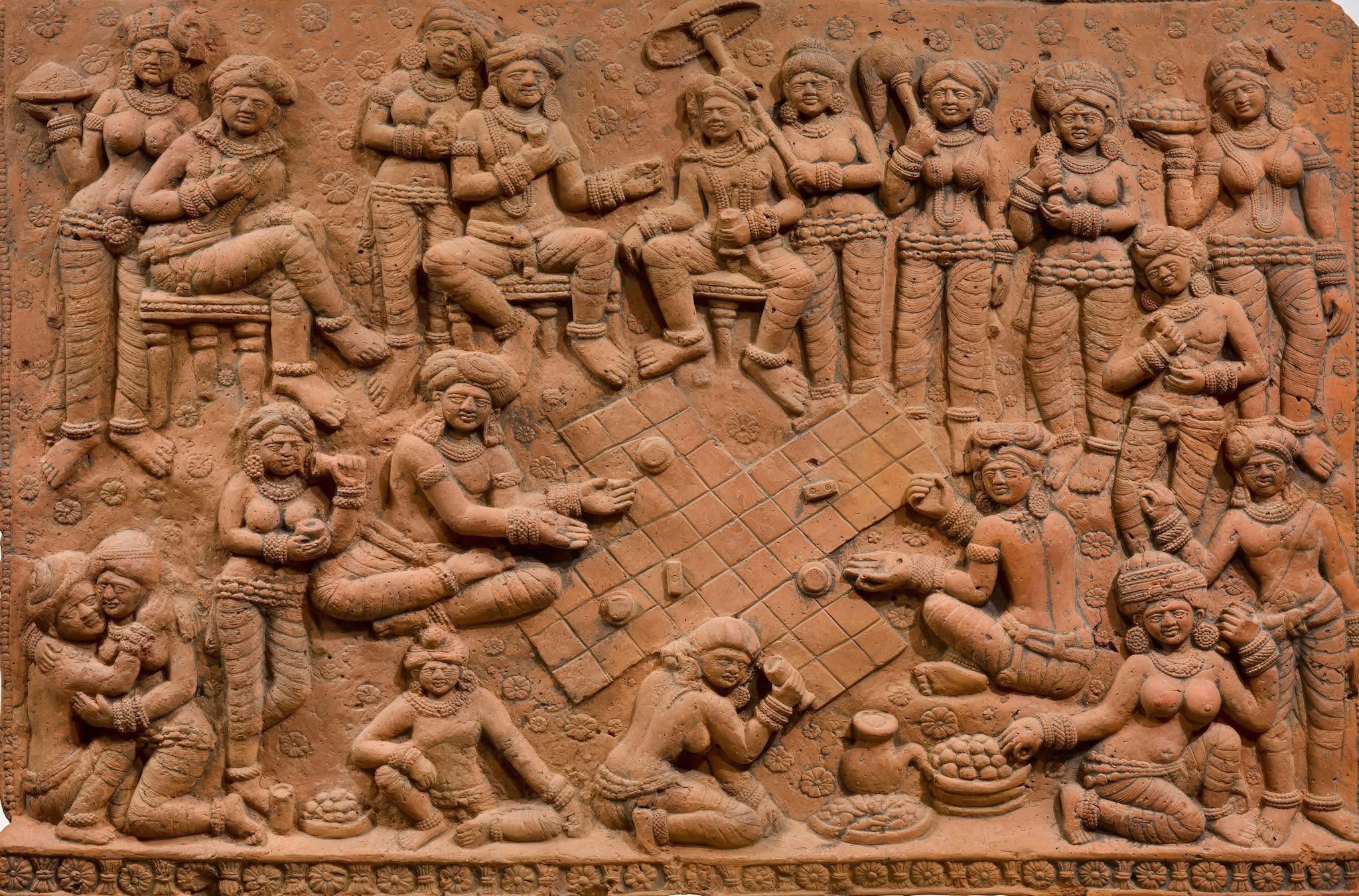
Archaeological evidence from sites like Chandraketugarh, Mangalkot, and Pandu Rajar Dhibi, though often interpreted through later historical lenses, hints at strata of cultural complexity far deeper than the conventional narrative acknowledges. The terracotta figurines, the aquatic symbolism, the feminine iconography: these belong to a civilisational grammar that long predates Sanskrit’s arrival in eastern India.
What later Brahmanical texts called ‘Asura’, rendering the word demonic, was, in the older cosmological vocabulary, a title of power, of elder wisdom, of divine sovereignty rooted in the earth and the water rather than in fire and the sky. The indigenous inhabitants of this delta were, in the language of their own time, the custodians of a cosmological order centred on cyclic temporality, creative potential, and communion with the living earth.
When Sanskrit and the Brahmanical tradition arrived in Bengal, gradually and unevenly, they did not replace this world. They negotiated with it. The Puranas, though progressively reshaped through a Vedic-Deva framework, carried within them the residue of older, earth-centric, non-Aryan cosmologies. The very existence of Brahma as a creator deity, strikingly marginalised within the triumvirate of Brahmanical theology despite his logical centrality, may itself encode a long civilisational memory: of an older, indigenous god of the delta, whose name and role were absorbed but whose authority was gradually subordinated to the incoming celestial pantheon.
This is not mythology. It is civilisational stratification.
What emerged from this long, unresolved encounter between indigenous deltaic culture and incoming Sanskritic traditions was not a smooth synthesis. It was tantra. It was Vajrayāna Buddhism, which arose precisely when Mahāyāna met the indigenous mystical and ritual traditions of Bengal in the post-Gupta period. It was the Sahajiyā tradition, that extraordinary confluence of Buddhist, Vaishnava, and indigenous tantric streams, which refused to choose between the cosmic and the corporeal, the sacred and the vernacular, the elite text and the body of the cultivator working the delta mud. It was the Bauls. It was the mother goddesses, Manasa, Chandi, and Kali, who could never be fully absorbed into the Brahmanical order because they belonged to an older and more indigenous sovereignty.
This is the civilisational substrate through which everything else, including Islam, must be read.
Islam in Bengal was not simply imported
One of the most enduring misconceptions about Bengal concerns the nature of Islamisation itself. Popular narratives often oscillate between two extremes. One claims Islam spread primarily through conquest and external imposition. The other reduces Bengali Muslim formation to mass lower-caste conversion. Both explanations flatten a much more complex historical process.
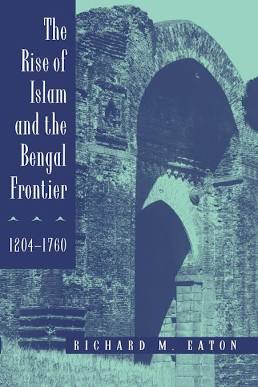
As historian Richard M. Eaton argues in The Rise of Islam and the Bengal Frontier, the spread of Islam in Bengal was deeply connected to agrarian expansion and ecological transformation in the Bengal delta. Eastern Bengal, in particular, was not a densely integrated Brahmanical core before the medieval period. Much of it was frontier land undergoing gradual cultivation and settlement. Networks of pirs, local patrons, agricultural pioneers, and shrine institutions became intertwined with the expansion of cultivation itself.
In other words, Islamisation in Bengal was inseparable from the making of Bengal’s landscape.
This changes the discussion fundamentally. Islam in Bengal was not merely transplanted from Arabia or Persia as a fixed civilisational package. It became rooted within the ecological and social realities of the delta. The riverine geography of Bengal shaped patterns of settlement, mobility, economy, and community. Naturally, it also shaped religious life.
Importantly, the delta into which Islam arrived was not a cultural blank slate. It carried within itself millennia of religious formation: the tantric substratum, the Shakta cosmology, the Nath and Sahajiyā traditions, the Buddhist institutional memory of Paharpur and Mainamati. When Islam arrived in this landscape, it did not encounter a passive, undifferentiated population. It encountered a civilisation already accustomed to absorbing new spiritual vocabularies, to translating cosmic power through the body and the landscape, to finding the sacred in the river and the rain rather than exclusively in the mosque or the temple.
This is why Bengali Islam historically developed forms that differed, sometimes sharply, from scriptural orthodoxies emerging from other regions.
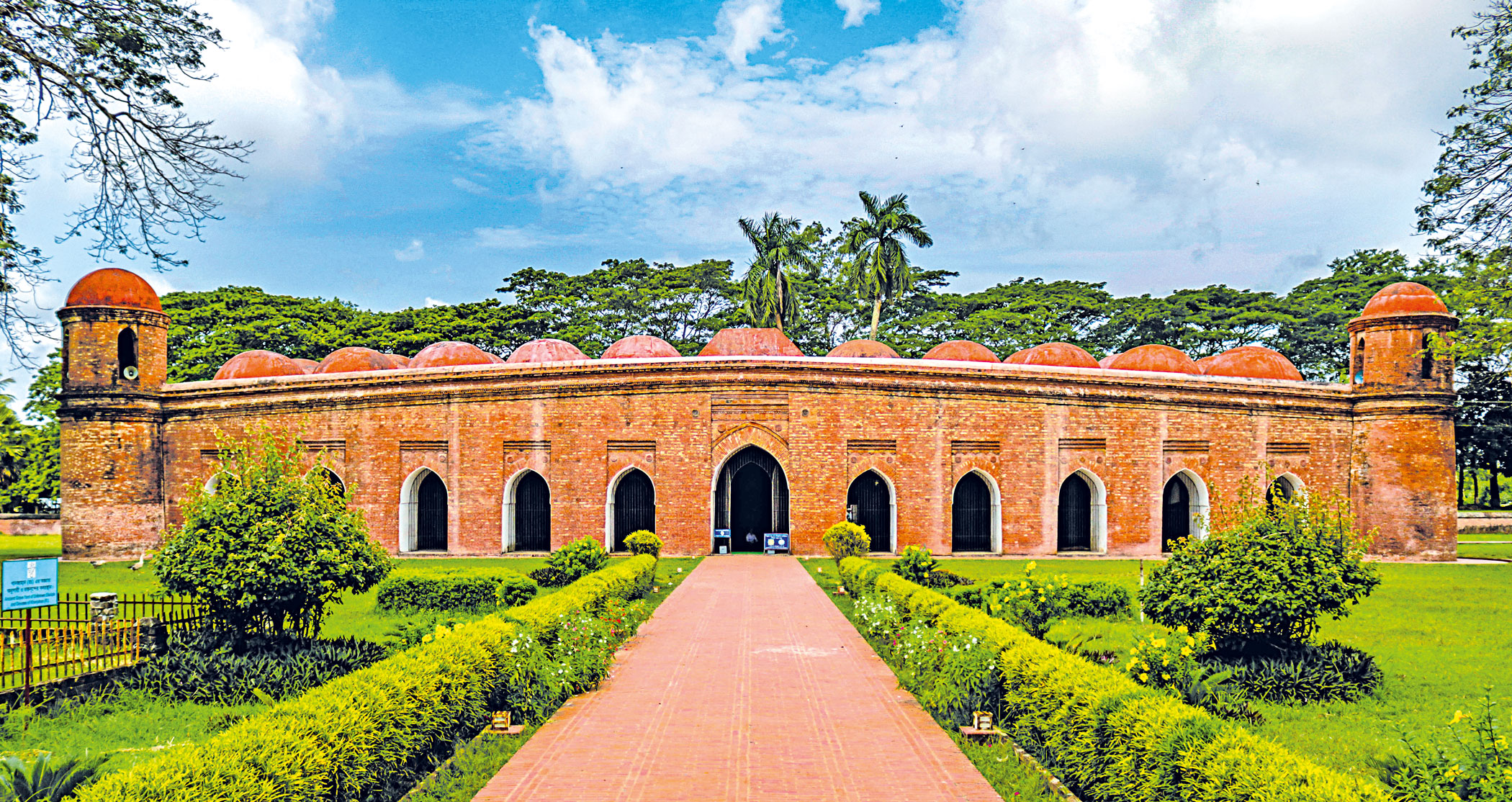
As scholar Asim Roy demonstrates in The Islamic Syncretistic Tradition in Bengal, Islam in Bengal evolved through interaction with vernacular cultures, local sacred traditions, folk rituals, and regional cosmologies. Shrine culture became central to religious life. Shared ritual spaces emerged. Localised devotional traditions flourished. Religion operated not only through theology but through lived practice.
The Bengali Muslim peasant, boatman, artisan, or villager did not necessarily experience Islam primarily through legal texts or distant theological debates. Islam was experienced spatially and socially: through shrines, seasonal rhythms, songs, local saints, village traditions, and everyday ethical life. In much of this, the grammar of the sacred remained recognisably rooted in the older deltaic cosmology; the veneration of pirs at river-edge shrines echoes the older veneration of Nagas and local tutelary spirits; Muharram processions wound through landscapes already thick with goddess worship and seasonal ritual.
Islam met Bengal’s deep Tantric-Shakta substratum, and the encounter produced something that neither Middle Eastern theology nor European secular sociology fully accounts for.
As scholar Shahab Ahmed argues in What Is Islam?, Islamic civilisation historically manifested in multiple, sometimes contradictory, forms across different societies. Ahmed challenges the assumption that Islam can be reduced solely to legal orthodoxy or textual purity. Muslim societies consistently produced localised civilisational expressions shaped by their own historical conditions.
Bengal was one such civilisation.
Similarly, historian Marshall G. S. Hodgson’s distinction between “Islamic” and “Islamicate” societies is critical here. Bengal may be understood not simply as a theological space but as an Islamicate civilisation where language, architecture, music, aesthetics, folklore, and social life evolved within a Muslim cultural world while remaining deeply rooted in Bengal’s own ecology and history, indeed in the ancient ecological intelligence of the delta itself.
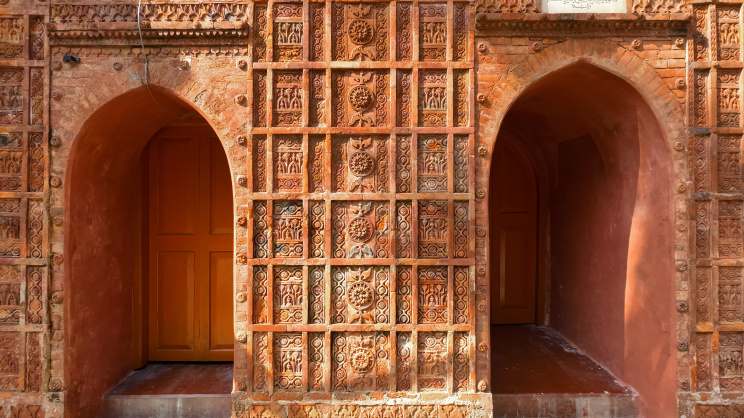
This does not make Bengali Islam less authentic. It makes it historically situated.
The expectation that Bengal should replicate Arab civilisational forms misunderstands how civilisations actually work. Islam historically adapted across regions. Persian Islam differed from Arab Islam. Anatolian Islam differed from Persian Islam. Malay Islam differed from Turkish Islam. Bengali Islam likewise developed through localisation, through the same process of vernacular adaptation that had already shaped how Buddhism took root here, how Vaishnavism was transformed here, and how Tantra was born here.
Localisation is not corruption. It is historical continuity.
The tragedy of many modern debates is that Bengali Muslims are often forced to choose between regional belonging and religious authenticity, as though the two are mutually exclusive. Historically, they were not. Bengal adapted Islam to its own historical and cultural context, just as it had adapted every other civilisational current it encountered.
Bengal was never merely an extension of upper Gangetic civilisation
Just as Bengal’s Islam cannot be reduced to Middle Eastern templates, Bengal itself cannot be reduced to a Brahmanical extension of North India.
This assumption has shaped both colonial historiography and many strands of modern nationalism. Bengal is often portrayed as a peripheral region receiving civilisation from an upper-Gangetic Sanskritic core. Yet Bengal’s historical formation tells a profoundly different story, one in which Bengal was never a periphery but a civilisational centre in its own right, carrying a cultural logic that predated the Sanskritic corpus it would eventually accommodate.
The Bengal delta was unstable, shifting, flood-prone, and constantly transforming. Such landscapes produce adaptive societies rather than rigidly consolidated hierarchies. The indigenous civilisational logic of this delta, rooted in communal resource management, reverence for the feminine divine, ecological attunement, and fluid social organisation, was never fully overwritten by Brahmanical consolidation, which remained uneven across much of Bengal, especially in the east and south.
Historian Niharranjan Ray argued powerfully in Bangalir Itihas that Bengali civilisation emerged through a composite ethnogenesis involving pre-Aryan, Austroasiatic, Tibeto-Burman, regional, and later Sanskritic influences. Bengal was never culturally homogeneous. What later Brahmanical traditions regarded as the margins often formed the centre of life in the Bengal delta.
This partially explains Bengal’s extraordinarily strong vernacular traditions. Scholar Dinesh Chandra Sen highlighted how Bengali identity evolved not merely through elite Sanskritic culture but through folk literature, oral traditions, local myths, devotional songs, and popular religious practices rooted in everyday rural life. These vernacular traditions were not diminished reflections of Sanskrit learning. Rather, they were the living carriers of a civilisational memory that long predated Sanskrit’s arrival in Bengal.
Linguist Suniti Kumar Chatterji demonstrated that the Bengali language itself emerged through interactions among Sanskritic, Austroasiatic, Dravidian, and Tibeto-Burman influences. Bengali carries within its very phonology, morphology, and vocabulary the evidence of civilisational layering. The language is itself a palimpsest of the civilisations that converged in this delta. One might argue that Bengali’s remarkable ability to absorb Persian, Arabic, and later English vocabulary, while producing the rich hybrid literary worlds of medieval Bangla literature, the dobhashi tradition, the Mangalkavya, and the Baul song, reflects a linguistic intelligence shaped over millennia by processes of absorption, adaptation, and transformation.
There was no singular civilisational purity at Bengal’s origin.
This is precisely why rigid Hindu-Muslim binary historiographies struggle to explain Bengal. The region’s social history was shaped less by clearly bounded civilisational blocs than by overlap, continuity, negotiation, and adaptation. Sacred spaces were often shared, layered, or reinterpreted across generations. Cultural practices frequently crossed formal religious boundaries. The mosque beside the village pond, the shrine at the river’s edge visited by people whose everyday lives drew upon both Hindu and Muslim traditions, and the Baul singer whose spiritual vision transcends the confines of orthodoxy are not historical anomalies. They are expressions of a civilisation whose deepest logic has long been one of accommodation and synthesis, forged over centuries through the gradual accumulation of diverse cultural and religious influences.
Bengal’s coexistence cannot be explained through European secularism alone
Modern discussions of coexistence in South Asia often assume that secularism is the only alternative to communalism. But this assumption itself emerges from European historical experience, an experience shaped by a very specific conflict between church authority and state power that Bengal never underwent.
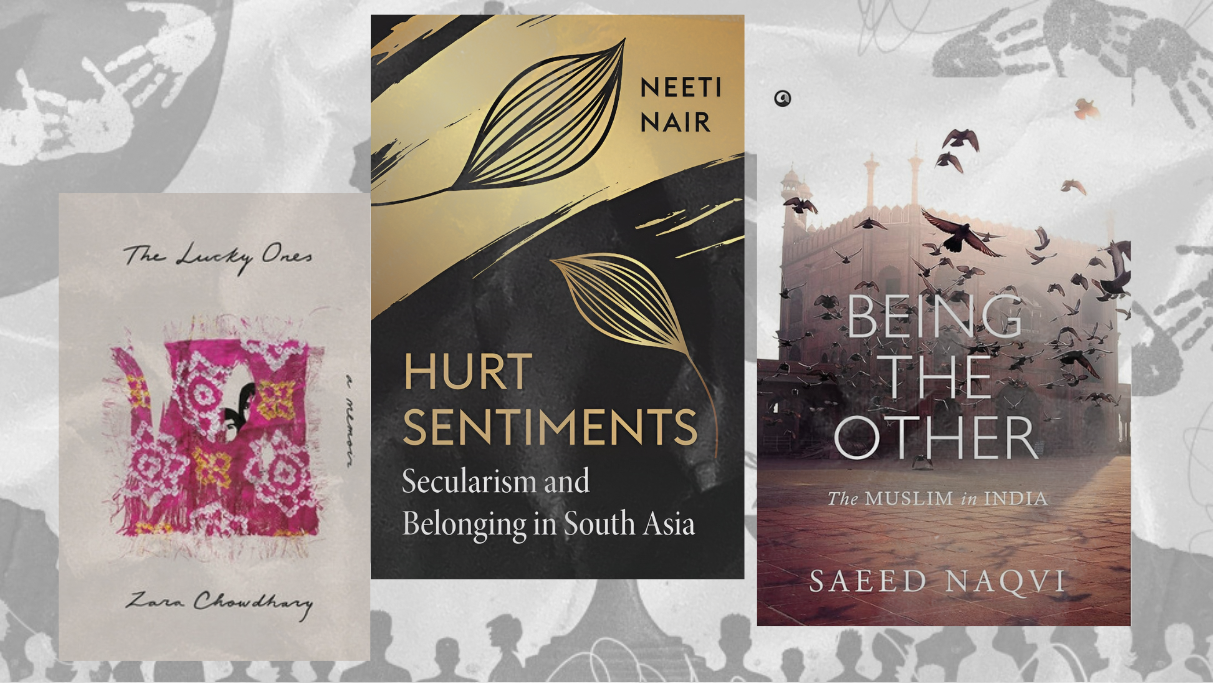
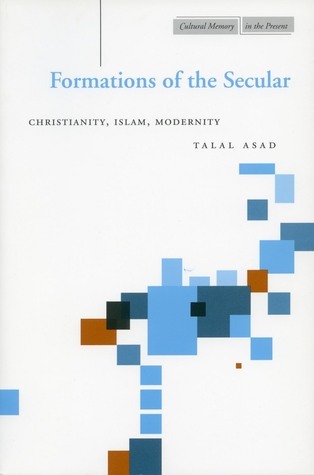
As anthropologist Talal Asad argues in Formations of the Secular, secularism is not a universal neutral condition but a historically specific political formation rooted in Christian-European history. Applying it universally without contextual adaptation creates analytical distortions. This is particularly relevant to Bengal, where the long history of coexistence operated through a completely different logic, one that is only legible if we take seriously what Bengal was before modernity arrived.
The civilisational substrate of the Bengal delta, with its indigenous Tantric cosmology, its non-Brahmanical religious traditions, its vernacular devotionalism, and its porous shrine culture, had produced, over millennia, a social world in which religious identity was lived rather than legislated, overlapping rather than sealed, porous rather than bounded. Tantra, by its very nature, resisted the separation of sacred and profane. Sahajiyā devotionalism refused to be bound by the walls of caste and creed. The Baul tradition explicitly rejected the mosque and the temple as exclusive sites of the sacred. These were not proto-secular positions. They were expressions of an indigenous civilisational logic that predated the categorical separations imposed by modernity.
Political theorist Ashis Nandy has argued that colonial modernity hardened identities that were previously more fluid in South Asia. Census categories, communal electorates, codified legal identities, and nationalist politics gradually transformed overlapping social worlds into rigid communal blocs. Modern communalism, therefore, cannot simply be projected backwards as a timeless historical reality.
Scholar Saba Mahmood demonstrated how modern secular governance can intensify religious division by reorganising communities into fixed legal categories. The British colonial administration in Bengal contributed significantly to this hardening, producing, through the census, through codified personal law, and through divide-and-rule electoral engineering, the communal identities that would eventually produce the catastrophe of 1947.
The tragedy is that older histories of coexistence are increasingly obscured. They were not always harmonious, but they were shaped by a civilisational logic very different from that of modern political identities. A logic in which the pir’s dargah at the river’s edge and the Manasa temple in the same village were not competitors in a zero-sum religious market, but expressions of a shared, layered sacred geography whose grammar had been forming since before either Islam or Brahmanical Hinduism arrived in this delta.
Philosopher Akeel Bilgrami similarly notes that South Asia lacked the church-state conflict that shaped European secular modernity. Historically, coexistence here depended less on privatising religion and more on managing plural social life within shared civic and sacred spaces.
To understand Bengal historically, we therefore need categories beyond the simple binary of communalism versus secularism, categories that take seriously the delta’s indigenous civilisational inheritance.
How should we read Bengal?
Bengal’s history demands a different intellectual approach, not because Bengal was isolated from broader civilisational currents, but because it absorbed and transformed them through the logic of a civilisation that was already ancient, already complex, already confident in its own cultural grammar before any of those currents arrived.
Islam entered Bengal, but Bengal reshaped Islam. Sanskritic traditions entered Bengal, but Bengal vernacularised them, producing a Buddhist Tantra, a syncretic Vaishnavism, and a Sahajiyā tradition that belong to no purely external category. Colonial modernity entered Bengal, but Bengal negotiated it through the density of its own social and spiritual realities.
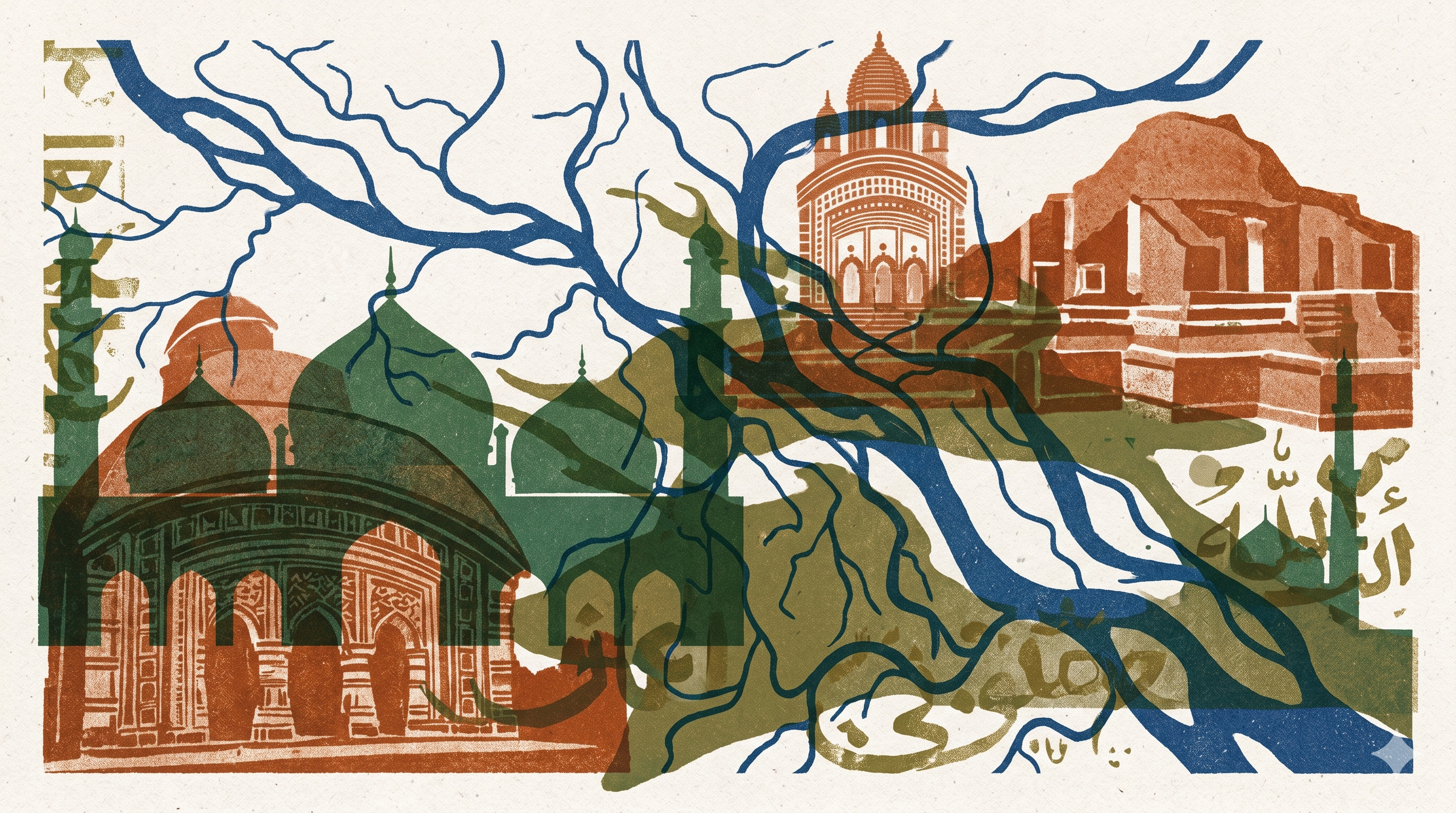
This is why Bengal cannot be adequately explained through imported civilisational categories alone.
A syncretic cultural history does not deny religious difference, political conflict, or historical rupture. Rather, it recognises that societies evolve through interaction, adaptation, overlap, and continuity, and that what appears to be syncretism from the outside is, from within, simply the continued exercise of a civilisational logic shaped over millennia.
Until Bengal is read through its own civilisational experience, in all its depth, from its deepest strata onwards, we will continue to force it into categories that explain other civilisations better than they explain Bengal itself. And those who benefit most from that misreading will continue to present their interpretations as settled truths. The antidote is not outrage. It is history: honestly, deeply, and on Bengal’s own terms.
Mohammad Habib Reza is an architect, architectural historian, and Associate Professor at the School of Architecture and Design, BRAC University.
Send your articles for Slow Reads to slowreads@thedailystar.net. Check out our submission guidelines for details.
Graphic modernity: Bengali artists and the politics of book design
Echoes of Karbala: A personal journey through Muharram in Old Dhaka
500 years after Babur's victory / How the Mughal legacy continues to shape South Asia
The lost world of Dhaka's courtesans and baijis
Early Bengali advertising / Ghosts, gods, and swadeshi pride

Love, faith and family: Inside World Cup players’ tattoos

Can migration help win a World Cup?

A crime history of Bengal: When rivers became a haven for dacoits

Mohajir manuscripts: Field notes from Dhaka Aliya Madrasa