Buddhadeva Bose: As I knew him
I met Professor Buddhadeva Bose in 1961. It was at the Institute of Indian Civilisation of the Sorbonne in Paris. He gave a memorable lecture on Tagore. Later, I had the occasion to meet him along with some of my colleagues. Incidentally, I told him about a book on comparative literature in French that I possessed. He was interested in seeing the book, and finally we decided to meet the next morning at his hotel, where I would bring a copy of it.
At about 10 in the morning, I reached his hotel near the Opera. I was requested to wait in the lounge, where I was soon joined by an extraordinary young Indian, Deben Bhattacharya. He had earlier translated Bose’s poems into English for the British monthly Encounter. He had come to invite the Boses to dinner, and he asked me to join them if I was free. For such occasions, I was always free. In the evening, I met Buddhadeva and his ‘Mokkirani’, Protiva Bose, as well as Deben and his wife, Birgit. As in the morning, we had a great deal of discussion in the evening, mostly related to Bengali literature.
The next afternoon, Bose was invited to Krishna Tagore’s home. There were several other celebrities. Buddhadeva invited me to join him there, and we spent the evening and part of the night partying. We went to a special restaurant, and he told me that the dinner was on him and that I should take care of the nightclub and other expenses. We had an excellent time. My classmate Josefina joined us, and she instantly became a friend of Protiva Bose. We enjoyed a good night and decided to meet the next day at 12 at the Louvre. Buddhadeva was quite exuberant upon seeing the original Greek sculptures and, finally, the Mona Lisa and other works by Leonardo da Vinci. I have forgotten where we had dinner, but later we met Deben and Birgit and spent the Paris night moving through a few cafés. The next morning, Bose left for Amsterdam.
After a few months, I started writing letters to Bose and received replies. Two of those letters are still with me. On returning home in 1968 and the following year, I received two other letters which were, unfortunately, lost during the War of Liberation.
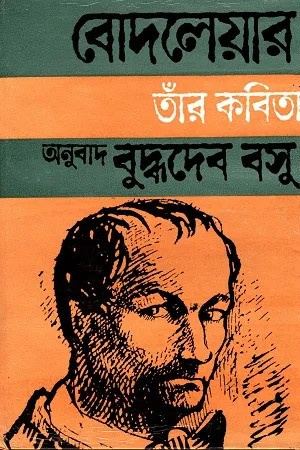
In August 1965, I visited Calcutta and spent a great part of the day chez Bose. The couple entertained me with a family lunch and gave me a copy of Bose’s translation of Baudelaire.
Later, when I came back to Chittagong, I sought Bose’s advice regarding the publication of a magazine called Forashi Sahitya Shombhar. He advised me to avoid limiting it to French and to keep it open to all languages. On receiving an invitation to my marriage, he wrote to me asking me to give him a London address so that he could send me some books.
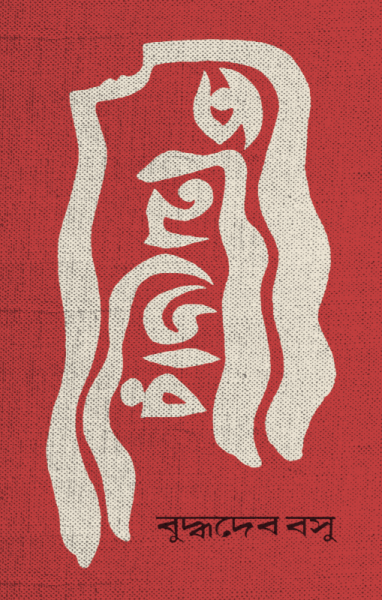
Since his student days, Buddhadeva had been quite prolific in his writing. Whether in prose or poetry, he was constantly writing. Thus, he produced a good number of books of poetry, short stories, novels, essays and works in several other literary forms. His Kaler Putul (1945), An Acre of Green Grass (1948), Tithidor (1949), Andha Alo (1958), Baudelaire (1958), Raat Bhor Bristi (1966), Toposhi o Tarongini (1967), and many others are still remembered.
Dr Mahmud Shah Qureshi is an eminent Bangladeshi scholar. He has been honoured with numerous accolades, including the Ekushey Padak and France’s Légion d’honneur.
Send your articles for Slow Reads to slowreads@thedailystar.net. Check out our submission guidelines for details.
Why is there so much anxiety about women’s bodies?

End of reading? A post-literate society in the making
Can I still be the daughter they need?
What death teaches us about life
How to help children fall in love with reading
Why Christopher Nolan's The Odyssey disappoints in its portrayal of women

10,000 steps a day: Health myth or medical fact?
Why Dhaka University should rethink its rules for female students
Inherited Memories / One railwayman's line-box, three eras of history