What phuchka and jhalmuri can teach us about the science of taste
Think about the last time you popped a phuchka into your mouth at a street cart. You did not just taste it; you experienced a rapid structural collapse. The paper-thin, fried shell shatters under pressure, instantly flooding your mouth with cold tamarind water, soft spiced potatoes and crisp onions. Within milliseconds, your brain registers sweet, sour, salty and spicy inputs all at once, punctuated by the earthy punch of roasted cumin (tala jira) and sharp black salt (bit lobon). By the time you swallow, your palate is not satisfied—it is actively demanding the next one.
What makes iconic street foods so wildly addictive is not just nostalgia; it is, perhaps, an accidental masterclass in culinary science. Most ordinary meals exist in a predictable, two-dimensional space. However, true culinary excitement occurs when a dish crosses what I call the “3+ Taste Threshold.” By pairing three or more distinct chemical tastes with dramatic textural changes over time, complex foods bypass our brain’s natural boredom switch and keep us in a state of continuous sensory delight.
The brain’s boredom switch and the chemistry of pleasure
The human brain loves efficiency. When you eat something simple—say, a plain salted potato crisp—your tongue registers a single dominant taste: salt. For the first few bites, your brain’s reward system fires happily. But very quickly, a biological mechanism known as sensory-specific satiety (SSS) kicks in.
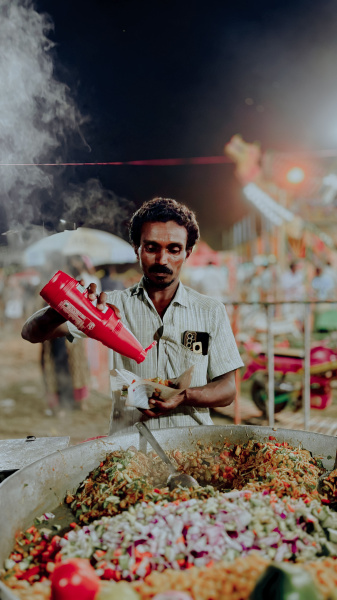
As the same flavour compound repeatedly hits your taste buds, your brain turns down the volume—the sensory input is no longer novel, leaving your palate bored long before you are physically full.
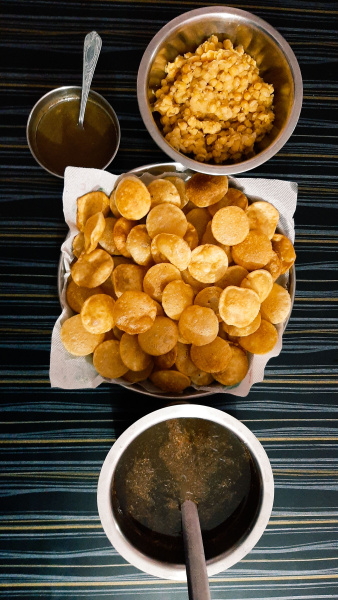
Phuchka relies on a sudden shift in physical state mid-bite. The thin, brittle puri acts as a dry container holding a dense filling of spiced potatoes and chickpeas. When filled with cold tamarind water (tok) and crushed between your teeth, the brittle barrier shatters, instantly flooding your mouth with a high-intensity wave of sour, sweet and spicy notes.
Complex street foods break this boredom cycle entirely. When a single bite delivers four or five tastes simultaneously, your brain’s decoding system becomes delightfully overloaded. This sensory contrast can intensify the brain’s reward response, helping sustain the desire for another bite. The experience is further amplified by chemesthesis, the physical sensations produced by food, such as the sharp burn of raw chilli or the nose-tingling heat of mustard oil. Because these chemical and physical signals are constantly competing for attention, your brain cannot adapt as readily to just one input. Instead of reaching rapid sensory fatigue, your brain stays engaged in an active loop of sensory stimulation, leaving your palate craving the next bite before you have even finished swallowing the first.
Flavour dynamics: Mirroring, contrasting and desirable bitterness
To achieve this level of sensory engagement, cooks rely on two fundamental flavour relationships: mirroring and contrasting.
Flavour mirroring (synergy): This involves layering ingredients that share similar flavour profiles to build harmonious depth. A masterfully prepared citrus punch or local lemonade (lebur sarbat), in some cases, does not rely on a single source of acidity; it mirrors citrus notes by layering lime juice, fragrant lemon zest and sweet orange, creating a seamless, multidimensional citrus experience.
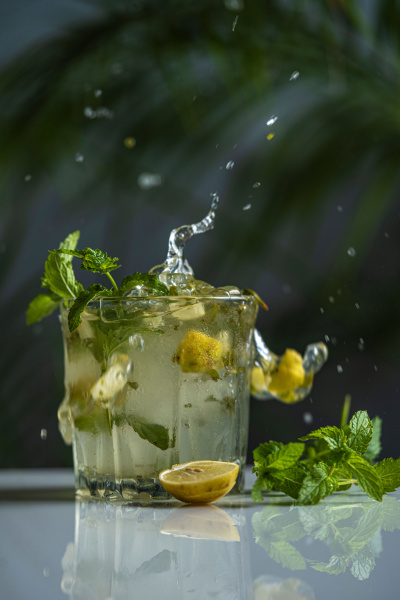
Flavour contrasting (tension): This involves bringing opposing tastes together to create dynamic sensory tension and actively modify how the tongue perceives them. When contrasting flavour signals hit the palate simultaneously, they can alter the perception of one another and soften harsh edges—such as when salt suppresses the perception of bitterness, or when sharp acidity cuts through heavy richness and fat.
When you eat something simple—say, a plain salted potato crisp—your tongue registers a single dominant taste: salt. For the first few bites, your brain’s reward system fires happily. But very quickly, a biological mechanism known as sensory-specific satiety (SSS) kicks in.
This tension is where bitterness—a taste humans are evolutionarily predisposed to approach cautiously—can become deeply desirable. On its own, bitterness can serve as a warning signal for potentially harmful substances. But when brought into a multi-taste matrix, it adds sophisticated depth. Consider a classic Bangladeshi citrus pickle (lebur achar): the sharp bitterness of the oil-soaked rind is vigorously countered by sourness, salt and chilli heat, turning a harsh taste into a mouth-watering delicacy. Similarly, when bitter gourd (korola) is fried with potatoes, salt and chilli, the salt tempers its harshness while the contrasting textures transform a bitter vegetable into an appetite-stimulating dish.
The physical delivery system: Texture as a time-release switch
Chemical taste alone does not create this excitement; it also requires precise timing. Texture acts as a mechanical delivery system, influencing how quickly flavour compounds are released and reach the receptors on your tongue.
South Asian street food culture offers two brilliant examples of how texture can control this release:
The structural collapse (phuchka)
Phuchka relies on a sudden shift in physical state mid-bite. The thin, brittle puri acts as a dry container holding a dense filling of spiced potatoes and chickpeas. When filled with cold tamarind water (tok) and crushed between your teeth, the brittle barrier shatters, instantly flooding your mouth with a high-intensity wave of sour, sweet and spicy notes. The denser potato filling lingers behind, gradually releasing deeper savoury and earthy flavours as you chew.
The multi-surface matrix (jhalmuri)
Where phuchka is a sudden explosion, jhalmuri is a continuous rhythm. It achieves multi-taste excitement by combining ingredients that break down and release their flavours at different rates:
Puffed rice (muri): Light, airy and brittle, offering a vast surface area for flavourful oils and seasonings to cling to.
Chanachur and peanuts: Dense and hard, delivering a deep, satisfying crunch.
Fresh vegetables and raw mustard oil: Fibrous onions and cucumber release fresh moisture, while raw mustard oil delivers a sharp, nose-tingling heat.
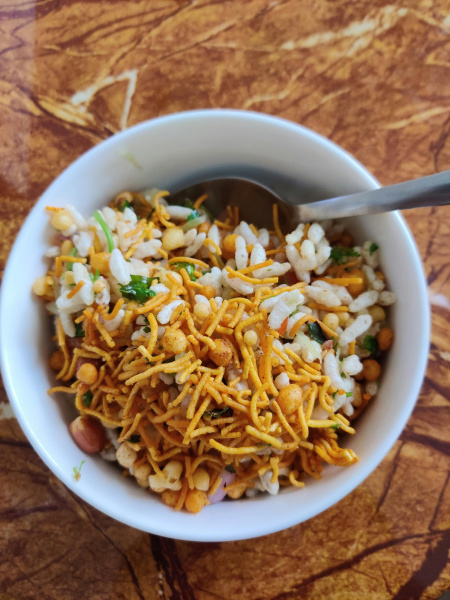
Because each element breaks down at a different rate during chewing, tastes and aromas are released in sequence rather than all at once, creating an evolving flavour profile with every mouthful.
A universal formula: Global perspectives
This synergy between the 3+ Taste Threshold and structural timing can be found across culinary traditions around the world.
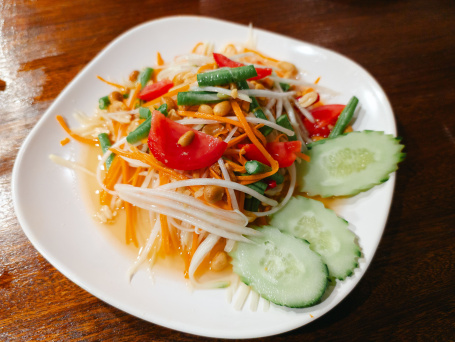
Take Thai som tam (green papaya salad). On the taste front, it hits your palate with four intense inputs at once: sharp lime sourness, fiery bird’s-eye chilli heat, salty-umami fish sauce and sweet palm sugar. But the real genius is the green papaya itself. Shredded into firm, crisp strands, it provides a fibrous crunch that resists becoming soggy in the liquid dressing. As your teeth crush the papaya, the intense, multi-taste dressing is released alongside the sudden, oily crunch of roasted peanuts.
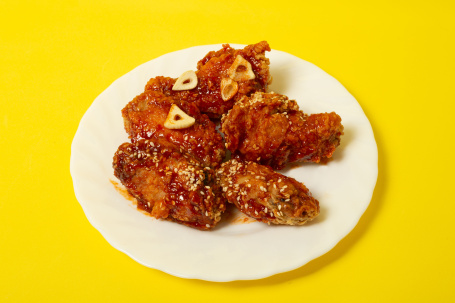
Further east, Korean fried chicken achieves a similar high-wire act through temperature and crust mechanics. The chicken is often double-fried to create an exceptionally crisp outer shell. This brittle crust holds a thick, sticky glaze of sweet honey, fermented gochujang chilli paste, garlic and soy sauce while retaining much of its crisp texture. When you bite through that hot, crunchy barrier into the juicy meat—and follow it with a cold, sour, crunchy cube of pickled radish—you experience a dynamic interplay of taste, texture and temperature similar to that of a fresh phuchka.
Chemical taste alone does not create this excitement; it also requires precise timing. Texture acts as a mechanical delivery system, influencing how quickly flavour compounds are released and reach the receptors on your tongue.
Even comfort foods such as loaded nachos rely on this principle. A tortilla chip acts as a rigid, salty vehicle supporting contrasting layers—rich melted cheese, savoury meat, cold salsa and spicy jalapeños—creating a multi-surface matrix with every bite.
Designing excitement
Great food is rarely about a single standout flavour. It is often an intricate interplay of taste, aroma, texture and temperature. By crossing the 3+ Taste Threshold, balancing contrasting flavours and using texture as a mechanical time-release switch, cooks around the world—from Dhaka street vendors to global street-food masters—engage multiple sensory systems at once. They turn simple ingredients into compelling, multisensory experiences that keep our palates curious and encourage us to reach for another bite.
Sajedul Hoq is a culinary enthusiast, founder of Fusion Terminal (fusionterminal.com), and creator of the food review platform dhakafoodies (fb.com/thedhakafoodies).
Send your articles for Slow Reads to slowreads@thedailystar.net. Check out our submission guidelines for details.

Remembering Yayoi Kusama: My encounters with the master of infinity

Dress and morality : The politics of what women wear
Is being single at 35 a failure?

Travelling through books / One more page please, Mama

BTV does not need a new look to have a new future

Why is there so much anxiety about women’s bodies?

Buddhadeva Bose: As I knew him

End of reading? A post-literate society in the making

Can I still be the daughter they need?