


Bangladesh could change cricket forever, again

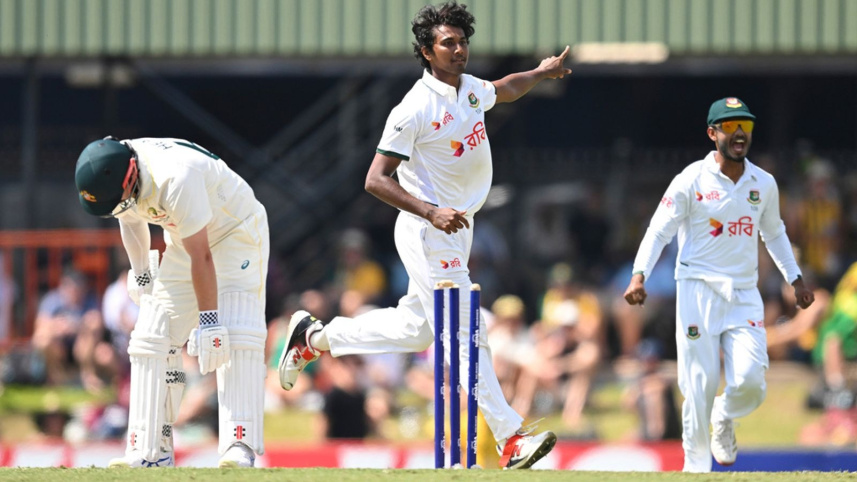
Every decade, it seems, Bangladesh finds a way to bend the arc of world cricket -- not through continuous dominance, but through a seismic upset that forces one of the sport’s biggest nations to rebuild in its aftermath.
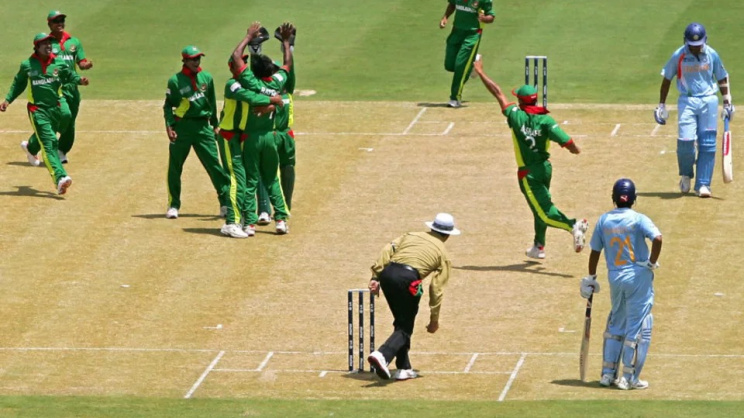
Go back to 2007. In the group stage of the 50-over World Cup, Bangladesh beat India -- a defeat so consequential it knocked India out before the Super Eights.

The ripples went far beyond a mere elimination. India returned home to a full-scale reckoning: a senior-heavy team was gradually pulled apart, and a rebuilding process began that would reshape Indian cricket for a generation.
That same year, at the inaugural T20 World Cup, a young Indian side -- without Sourav Ganguly, Rahul Dravid and Sachin Tendulkar -- won the tournament under a young captain named MS Dhoni.
It helped turn T20 from a novelty into a phenomenon. A year later, the IPL launched and rewired franchise cricket. Dhoni would go on to lead India to the 2011 World Cup and to the No. 1 Test ranking.
Following the 2007 World Cup debacle, the ICC also overhauled the tournament format, moving away from the 16-team group-stage structure after India’s early exit. The changes were widely seen as an attempt to avoid a repeat of such a commercially damaging early elimination for one of the game’s biggest teams.
Bangladesh did not cause all of that alone, but its victory over India was one of the tremors in a transformative period for both Indian and world cricket.
Fast forward to 2015. Bangladesh beat England in Adelaide to eliminate them from the World Cup and march into the quarter-finals.
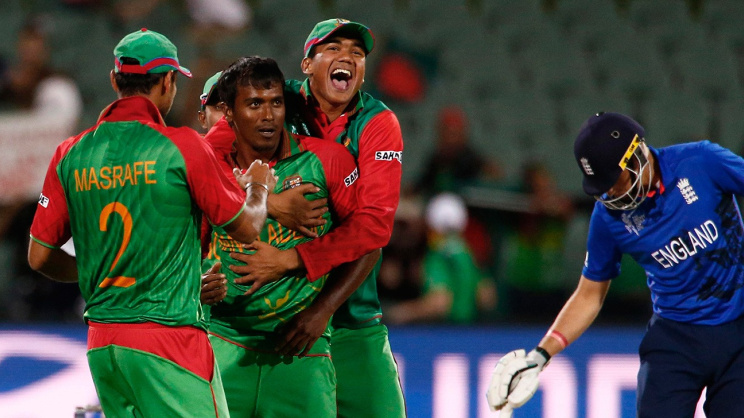
England’s response was reinvention. Out went the conservative ODI template; in came the fearless, boundary-hunting cricket built under Eoin Morgan.
Four years later, England lifted the World Cup at Lord’s, playing the aggressive brand of cricket that emerged from the reckoning that followed that tournament.
Which brings us to Darwin -- and a script that feels eerily familiar.
Bangladesh had not played a Test series in Australia in 23 years and had not toured the country for any bilateral series in 18. For years, they received precious few opportunities to play Australia at home.
This tour itself tells a story. It is being staged not in Melbourne or Sydney but at Darwin’s Marrara Stadium, hosting its first Test in 22 years. The second Test follows in Mackay, hardly a traditional cricketing capital either.
And yet, on the pitch, Bangladesh have been anything but peripheral.
Australia won the toss and chose to bat first, only for Bangladesh’s pace attack, led by Hasan Mahmud’s six-wicket haul, to bowl the hosts out for 198.
Bangladesh then batted, and batted, and batted. Tanzid Hasan made a maiden century in only his second Test, captain Najmul Hossain Shanto added 84, and Mehidy Hasan Miraz made a defiant 65 as Bangladesh reached 426, taking a lead of 228.
Josh Hazlewood’s six-wicket haul, which also brought up his 300th Test wicket, was Australia’s only real consolation.
Sent back out to bat, Australia slipped to 74 for 4 before Cameron Green and Alex Carey steadied things. At stumps on day three, they were 161 for 4, still trailing by 67.
This is not Bangladesh riding home comforts, as they did against England in 2016 or Australia themselves in 2017. This is a team taking apart the world’s No. 1 Test side at an unusual venue, in a rare winter Test window, thousands of kilometres from Australia’s traditional cricketing heartland.
If Bangladesh can close this match out, the symbolism will be hard to overstate.
 For all latest news, follow The Daily Star's Google News channel.
 A visiting Asian side beating Australia comprehensively on Australian soil does not happen often, and it rarely happens quietly. India waited 71 years from its first Test in Australia to win a series there, while Pakistan’s last Test victory on Australian soil came in 1995. Sri Lanka, meanwhile, have never won a Test match in Australia.
That history speaks to how difficult Australian conditions have traditionally been for Asian sides. A Bangladesh victory would therefore be a genuine jolt for Test cricket desperately searching for relevance amid the game’s shorter, louder formats -- and another data point in Bangladesh’s strange, recurring role as the team that forces cricket’s superpowers to look in the mirror.
It would also give real teeth to the World Test Championship. A result like this, against the No. 1 ranked side by the No. 9, is exactly the kind of upset that gives Test cricket context -- proof that the gap between the game’s giants and underdogs is not as fixed as the rankings suggest.
And most importantly, after such a dominant showing in Darwin, it is highly unlikely Bangladesh will need another 23 years to come back Down Under for their next Test series.
Comments