


Template or tribute? Questions shadow new jersey launch

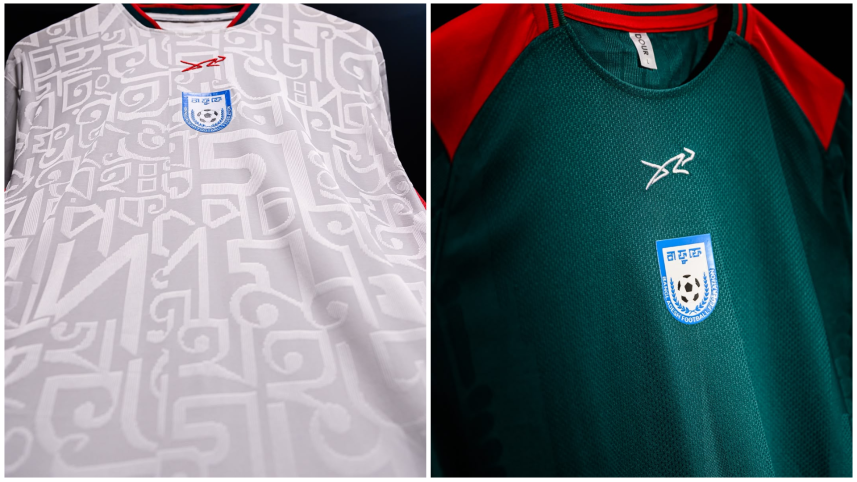
The wait for the new Bangladesh football team jersey tested the patience of supporters for months. When yesterday’s official unveiling was delayed by nearly an hour, that patience wore even thinner. But it was only when the covers finally came off that the real scrutiny began.
Despite a marketing campaign built around grassroots creativity and national pride, manufacturer Dour and the Bangladesh Football Federation (BFF) now face mounting questions over a kit launch defined by recycled templates, a hefty price tag, and a transparency void regarding financial details.

There had been plenty of questions over the timing already. Should the jersey have been unveiled earlier? Dour maintained the jerseys had been ready for months, but said the BFF determined when they would be unveiled.
“We were fully ready to launch the jersey from June. We could even have done it in March, but the timing was not up to us,” Dour CEO and founder Abid Alam Chowdhury said at the NSC auditorium in Dhaka.
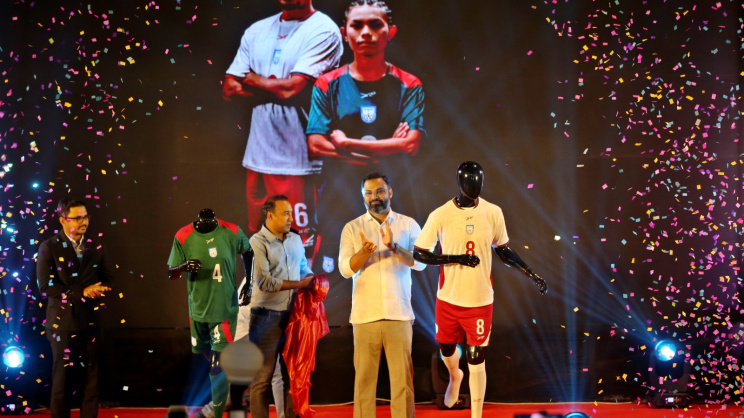
Dour claimed more than 1,300 submissions came through its crowdsourcing campaign, with 34 elements used in the final designs.
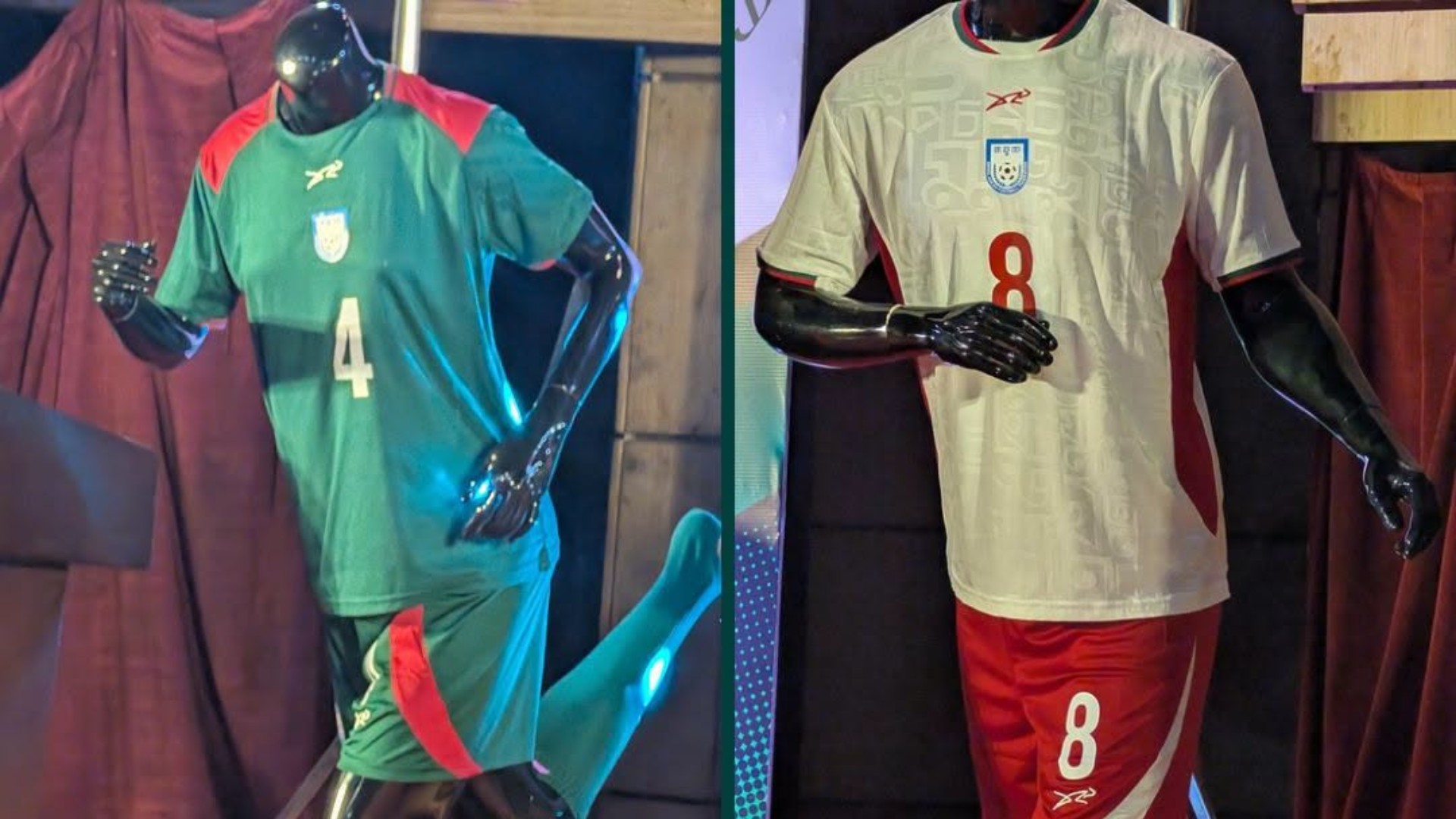
The white home jersey features red detailing and a Bangla-script watermark honouring the mother tongue, paired with red shorts and white socks. The green away kit, with red detailing, reflects Bangladesh’s “green soul”, drawing on its rivers, paddy fields and forests.
The ideas are unmistakably Bangladeshi. The execution is where the trouble truly began.
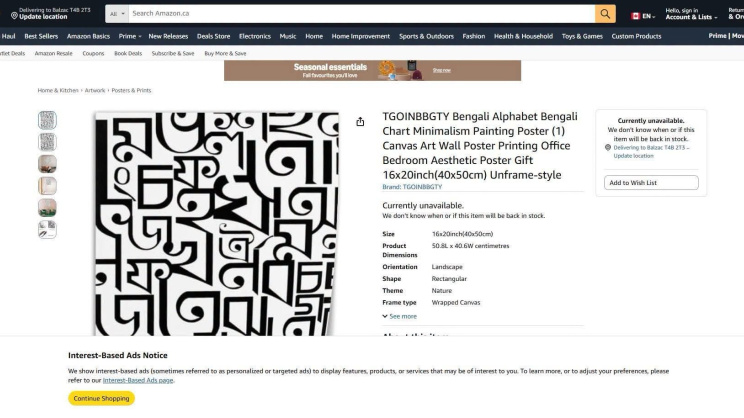
In what feels like unintentional satire, the jersey’s Bangla watermark appears to reproduce almost exactly a digital artwork sold online as a ‘minimalism’ poster.
In what feels like unintentional satire, the jersey’s Bangla watermark appears to reproduce almost exactly a digital artwork sold online as a ‘minimalism’ poster.
The manufacturer certainly took a ‘minimalist’ approach to originality. It wasn’t just the font; the distinctive interlocking arrangement of the letters remained exactly the same, simply lifted and tiled across the fabric.
The structural design fares no better.
The home kit's sweeping red panels mirror Turkey’s Euro 2024 template, while the training kit and promotional rollout heavily echo Puma’s Manchester City line.
If this was truly a project driven by the people, it is telling that not a single fan or designer from those 1,300 submissions was credited by name at the launch. When grassroots creativity is your core selling point, delivering a patchwork of uncredited, lifted graphics and familiar templates is a glaring failure.
Then there is the third kit, or rather the lack of one.
According to Abid, the design has been submitted but is still awaiting BFF approval and could launch after the upcoming SAFF Championship. What is the point of a third kit if it arrives after the tournament where an alternative strip may be needed to avoid a colour clash?
For regular supporters, however, the biggest hurdle is the price.
The official jersey retails for Tk1,600, rising to Tk1,700 with a custom name and number. In Bangladesh, high-grade replica and player-edition shirts of major international and club teams sell for around Tk1,000 to Tk1,100, depending on the version and seller.
They are not identical products. But the comparison matters because it asks a straightforward question: what tangible value does the Bangladesh kit offer for that extra Tk500-600, beyond its patriotic appeal?
That question is particularly relevant after complaints over last year’s jersey quality. The new edition does feel better in hand, with Dour claiming an eight-minute drying time and international-level fabric. But technical improvements alone may not convince supporters to shell out Tk1,600 for a jersey already inviting comparisons with existing templates and stock graphics.
 For all latest news, follow The Daily Star's Google News channel.
 Abid’s own response regarding affordability was telling.
“Is it within the reach of the fans? To be honest, for me, it is. From a market perspective, perhaps it isn’t.”
Is it within the reach of the fans? To be honest, for me, it is. From a market perspective, perhaps it isn’t.
Then there is the financial fog.
Dour is targeting 100,000 sales by December, a massive Tk16 crore retail footprint. So how much of that actually benefits the federation?
“I can’t give you the exact figure,” Abid deflected.
The BFF-Dour partnership has faced scrutiny since day one, and withholding the numbers only makes it worse.
The BFF-Dour partnership has faced scrutiny since day one, and withholding the numbers only makes it worse.
Commercial terms can remain confidential. But when BFF royalties are explicitly cited as part of the justification for a Tk1,600 price tag, the refusal to offer even a basic financial outline leaves a noticeable void of accountability.
For all its national symbolism and improved fabric, the new kit leaves a gap between what it promises and what it delivers. A campaign built on fan creativity should have produced something that felt genuinely distinctive, while giving supporters clearer reasons to believe that the price tag reflects more than the badge on the chest.
Comments