


How legends are redefining longevity
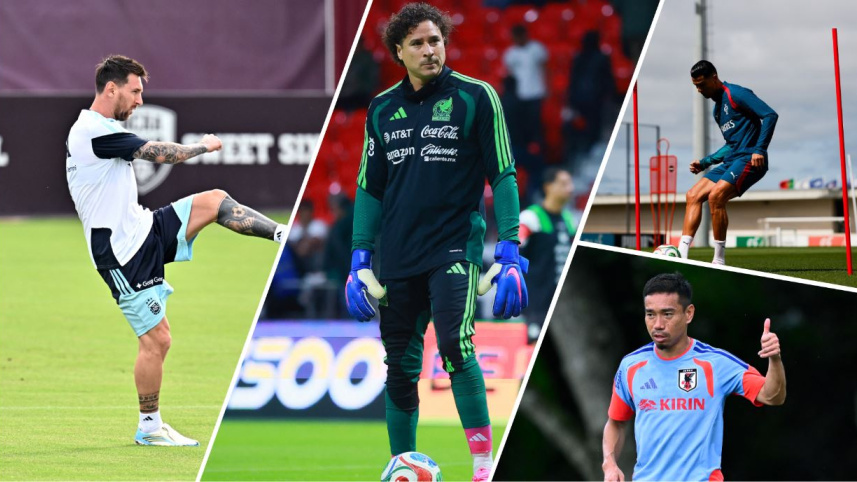
The FIFA World Cup 2026 is set to celebrate something remarkable: longevity. Thanks to advances in sports science, recovery methods, nutrition, and individualized training, elite footballers are extending their careers longer than ever before. As a result, some of the sport’s greatest legends are preparing to compete in their fourth, fifth, or even sixth World Cup.
Among them are Lionel Messi, Cristiano Ronaldo, and Guillermo Ochoa, who could make history by appearing in a sixth World Cup. Their continued presence reflects a broader transformation in modern football, where players are finding new ways to maintain peak performance well into their late thirties and beyond.

Paraguay’s Miguel Almiron exemplifies this commitment. He travels with a physiotherapist, begins recovery immediately after matches, and even has a treatment room at home. Argentina’s Rodrigo De Paul revealed that after training with Inter Miami, he and Messi often completed additional individualized fitness sessions to ensure they arrived at the World Cup in top condition.
Cristiano Ronaldo has long embodied this mentality. Known for his relentless discipline, he carefully manages his workload and recovery. At 41 years old, he continues to prove that elite performance is no longer limited by age alone.
According to Argentina fitness coach Luis Martin, modern preparation is increasingly personalised. “Training programmes are becoming increasingly tailored to the individual. Every player is different.” Clubs now monitor performance data closely, helping players train smarter and avoid unnecessary strain.
The list of returning veterans is impressive. Neymar, Son Heung-min, Luka Modric, Manuel Neuer, Kevin De Bruyne, Romelu Lukaku, Nicolas Otamendi, Fernando Muslera, and Yuto Nagatomo are all aiming for another World Cup appearance. Nagatomo, now 39, admitted, “I know I’ve already been to four World Cups, but I’ve never felt as nervous as I do now.”
After Japan’s elimination in Qatar 2022, Nagatomo considered retiring from international football. However, watching the dramatic Argentina-France final reignited his ambition. “I said to myself, ‘Why can’t I aspire to that too?’” Despite injuries and setbacks over the following years, he recovered in time and kept his World Cup dream alive.
Fitness expert Javier Valdecantos believes the explanation is simple: “The way players train has changed.” He points to major scientific breakthroughs over the last 15 years. In the past, training relied heavily on tradition and experience. Today, clubs measure nearly every aspect of performance, allowing them to identify harmful practices and optimise recovery.
Nutrition has become equally important. Athletes now follow carefully planned diets based on their training demands, recovery needs, and energy expenditure. Valdecantos notes that modern players understand exactly how many calories, carbohydrates, and proteins they need after specific workouts. “It’s remarkable how much science goes into training these days. That’s why players are still going strong at 40.”
Messi, preparing for his sixth World Cup, remains driven by the same love for the game that has defined his career. “I love playing football and I’ll keep doing it for as long as I can,” he said.
The 2026 World Cup will showcase more than star power. It will stand as a testament to resilience, adaptation, and careers built to last--proof that in modern football, greatness can endure longer than ever before.
 For all latest news, follow The Daily Star's Google News channel.
Comments