


The curse of expectation: Favourites and their repeated World Cup heartbreaks

Football World Cup history has repeatedly underlined one immutable truth -- the script is never written in advance. Those who arrive believing themselves invincible often fail to have the last laugh.
From Austria’s ‘Wunderteam’ in 1934 to Hungary’s ‘Magical Magyars’ in 1954, or Brazil’s artistic 1982 side, the World Cup stage has repeatedly turned into a graveyard for pre-tournament favourites.

As the 2026 World Cup approaches, a striking pattern emerges upon reflection: those expected to lift the trophy often find the crown too heavy to bear.
Early Heartbreaks (1930–1954)
The trend began with the inaugural World Cup in 1930. Argentina, champions of the 1927 and 1929 South American Championships (Copa America), arrived in Montevideo as favourites. Hosts Uruguay, Olympic champions in 1924 and 1928, were equally under the spotlight.
Both sides stormed into the final with 6-1 semifinal victories. But nerves defined the title decider. There was even a dispute over which ball would be used. Argentina led 2-1 at halftime using their own ball, only for Uruguay to score three times in the second half with theirs to win 4-2 and claim the crown.
Four years later, Austria’s famed ‘Wunderteam’ dazzled the world at the 1934 World Cup. Unbeaten in 14 matches, they entered the tournament brimming with confidence. Yet they fell 1-0 to Italy in the semifinal, despite the Azzurri having won just one of the two sides’ previous 12 meetings. Italy went on to defeat Czechoslovakia in the final and successfully defended their title in 1938.
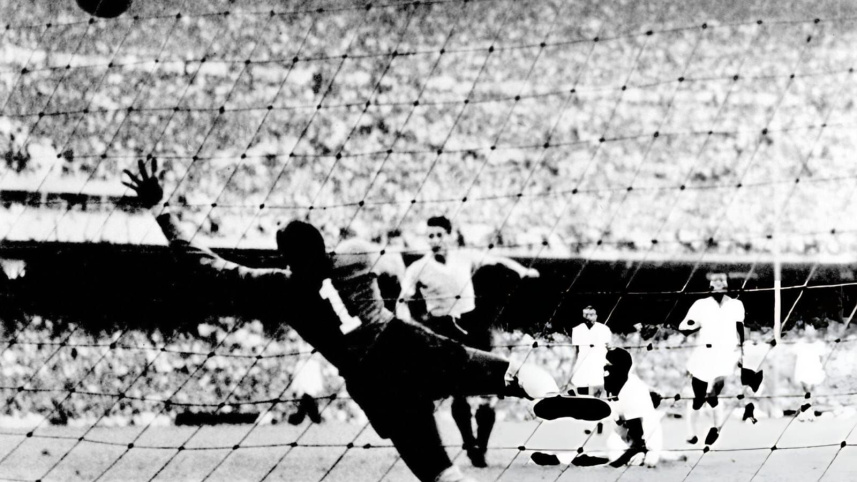
The most emotional chapter unfolded in 1950. Brazil, who had scored 46 goals in eight Copa America matches the previous year, were virtually crowned champions by newspapers before the final. Headline of a Brazilian newspaper, O Mundo, proclaimed: “Here are the world champions.” But Uruguay overturned a deficit to win 2-1 in front of nearly 200,000 stunned spectators. The episode is remembered as the ‘Maracanazo’ or the Maracana tragedy.
In 1954, Hungary -- powered by Ferenc Puskas and Sandor Kocsis -- were considered one of the greatest sides in history. After thrashing West Germany 8-3 in the group stage, they met the same opponents in the final. Despite racing to a 2-0 lead within eight minutes, Hungary ultimately fell 3-2 in what became known as the ‘Miracle of Bern’.
Brazil’s Dominance and Disappointment (1958-1982)
West Germany entered the 1958 World Cup as favourites, but the world witnessed the magic of 17-year-old Pele and 24-year-old Garrincha as Brazil lifted their first title. Four years later, despite Pele’s injury, Garrincha’s brilliance guided Brazil to a second successive triumph.
But 1966 brought disruption. Targeting a third straight title, Brazil’s ageing squad struggled, and Pele was repeatedly subjected to harsh tackles. The favourites were eliminated in the group stage, while hosts England claimed the trophy. Brazil returned to form in 1970, becoming the first favourites to meet expectations while playing dazzling football that surpassed all anticipation.
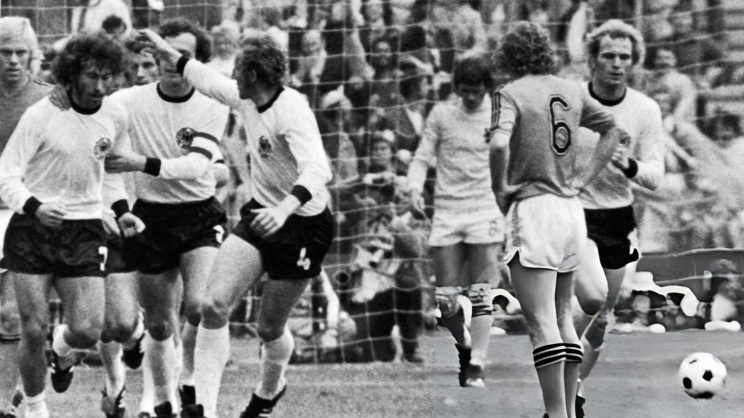
Four years later, the downfall of the favourites resumed. Johan Cruyff’s Netherlands, masters of ‘Total Football’, lost the final to West Germany. In 1978, hosts Argentina defied expectations, overcoming favourites Germany and Brazil to win their first World Cup.
Perhaps the most heartbreaking exit came in 1982. Brazil’s artistic side, featuring Zico and Socrates, were stunned by Paolo Rossi’s hattrick as Italy won 3-2 in the second group stage, ending Brazil’s 24-match unbeaten run. Italy went on to defeat West Germany in the final, reclaiming the title after 44 years.
Modern Era Upsets (1986-2022)
In 1986, Brazil were tipped favourites, but not with an outright guarantee of winning the title. In that edition, Diego Maradona’s extraordinary brilliance carried Argentina to the title -- a performance that continues to amaze football lovers.
Four years later, hosts Italy were favourites, yet West Germany defeated Argentina to become champions.
Brazil topped the favourites’ list in both 1994 and 1998. They lifted the trophy in the United States, but drama unfolded four years later in France. Just hours before the final, Ronaldo’s mysterious illness disrupted the Brazilian camp. Hosts France cruised to a 3-0 victory, powered by Zinedine Zidane’s brace, to claim their first title.
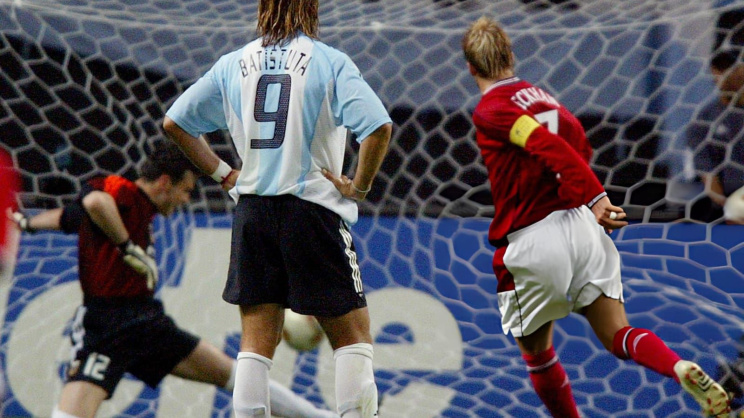
The new millennium saw even greater shocks. In 2002, favourites Argentina and France exited in the group stage, while Brazil -- who had struggled to qualify -- rode on Ronaldo’s remarkable comeback to a record fifth title. Four years later, Brazil were again favourites with Ronaldinho and Kaka, but bowed out in the quarterfinals to Zidane’s France. The French, too, fell short, losing to Italy on penalties in the final.
Spain upheld the reputation of favourites in 2010, winning the title in South Africa with their ‘tiki-taka’ style. But four years later, humiliation struck. Hosts Brazil, overwhelming favourites, were crushed 7-1 by Germany in the semifinal – one of the most embarrassing defeats in history. Germany went on to lift the trophy.
 For all latest news, follow The Daily Star's Google News channel.
 The trend continued in 2018 and 2022. Defending champions Germany exited in the group stage in Russia. In Qatar, despite Brazil and France carrying the favourites’ tag, Argentina ended a 36-year wait. Even after losing their opening match to Saudi Arabia, Lionel Messi guided the Albiceleste to their third world title.
The World Cup remains a grand stage where nerve often outweighs form, and tactical efficiency eclipses aesthetic beauty. From Uruguay in 1950 to Italy in 1982, many champions were not loudly tipped beforehand. Time and again, history has shown that expectation can be a burden too heavy to bear, and that the loudest pre-tournament anthems often fade into stunned silence. On football’s greatest stage, it is rarely the proclaimed invincible who prevail -- but those who endure the pressure, seize their moments, and rewrite the script when it matters most.
Comments