


From vision to equity: Orbis chief charts Bangladesh’s next leap in eye care

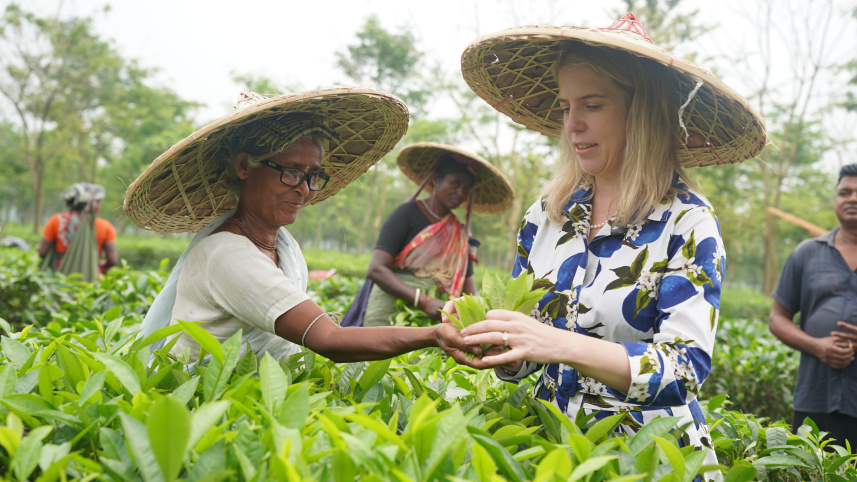
In a global health landscape marked by shrinking funding and widening inequities, Orbis International is charting an uncommon trajectory—growth with a deliberate focus on equity. At the helm of this strategy is its newly appointed President and CEO, Kathleen Sherwin, who has just completed an intensive visit to Bangladesh as part of her first 90 days in office.
“I’m feeling a great deal of ambition for where Orbis is going,” Sherwin said, reflecting on a whirlwind introduction that has taken her from South Asia to East Asia in rapid succession. Her early priority has been clear: to ground leadership decisions in field realities.


Growth in a time of contraction
At a time when global health funding has contracted sharply—by an estimated $60–90 billion—many international NGOs are scaling back. Orbis, however, has managed to expand its revenue base, largely due to diversified funding from public donations and philanthropic foundations. This relative financial resilience, Sherwin emphasised, comes with responsibility.
“In this growth phase, we must prioritise those who are most underserved and under-resourced,” she noted, adding that responsiveness to local partners has become even more critical in an unpredictable funding environment.
Rather than working in isolation, Orbis is increasingly collaborating across the eye health ecosystem, leveraging partnerships to ensure continuity of care, particularly in vulnerable settings.
Bangladesh: Progress with persistent gaps
Sherwin’s visit to Bangladesh—covering Dhaka, Sylhet, Cox’s Bazar, and Rohingya refugee camps—offered a snapshot of both progress and enduring challenges.
Over four decades, Orbis has contributed significantly to eye health in the country: millions of screenings, hundreds of thousands of surgeries, and tens of thousands of clinical trainings. Yet systemic barriers remain.
Bangladesh’s densely populated urban centres face capacity constraints, while remote rural areas struggle with limited access to trained professionals and diagnostic services. “You see both extremes here,” Sherwin observed. “High demand in cities, and limited resources in rural communities.”
A model rooted in community and innovation
At the centre of Orbis’s Bangladesh strategy are its vision centres—community-based facilities designed to bring eye care closer to patients. Particularly notable are the women-led “green vision centres,” which combine healthcare delivery with economic empowerment and climate-conscious design.
“These centres are not just about care—they’re about sustainability,” Sherwin explained. Many are solar-powered, reducing operational costs while ensuring service continuity in energy-scarce areas.
The organisation now plans to nearly double its network to around 100 centres, scaling a model that integrates local workforce development, gender inclusion, and technological support.
Technology is playing an increasingly pivotal role. Artificial intelligence-enabled diagnostics and teleconsultation platforms are helping bridge the rural-urban divide, allowing frontline providers to connect with specialists in real time.
Tackling avoidable blindness at scale
Among Orbis’s most ambitious initiatives in Bangladesh is a large-scale cataract programme, aiming to deliver 100,000 surgeries over the next two years—the largest such effort in its history.
Cataracts remain a leading cause of avoidable blindness globally, and addressing them at scale requires not just surgical capacity, but systemic strengthening. This includes upgrading equipment, improving referral pathways, and ensuring post-operative care.
In parallel, Orbis is expanding its presence in humanitarian settings, particularly among Rohingya refugees, where it remains the sole provider of organised eye care services.
Investing in human capital
A recurring theme in Sherwin’s vision is the critical shortage of trained eye health professionals. To address this, Orbis is investing heavily in capacity-building through a combination of traditional and cutting-edge approaches.
Its flagship Flying Eye Hospital continues to deliver hands-on training globally, but equally significant are its in-country initiatives: digital training hubs, simulation labs, and fellowships.
In Bangladesh, three digital training centres—established in collaboration with institutions such as the Bangladesh College of Physicians and Surgeons—are introducing virtual reality-based surgical training. Trainees can practise procedures in simulated environments before operating on patients, significantly shortening the learning curve.
 For all latest news, follow The Daily Star's Google News channel.
 “There’s a powerful combination here—online learning, simulation, and hands-on practice,” Sherwin said. “It’s about building confidence and competence before clinicians ever reach the operating table.”
A moment for reflection
Despite its achievements, Sherwin acknowledged that Orbis, like many global health organisations, must confront its own limitations.
One key area is inclusion. “We can do better in applying a consistent gender and inclusion lens across all our programmes,” she admitted, highlighting the need to address the specific barriers faced by women, girls, and people with disabilities.
This reflection is shaping Orbis’s evolving strategy—one that seeks not just to expand services, but to ensure they are equitable, accessible, and responsive to diverse needs.
Looking ahead
As Sherwin departs Bangladesh, her message is both pragmatic and hopeful. The country has made measurable strides in reducing avoidable blindness, but the next phase will require scaling innovation, strengthening systems, and deepening partnerships.
For Orbis, the path forward lies at the intersection of technology, community engagement, and inclusive policy—a model that could well define the future of global eye care.
Comments