


LUNAR SWIRLS
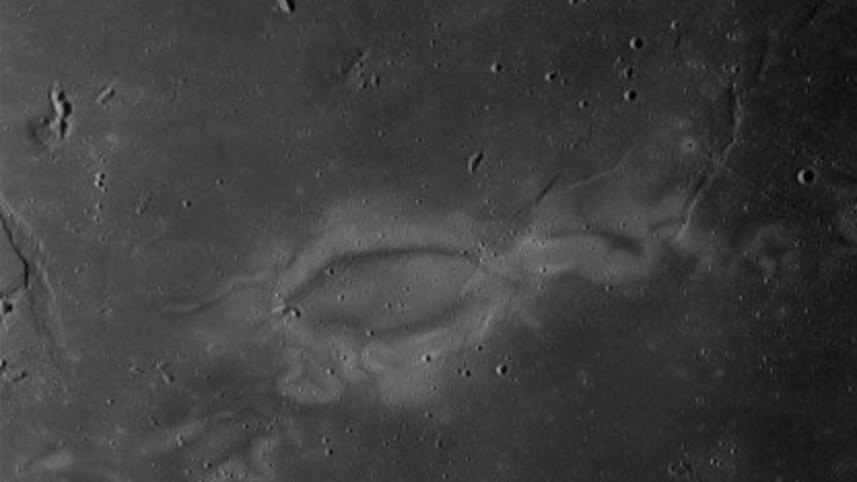
Brown University researchers have produced new evidence that lunar swirls -- wispy bright regions scattered on the Moon's surface -- were created by several comet collisions over the last 100 million years.
In a paper published in the journal Icarus, the researchers use state-of-the-art computer models to simulate the dynamics of comet impacts on the lunar soil. The simulations suggest that such impacts can account for many of the features in the mysterious swirls.

"We think this makes a pretty strong case that the swirls represent remnants of cometary collisions," said Peter Schultz, a planetary geoscientist at Brown University. Schultz co-wrote the paper with his former graduate student, Megan Bruck Syal, who is now a researcher at the Lawrence Livermore National Laboratory.
Lunar swirls have been the source of debate for years. The twisting, swirling streaks of bright soil stretch, in some cases, for thousands of miles across the lunar surface. Most are found on the unseen far side of the Moon, but one famous swirl called Reiner Gamma can be seen by telescope on the southwestern corner of the Moon's near side. "It was my favorite object to look at when I was an amateur astronomer," Schultz said.
www.sciencedaily.com
 For all latest news, follow The Daily Star's Google News channel.
Comments