Justice that lets every woman and girl live free from fear



This year’s International Women’s Day theme, “Rights. Justice. Action. For ALL Women and Girls,” is a call to overcome structural barriers that deny women and girls equal access to justice, such as unequal laws, weak enforcement, discriminatory practices and harmful social norms that undermine rights and perpetuate violence.
Across the globe, democratic space is narrowing and hard-won gains for gender equality are under pressure. Women and girls continue to face legal and social systems that institutionalise inequality and restrict their access to protection and redress. In 2026, women worldwide enjoy only 64 per cent of the legal rights held by men (World Bank), leaving them disadvantaged in areas ranging from employment and financial security to safety, property ownership and mobility. Without meaningful access to justice, rights remain promises on paper rather than lived realities.
In Bangladesh, the experience of survivors underscores the need to further reform protection systems. As one survivor of sexual violence shared: “When I went to seek redress, I felt like the system saw everything except my pain. I kept asking myself: if justice isn’t for women like me, then who is it for? I stayed quiet for years because I thought no one would believe me. Speaking up was the only way for me to survive, but the journey to justice has been harder than the violence itself.” Her words echo the lived realities of many women and girls.
The 2024 National Violence Against Women Survey reveals that 54 per cent of women in Bangladesh have experienced physical and/or sexual violence in their lifetime, yet 64 per cent never told anyone. Silence is rarely a choice; it is often a survival strategy shaped by stigma, fear of retaliation, economic dependency and a lack of confidence in formal systems. When survivors do not see a clear, compassionate and effective path to justice, the system itself becomes another source of harm.
Recent steps by the Government of Bangladesh to strengthen legal protections are both timely and necessary. New ordinances addressing domestic violence and sexual harassment in workplaces, educational institutions and online spaces, together with commitments to review the Child Marriage Restraint Act, signal a willingness to close systemic gaps. These measures reflect a life-cycle approach to protection, recognising that adolescent girls, young women, women in the home and workplace, women with disabilities, older women and transgender women face different and intersecting risks.
Laws, however, only matter if they work for survivors. Justice must be visible, accessible and humane.
Access to justice is inseparable from the realisation of women’s rights. Violence against women and girls is both a human rights violation and a public health crisis. Survivors require not only legal remedies but also confidential health services, psychosocial support and quality, survivor-centred case management. The integration of legal assistance with accessible health and social services is essential to ensure a multisectoral response that will enable women and girls to seek help safely and with dignity.
Reformed legislation contributes to Bangladesh’s commitments under the Sustainable Development Goals, particularly Goals 5 and 16, as well as international frameworks such as the Convention on the Elimination of All Forms of Discrimination against Women (CEDAW), the Beijing Platform for Action and ILO Convention 190. These instruments, as well as the Commission on the Status of Women 70 platform, help close legal gaps by expanding definitions, extending protections across physical and digital spaces and acknowledging technology-facilitated gender-based violence. The Cyber Security Ordinance (2025) further strengthens efforts to address online abuse, which disproportionately affects women and girls.
At the same time, legal reform must be comprehensive. Certain inequitable provisions within personal laws, dowry-related practices and aspects of rape legislation continue to undermine full equality before the law. Addressing these gaps with urgency and consultation is critical to building a coherent and rights-based legal framework.
Laws, however, only matter if they work for survivors. Justice must be visible, accessible and humane. Internal complaint committees must be functional, independent and trusted. Reporting mechanisms must be safe and confidential. Police, health providers, social workers, legal aid services, employers and educational institutions must coordinate effectively to ensure timely referrals and survivor-centred support. Multi-sectoral response systems anchored in trained social service professionals and quality case management must be available to all survivors, regardless of age, marital status, disability, ethnicity, location or gender identity.
Adequate financing is equally essential. Legal reforms without resources for implementation, monitoring and oversight risk remaining symbolic. Investment in training for law enforcement, judicial actors, health providers and social workers is critical to ensure that survivors are treated with respect and that cases are handled ethically and efficiently. Strengthened data systems, including those addressing technology-facilitated violence, are necessary to track progress, inform policy and hold institutions accountable. Supporting women’s movements and women’s rights organizations, which have long driven legal reform and accountability, is also needed.
Preventing child marriage is also central to advancing justice. Child marriage remains both a driver and a consequence of gender inequality and gender-based violence, cutting short girls’ education, exposing them to early pregnancy, which increases their vulnerability to abuse, and closing the door to future opportunities. Ensuring that the Child Marriage Restraint Act is aligned with international human rights standards and effectively enforced will protect girls’ rights, health and futures.
Public awareness and community engagement must accompany legal change. Women, girls and young people need accessible information about their rights and available services and the removal of all barriers to accessing these. Men and boys must be engaged as allies in challenging harmful norms and supporting equality. Community and religious leaders, sports champions, musicians and artists can be powerful in a movement to bring about this change for the women and girls of Bangladesh.
Above all, we must be clear: gender-based violence and child marriage are preventable. Strong laws are powerful instruments for shaping safer, more equal societies when enforced with commitment, care and accountability. Justice is about restoring dignity, rebuilding trust and ensuring that every woman and girl can live free from fear.
The United Nations, including UNFPA and UN Women, stands firmly with the women and girls, men and boys of Bangladesh, calling for the conservation and extension of gains made and for translating commitments into action. Together, we can ensure equality in law and in practice, so that rights are realised not in theory but in the everyday lives of all women and girls across Bangladesh.
Stefan Liller is the UN Resident Coordinator a.i. and UNDP Resident Representative in Bangladesh.
Catherine Breen Kamkong is the UNFPA Representative in Bangladesh.
Gitanjali Singh is the UN Women Representative in Bangladesh.
Send your articles for Slow Reads to slowreads@thedailystar.net. Check out our submission guidelines for details.
International Women's Day / Beyond the celebration
Unequal homes
Abolish discriminatory inheritance laws now
Land, lineage, and the fight for Indigenous women’s rights
Online abuse is now a national crisis: Time to act
Why sexual harassment laws fail in practice
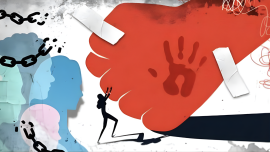
Women as non-citizens in Bangladesh — and why the future must be feminist
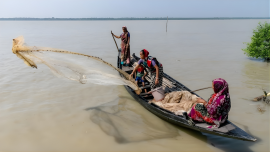
Public lands, patriarchal rules

Break barriers to women’s economic power
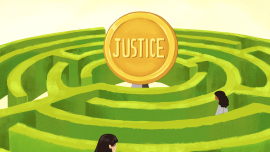
Editor's Note
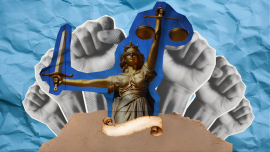
Justice that lets every woman and girl live free from fear
Confronting gender inequality in Bangladesh’s labour laws
Women in justice and justice for women