Why sexual harassment laws fail in practice
Sexual harassment and gender-based violence have long scarred Bangladesh’s social fabric. While the country today has a range of laws, ordinances, and international commitments aimed at protecting women, the reality on the ground tells a different story—one of impunity, weak enforcement, institutional apathy, and a justice system that too often re-traumatises victims instead of protecting them.
One of the earliest incidents that sparked national outrage occurred on December 31, 1999, at the Teacher-Student Centre of the University of Dhaka. A young woman, Shaon Akhter Badhan, was brutally assaulted by a group of 10 to 12 men. In a public space, in front of others, she was harassed, her clothes torn, and her dignity violated. The incident sent shockwaves across the country.
Badhan filed a case with Ramna Police Station on January 6, 2000, naming three suspects. Yet the trial was marred by procedural failures. Badhan herself did not testify. Of the 24 listed witnesses, only 15 appeared in court. On August 31, 2010, the accused were acquitted for lack of sufficient evidence. The verdict highlighted deep systemic flaws in the judicial process and the enormous barriers victims face in pursuing justice.
A review of the past 25 years since 2000 shows that several major cases of sexual harassment have surfaced in public universities such as the University of Dhaka, Jagannath University, and Jahangirnagar University. Between 2008 and 2009, many harassment incidents surged nationwide. The rise of so-called “eve teasing” led to multiple suicides by young girls and, in some cases, the killing of family members who attempted to intervene. The majority of the perpetrators were politically connected, further entrenching a sense of untouchability.
In response to escalating violence, on behalf of the Bangladesh National Women Lawyers' Association (BNWLA), I filed a writ petition under Article 102 of the Constitution at that time. In 2011, the Supreme Court delivered a landmark judgment that laid the foundation for sexual harassment laws in Bangladesh. These directives mandated the formation of internal complaint committees in educational institutions and workplaces, an important step towards institutional accountability.
More recently, the Women and Children Repression Prevention (Amendment) Ordinance, 2025, was promulgated. However, as it was issued by a non-political government, it must now be passed by Parliament to become a fully enacted law.
A justice system that re-victimises
Despite progress in lawmaking, women and children still encounter hostile systems when they seek justice. Many workplaces, schools, colleges, and universities still remain unsafe for women.
Victims often face “second-time victimisation” when reporting crimes. While conditions in Dhaka have improved somewhat over the years, in district and suburban areas, access to justice remains a mirage. Over the past two decades, countless cases have gone unreported due to stigma, fear, and structural barriers.
The culture of power and predation
In my personal experience, there are different patterns among perpetrators of rape. One type is driven by sadistic tendencies—someone who views women as sexual objects and often has a history of criminal behaviour from an early age. Another type is what may be described as a “power rapist,” who commits rape to assert dominance or display political or social influence, believing they can act with impunity.
But who takes responsibility for identifying and addressing these patterns? Our justice system does not even have a structured mechanism to properly classify such offenders in order to bring them effectively under accountability.
In most cases across universities in the country, incidents never come to light. Even when a few do surface, if the accused—whether teacher or student—is politically connected or socially influential, the case often fails to reach the court. This is a major and deeply pervasive problem in our country.
Despite repeated rhetoric, we have yet to establish a genuine culture of “zero tolerance” towards sexual harassment.

Committees in name only
The law clearly mandates that every institution—workplaces, schools, colleges, universities—must establish internal sexual harassment committees. These committees must have an odd number of members (three, five, or seven), with at least two external members and a woman as chair. Complaint boxes must be placed in a way that ensures privacy. Proceedings must maintain confidentiality and anonymity.
In practice, however, many committees exist only on paper. Even in prominent corporations and factories, committee members are often unavailable, untrained, or relatives of management. In some cases, the absence of complaints is taken as proof that everything is functioning well—when, in reality, fear may be suppressing reporting. Although ministries should conduct surprise visits to ensure compliance, this practice is almost non-existent.
Weak implementation and legal gaps
Although the law stipulates that sexual harassment cases should receive a speedy trial and be resolved within two to three months, delays are common. Public prosecutors often lack specialised training, especially in cyber harassment cases. Judges handling such matters may not have adequate preparation.
The Evidence Act, even with expanded provisions for digital evidence, still places heavy burdens on victims. Successful prosecutions remain rare.
Out-of-court settlements—especially forced marriages between victim and perpetrator—continue in some regions, particularly in rape cases. In one case of domestic violence, parents accepted around three lakh taka to withdraw a complaint, despite visible burn marks on their daughter’s body. Courts, persuaded by settlements, sometimes close cases. Such outcomes represent grave failures of accountability.
The introduction of One-Stop Crisis Centres (OCCs) once marked progress, especially in cases involving domestic workers. Some wealthy perpetrators were punished, and physical abuse cases declined. But cases involving influential individuals—including members of the security forces—often go unreported.
The expanding threat of cyber harassment
Cyber harassment has added a new, alarming dimension. A 2014 helpline launched to combat cyber abuse received 10,216 complaints in its first year alone. Social media platforms have amplified risks, including cyberbullying, image-based abuse, and online pornography.
Despite existing cyber security laws, enforcement is weak. Many victims fear secondary humiliation and avoid filing complaints. Some have left the country entirely, changed their identities, and pursued legal remedies abroad.
Prosecutors and judges often lack adequate training in handling digital evidence. Monitoring and awareness remain insufficient.
International commitments, local failures
Bangladesh has ratified key international labour conventions to ensure safe workplaces and prevent harassment. According to ILO findings, three out of five workers experience some form of harassment. A “women-friendly workplace” must guarantee safety and dignity.
Yet factory visits—even in establishments under BGMEA and BKMEA—reveal non-functional committees. International buyers increasingly check compliance, but in reality, many committees are symbolic.
Towards a victim-centric system
If Bangladesh is serious about women’s empowerment, it must build a comprehensive victim-centric support system in matters of sexual harassment and other gender-based violence.
The first step is counselling in a safe, child- and women-friendly environment. Legal assistance must follow, alongside guaranteed protection during proceedings. International examples show that victims can be housed in secure environments throughout legal processes, shielded from intimidation or humiliation.
Reintegration support is also essential. Sexual violence—whether rape, domestic abuse, or workplace harassment—leaves profound psychological scars. Justice must extend beyond verdicts to healing.
Committees must function properly, meet regularly, maintain confidentiality, and impose proportionate disciplinary measures. District authorities and education boards must monitor compliance not only in Dhaka but nationwide—extending to small rural institutions.
Awareness must spread like a wave—across ministries, workplaces, schools, villages, media platforms, and families. Every layer of society must engage in dismantling the culture of silence and shame.
Advocate Salma Ali is a human rights activist and adviser to the Bangladesh National Women Lawyers’ Association (BNWLA).
This article is based on an interview with Advocate Salma Ali. The interview was conducted and transcribed by Miftahul Jannat.
Send your articles for Slow Reads to slowreads@thedailystar.net. Check out our submission guidelines for details.
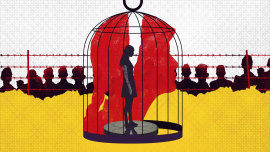
International Women's Day / Beyond the celebration

Unequal homes

Abolish discriminatory inheritance laws now
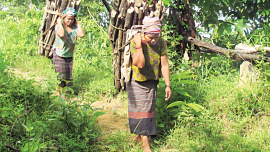
Land, lineage, and the fight for Indigenous women’s rights

Online abuse is now a national crisis: Time to act

Why sexual harassment laws fail in practice
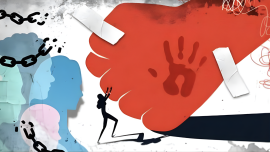
Women as non-citizens in Bangladesh — and why the future must be feminist
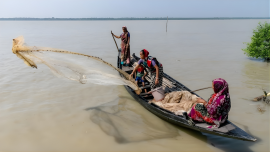
Public lands, patriarchal rules

Break barriers to women’s economic power
Editor's Note

Justice that lets every woman and girl live free from fear
Confronting gender inequality in Bangladesh’s labour laws
Women in justice and justice for women