


The diverse colours of indigenous new year festivities
Pahela Baishakh in Dhaka is characterised by the colourful procession originally known as Mongol Shobhajatra, now officially named the Baishakhi Shobhajatra, Panta- Ilish (the famed fermented rice and Hilsa fish combination) and Halkhata -the opening of the new year’s account books. However, the Chittagong Hill Tracts reveal a different world where vibrant indigenous communities celebrate their New Year with unique, nature-connected traditions.
Bizu: The Chakma Legacy of Gratitude

Bizu is a festival intrinsically linked to the cycles of Joom cultivation. It serves as a way for the Chakma people, the largest indigenous group in the hill tracts, to express deep gratitude for the bountiful harvest of the previous year. They celebrate this three-day festival starting on April 12th.
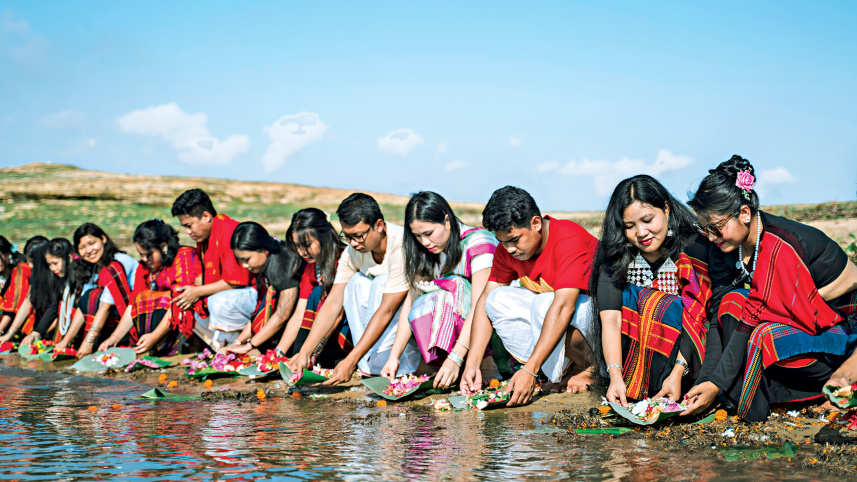
The journey begins with Ful Bizu, a day defined by a quiet, spiritual grace. As the first light of dawn breaks over the mountains, young men and women gather by mountain springs or riverbanks to float fresh flowers upon the water. This act is more than just a beautiful ritual; it is a symbolic letting go, an earnest plea for the flowing currents to wash away the sorrows, ailments, and frustrations of the past year. In the softness of these drifting petals lies the community’s collective prayer for a new year filled with prosperity and peace.
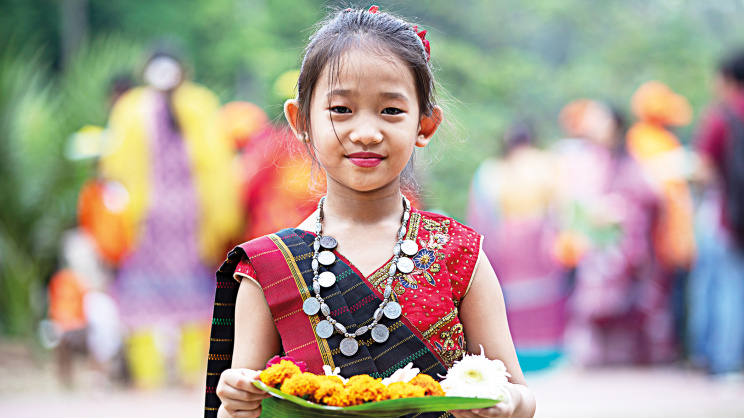
The transition to the second day, April 13th, brings the vibrant heart of the celebration: Mul Bizu. On this day, the air in the hills becomes thick with the aroma of Pachon, a legendary vegetable medley that serves as the culinary soul of the festival. Hospitality reaches its peak during Mul Bizu; doors are thrown open, and every home becomes a sanctuary for friends and neighbours.
The festivities find their serene conclusion on April 14th, known as Gojjepojje. While the name translates to “taking rest,” it is truly a day for welcoming the New Year with a calm and reflective spirit. After the excitement of the previous days, the community gathers at Pagodas and temples to light lamps and engage in prayer. Reflecting on these rituals, Arnab Chakma reminisced about the infectious energy of picking flowers at dawn and the late-night roaming with friends—a sense of freedom he misses dearly.
Sangrai: The Water Festivals of the Marma and Rakhine
The Marma people of the Chittagong Hill Tracts share a deep cultural and linguistic bond with the Rakhine people, who reside in coastal plains like Cox’s Bazar and Kuakata. Both communities celebrate Sangrai (or Sangre) to welcome the New Year.
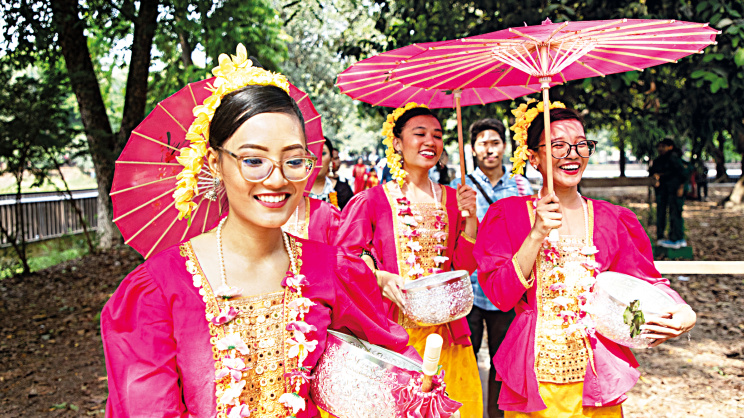
The festivities begin with the ritual of bathing the Buddha, followed by bathing the village elders. The highlight, however, is the Re Long Poye or water festival. Specially decorated pandals are set up with separate sections for boys and girls.
An interesting myth adds a romantic layer to the fun: it is believed that boys who splash water on specific girls might find a romantic connection leading to marriage. Organisers even facilitate "tactical" placements where boys can pay to stand in a specific line to face the girl they like. This "water-splashing" is followed by a feast of sweets like Payesh and sticky rice in the morning, with lunch featuring Bini Chal (sticky rice), Bash Koral (bamboo shoots), and hill vegetables.
Khing Mu, a graduate student, noted the struggle of balancing tradition with academics. While school finals often kept her away in the past, she now cherishes the ability to travel home from university to dance and celebrate in the pandals with loved ones.
Bishu: The Tanchangya Connection to the Land
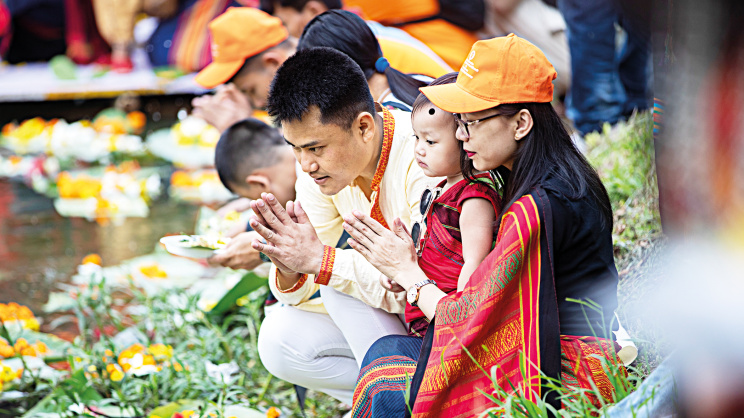
The Tanchangya community celebrates Bishu from April 12th to 14th. On Phool Bishu, youth dressed in vibrant Ponchoposhak collect flowers at dawn to offer to the Goddess Ganga at the riverbank, seeking to wash away the frustrations of the past year.
The second day, Mul Bishu, features Pachon, a unique dish prepared with at least five types of Joom vegetables. The festivities culminate on April 14th with the Bishu Mela (Fair). Adorned in their finest Ponchoposhak, community members gather from far and wide for a grand social affair filled with traditional music, dance, and theatre.
This cultural tapestry is perhaps most vividly personified in individuals like Rupaiya Srestha Tanchangya, whose family is deeply rooted in the hills of Rangamati. Having been raised by a Bengali mother and a Tanchangya father, she possesses a unique perspective, having witnessed these two vibrant cultures in parallel.
She notes that the most striking difference lies in the culinary traditions. “Bengalis grew up in a riverine environment, which shaped their diet around fish and rice. This is quite distinct from the hill tracts, where the centrepiece of the New Year feast is Pachon. This dish, crafted from a variety of Joom-grown vegetables, represents the bounty of the earth and the diversity of the hills.”
Rupaiya also points out the differing historical trajectories of the two festivals. “For Bengalis, it began primarily as an agrarian harvest festival that eventually evolved into a grand social celebration. Over time, it transitioned from a rural tradition into a cornerstone of Bengali cultural and non-communal identity. In contrast, for the hill communities, the festival originated as a land-offering and ritual for a successful harvest just before the start of the new Joom cultivation season. Traditionally, the indigenous people would celebrate this after the first rains at the end of the month of Chaitra.”
In essence, these diverse celebrations remind us that while the rituals and flavors may differ, the heart of the New Year remains the same. Whether through the floating of flowers in a mountain stream or the sharing of a festive meal, it is a universal journey of gratitude, community, and the timeless hope for a peaceful beginning.
 For all latest news, follow The Daily Star's Google News channel.
Comments