


The new rules of Baishakh dressing
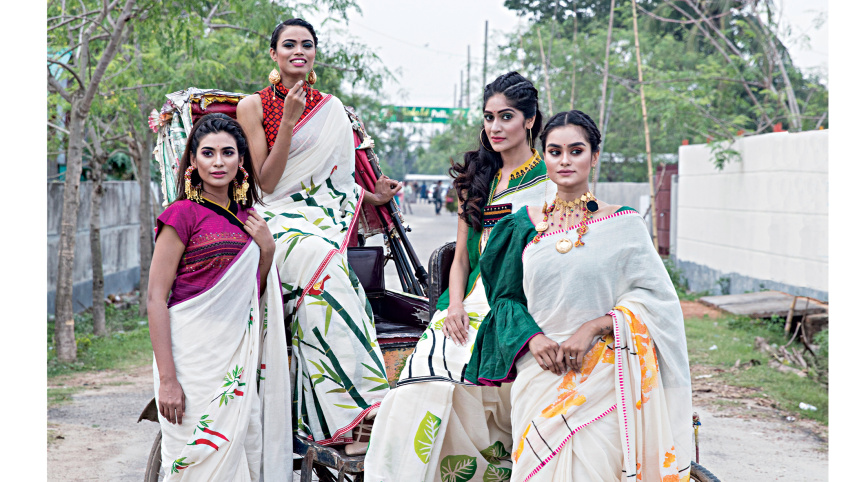
Dressing up for Pahela Baishakh is not easy, as there are a lot of considerations to be made. Baishakhi fashion was once synonymous with red and white, and while this timeless combo still holds a special place in our hearts, recent years have seen a delightful shift. The new year attire has to be practical and, in equal terms, befitting for the joyous nature of the celebrations. The events of the day shift range from outings to various soirees to homely dawats, and one must dress to shine on all occasions.
Reimagining colour

The events of the day are shedding their monochrome uniform, once considered auspicious, and embracing a new canvas of colours, prints, and playful styling. If there’s one colour combination giving red and white a serious run for its money, it is white and magenta. The vibrancy of the hue brings in just the right amount of boldness without overwhelming the calmness of white. From handloom saris with magenta thread work to plain kameezes with printed or embroidered magenta dupattas that flow like a summer breeze, this pairing is fast becoming a crowd favourite, and for good reason! It is festive, fresh, and oh-so-flattering.
Polka dots, please!
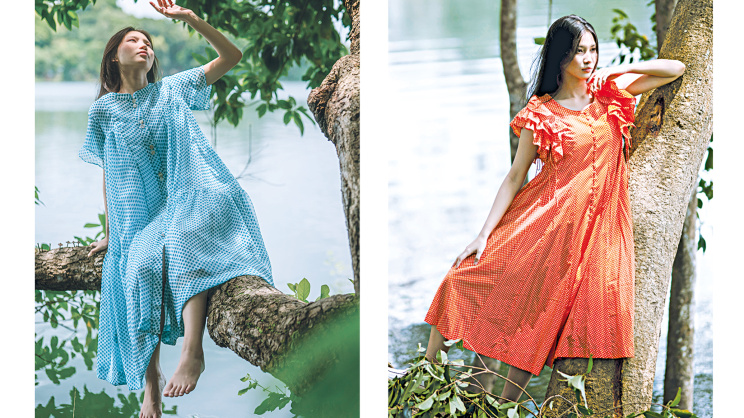
Who would have thought that the old-school charm of polka dots would become a Pahela Baishakh staple? But here we are, living and loving it. Polka dots bring an instant burst of fun to any outfit.
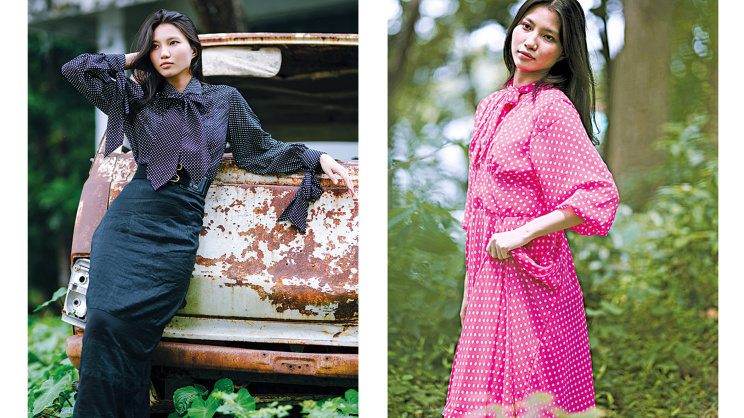
Whether it’s a retro sari with oversized dots or a breezy dress with tiny scattered ones, this peppy pattern adds movement, mischief, and a whole lot of personality. Bonus points if you pair it with chunky earrings and a messy bun.
Sunshine and teal dreams
Yellow is a classic for a reason. It is bright and sunny, and it practically radiates joy. Pair it with teal, and you have a combination that’s equal parts cool and warm. Think of a teal kameez with yellow embroidery or a mustard sari with a teal blouse and accessories. It’s perfect for that brunch-to-evening dinner transition.
Rise of prints and pastels
While bold colours are making a statement, pastels and soft florals are not far behind. Blush pinks, powder blues, and mint greens are showing up in cotton and Muslin saris, often paired with quirky blouses or contrasting accessories.
Digital prints, hand-painted florals, and abstract motifs are also finding fans among those who prefer subtle elegance over loud hues.
Styling it your way
Gone are the days of rigid outfit rules. Mix-and-match is the mood. Team your traditional sari with a crop top. Play with accessories: beads, silver jhumkas, glass bangles, or just a statement bag. The idea is to reflect the energy of the new year in your own way.
Pahela Baishakh has always been about the celebration of culture, of colour, and of community. And what better way to do that than by dressing in outfits that make you feel festive, fearless, and fabulous? Whether you are stepping out for the Baishakhi Shobhajatra or lounging at a home dawat, this year let your outfit be as joyful, vibrant, and diverse as the day itself.
 For all latest news, follow The Daily Star's Google News channel.
Comments