


Nirbhoya 2026: Celebrating fearless female changemakers

Khushi Chakma Innovating for climate resilience
Khushi Chakma, a 34-year-old mother from Shimultuli Village in Rangamati, is transforming her community’s economic landscape through climate-resilient farming. For years, Khushi’s family relied on sharecropping and fishing. However, repeated droughts and devastating flash floods have ruined their rice fields, leaving them without viable land or a stable income.

Her life took a pivotal turn in 2024 when she was selected as a beneficiary under the Local Government Division’s LoGIC Project. Receiving training from the Department of Agriculture Extension and guidance from a Community Mobilisation and Facilitator (CMF) Khushi saw a new path forward. She joined forces with two other local women, Sagarika and Shanti Devi Dewan, to cultivate 1,200 papaya saplings on a plot of abandoned land.
Within just three months, each tree began producing 20 to 25 sweet papayas. Wholesale buyers from Rangamati City now visit the village weekly to purchase the fruit in bulk. So far, the group has sold nearly 2,500 kilograms of papaya, earning 123,600 BDT. “The financial and technical support from the LoGIC Project has been extremely helpful,” Khushi says. “We’ve had a great harvest, and I hope to earn 3 to 4 lakh BDT from papaya sales this year.”
Motivated by her impressive yield and consistent income, over two dozen other women in the village have started their own individual papaya farms. Khushi has not only secured her family’s future but also turned climate-smart agriculture into a profitable, community-wide movement.
Asma Begum Transforming personal hardship into community leadership
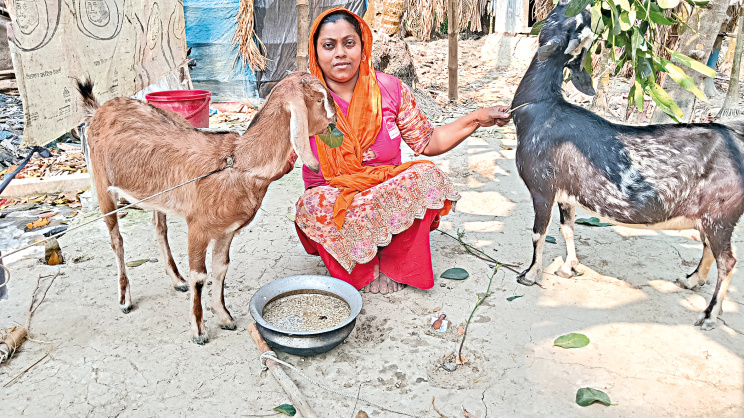
Born into extreme poverty in Balipara village, Pirojpur, 42-year-old Asma Begum’s early life was marked by relentless hardship. She was married off at a young age, only to be abandoned later by an abusive husband. Left to raise her two children alone, she survived by doing domestic work in other people’s homes.
Her turning point arrived when she joined the SWAPNO project. Through wage employment, savings support, and enterprise training, Asma began to rebuild her life from the ground up. Utilising her savings and an enterprise grant, she invested in livestock and restarted a small clothing business. Today, she earns a stable income of approximately 13,000 BDT per month.
Asma turned her success into a lifeline for her community. She hired a neighbouring woman as a tailoring assistant, directly creating income for another vulnerable household. Emerging as a powerful local mobilizer, Asma guided 45 ultra-poor women in her village to access business grants totalling 405,000 BDT.
Her leadership extends well beyond economic empowerment. Seeing the daily struggles of her neighbours, Asma successfully advocated with local authorities to pave a muddy village road, ensuring safe travel for 30 families during the rainy season. Asma Begum stands today as a respected community leader, a champion for women’s empowerment, and a true catalyst for grassroots development. Her journey serves as a powerful reminder that when one woman rises with courage and conviction, she lifts her entire community along with her.
Kanaklata Mondol Shattering gender and climate barriers
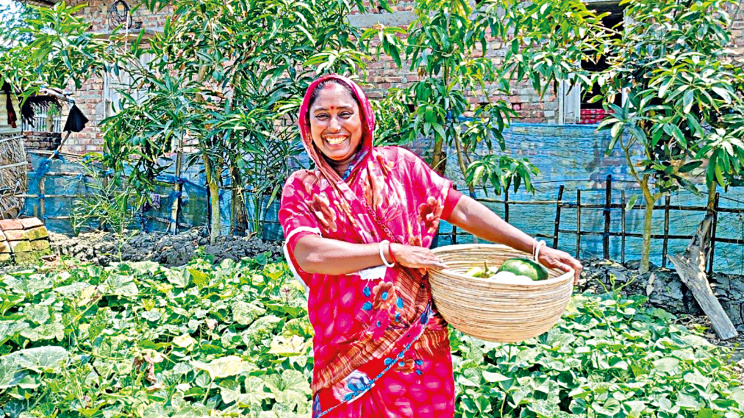
In the climate-vulnerable coastal village of Gunari in Khulna, 35-year-old Kanaklata Mondol faced a dual battle: rising soil salinity and deeply entrenched patriarchal norms that kept women economically invisible. While women were allowed to grow food in their homesteads, public marketplaces were strictly male domains. For Kanaklata, the challenge was not just crop failure; it was a society that dictated women could produce, but never price, negotiate, or sell.
In 2021, she joined a Women Livelihood Group under the Gender-responsive Coastal Adaptation (GCA) project. Equipped with training in climate-resilient agriculture, including innovative aquageoponics, Kanaklata dramatically improved her harvests. But her boldest move was stepping out of her yard and into the local markets of Kalinagar and Nalian to sell her produce directly.
On her first day, she was met with harsh backlash, but she stood her ground. Twice a week, she carried her vegetables and fish to the market, absorbing the social scrutiny. Her persistence forced the community to focus on the quality of her produce rather than her gender.
Today, Kanaklata is not only a financially independent farmer who controls her own revenue, but a recognised community leader. She has even taken on the role of “Pani Apa,” guiding local water management systems. “Through the GCA Project, I have gained not only financial stability but also the confidence to take control of my life,” Kanaklata proudly shares. “Now I can make my own decisions.”
Jotila Rani Shil
Championing justice and girls’ education in the Chittagong Hill Tracts
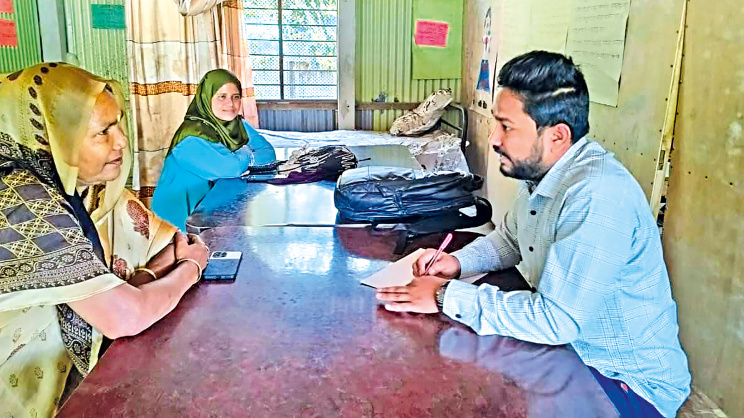
At 68 years old, Jotila Rani Shil remains one of the most trusted and courageous figures in Lama Sadar Union, Bandarban. A former Union Parishad member for 15 years, she has spent her life acting as a grassroots peacebuilder and a fierce protector of women and girls in the remote Chittagong Hill Tracts. From personally rescuing a female student who had eloped to another upazila to taking firm legal action against those who harass schoolgirls, Jotila has consistently defied age and societal barriers to uphold justice, security, and harmony in her community.
Currently, Jotila serves as the president of the Mothers’ Group for Lama Sadar School and College under the ERRD-CHT UNDP Project. In this vital role, she actively mobilises mothers to prevent early marriage, combat gender-based violence, and promote girls’ education. Recognising the unique barriers adolescent girls face, she successfully advocated with the School Management Committee to establish separate single-sex toilets, ensuring a safe and dignified learning environment. She also frequently negotiates with school authorities to waive fees for disadvantaged students, ensuring financial hardship never costs a child their education.
Though her family now discourages her from running for office due to her age, Jotila’s dedication remains unwavering. She continues to mediate family conflicts and tackle deep-rooted social challenges like drug addiction, dowry practices, and violence against women.
“I have spent my whole life beside the people of my community. When I see a girl continue her education, a family resolve conflict peacefully, or a vulnerable woman feel safe, I feel my work is meaningful,” Jotila shares. “Age cannot stop me. As long as I can walk and speak, I will continue to stand for justice, dignity, and the future of our children.”
 For all latest news, follow The Daily Star's Google News channel.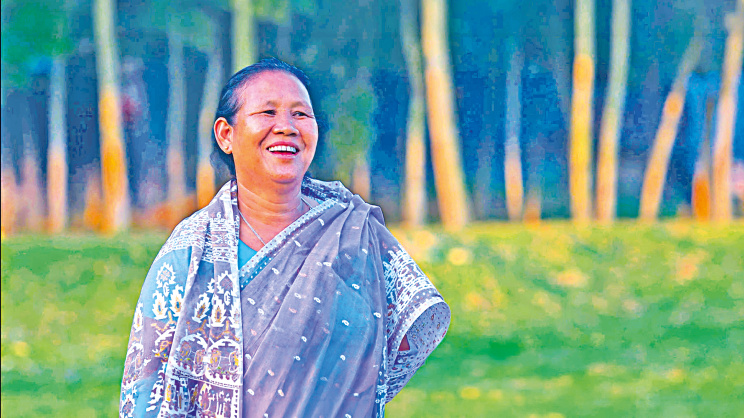
Trinla Mrong
Bridging culture and access to justice for Garos
As an elected Union Parishad member of Kangsha Union, under Jhenaigati Upazila in Sherpur district,Trinla Mrong has emerged as a symbol of confidence and courage for the indigenous Garo community women. She has dedicated herself to ensuring accessible resolutions for local conflicts over land, loans, and physical disputes.
Serving as a panel member of the Village Court, Trinla acts as a bridge between her community and local legal systems. When a complex land dispute arose near her village, she proactively guided the affected families to apply through the Village Court. She supported them through every step of the process, ensuring that the conflict was resolved peacefully and that justice was ultimately delivered.
Trinla has fundamentally shifted how her community views dispute resolution. By blending legal processes with a deep respect for cultural nuances, Trinla has proven that justice is not just about enforcing the law; it is about understanding, inclusion, and empowering the marginalised.
Comments