


'Crisis is here to stay'
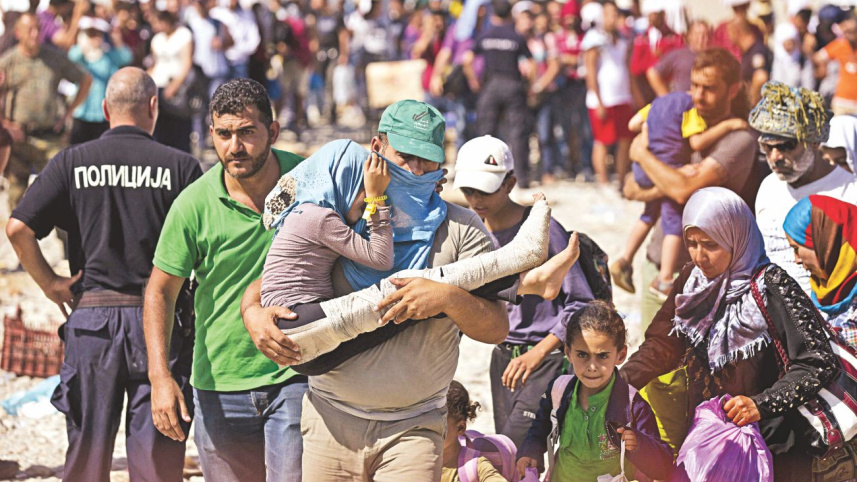
EU foreign affairs head Federica Mogherini said the refugee influx, which has opened deep divisions in the bloc, is here to stay and member states must adjust to that new reality.
"It is here to stay; the sooner we accept it, the sooner we will be able to respond effectively (and) united as Europeans," Mogherini said after a two-day informal meeting of EU foreign ministers.

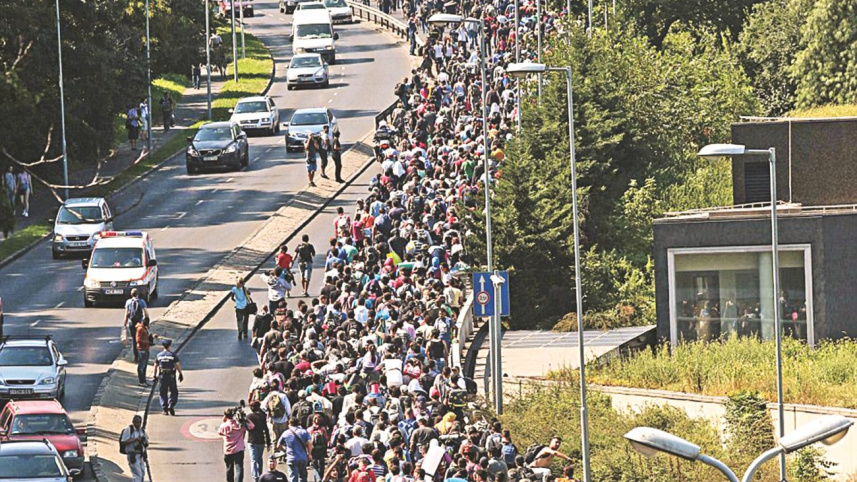
"It affects all of us. A few months ago, it was Italy, Greece and Malta. Now it is Hungary and it could (be the) turn of other member states in the future," Mogherini said.
The crisis has exposed sharp rifts in the 28-nation bloc, with Germany leading calls to take in many more people fleeing war and upheaval in the Middle East and North Africa.

However, newer eastern member states led by Hungary bluntly oppose European Commission plans for mandatory quotas and a permanent admission mechanism, saying that would only encourage more migrants to risk their lives coming to Europe.
The foreign ministers meeting, which as an informal gathering discussed policy but took no decisions, was overshadowed by dramatic events as thousands of migrants stranded for days in Budapest were bused to Austria en route to Germany.
Austrian Foreign Minister Sebastian Kurz said their plight and the growing human cost was a "wake up call" for Europe to resolve its biggest refugee crisis since World War II.
Austrian police said 4,000 people crossed into the country early Saturday morning, with the number predicted to rise to 10,000.

Italian President Sergio Mattarella yesterday calledfor shared asylum rules in the European Union, saying thousands of migrants approaching Europe should not be seen as enemies.
Speaking via video link to a conference in northern Italy, Mattarella said he was hopeful the bloc was finally on the road to common rules, after Germany and France joined Italy last week in urging the EU to take a more centrally coordinated approach.
Mattarella said the Dublin Regulation, which requires people seeking refuge in Europe to do so in the first country where they set foot, should be replaced with shared, updated rules in order to spread the burden more fairly.

Meanwhile, German Chancellor Angela Merkel said that her country won't stop anyone from seeking asylum, as thousands of migrants desperate to leave Hungary made their way westward to Germany and Austria.
German officials recently predicted that up to 8,00,000 migrants would arrive by the end of the year, many of them refugees fleeing war and persecution in Syria, Iraq and Eritrea.
"The right to political asylum has no limits on the number of asylum seekers," Merkel told the Funke consortium of newspapers in an interview.
But Merkel repeated her government's position that migrants who don't meet the criteria for asylum need to be returned to their home countries.
Merkel said she was confident Europe would meet the challenge. "This should be possible, because Europe is based on common values, and help for those in need of protection is one of them," she said.
 For all latest news, follow The Daily Star's Google News channel.
Comments