


Its real, act now to save planet
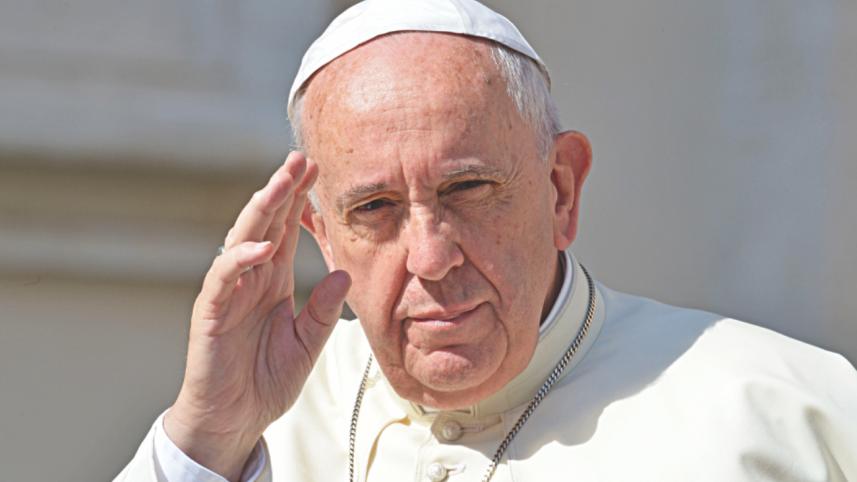
Pope Francis yesterday urged the world to act quickly to prevent "extraordinary" climate change from destroying the planet and said wealthy countries must bear responsibility for creating the problem and for solving it.
In a radically worded letter addressed to every person on the planet, the leader of the world's 1.2 billion Catholics blames human greed for the critical situation "Our Sister, mother Earth" now finds itself in.

"This sister now cries out to us because of the harm we have inflicted on her by our irresponsible use and abuse of the goods with which God has endowed her," he writes in his long-anticipated Encyclical on the environment.
Arguing that environmental damage is intimately linked to global inequality, he goes on to say that doomsday predictions can no longer be dismissed and that: "The earth, our home, is beginning to look more and more like an immense pile of filth."
Green activists hailed the charismatic Argentinian pontiff's widely-trailed intervention as a potential game-changer in the debate over what causes global warming and how to reverse it.
"Everyone, whether religious or secular, can and must respond to this clarion call for bold urgent action,"said Kumi Naido, the International Executive Director of Greenpeace.
Environmentalists hope the pope's message will significantly increase the pressure for binding restrictions on carbon emissions to be agreed at global talks in Paris at the end of this year.
"If present trends continue, this century may well witness extraordinary climate change and an unprecedented destruction of ecosystems, with serious consequences for all of us," he writes.
Bemoaning the "remarkable" weakness of political responses to this, Francis accuses the sceptics of cynically ignoring or manipulating the scientific evidence.
The consequences of climate change, he argues, will include a rise in sea levels that will directly threaten the quarter of the world's population that lives near or on coastlines, and will be felt most acutely by developing countries.
Highlighting warnings that acute water shortages could arise within decades, he writes that, "the control of water by large multinational business may become a major source of conflict in this century".
One of the strongest themes in the encyclical is that rich countries must accept responsibility for having caused climate change and should "help pay this debt" by cutting their carbon emissions and helping the developing world adopt sustainable forms of energy generation.
 For all latest news, follow The Daily Star's Google News channel.
Comments