


Merkel the bold
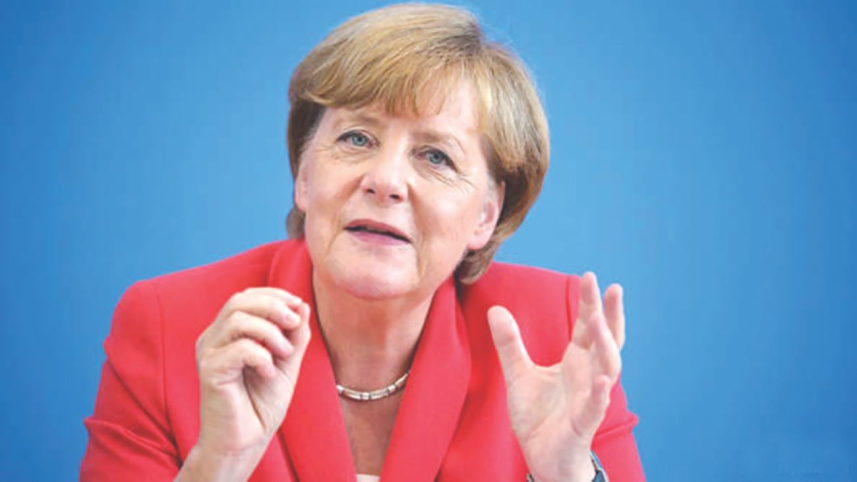
Angela Merkel may be the most powerful politician in Europe, but she has rarely shown much inclination for bold leadership. Both in domestic politics and, especially, during the euro crisis, the German chancellor's style has been one of cautious incrementalism.
She has eschewed sweeping visions, put off decisions whenever possible and usually reflected, rather than shaped, public opinion. The European Union has paid a heavy price for her small-bore instincts, not least because they made the euro-zone crisis deeper and more protracted than it needed to be.

Against that background, Merkel's approach to Europe's migrant crisis is remarkable. As throngs of Africans and Arabs turn Italian and Greek islands, and eastern European railway stations, into refugee camps, the chancellor has taken a brave stand. She has denounced xenophobes, signalled Germany's readiness to take more Syrian refugees and set out a European solution to a politically explosive problem.
On August 31st Merkel issued a dramatic call to arms, warning that today's refugee misery will have graver consequences for the future of the EU than the euro mess. "If Europe fails on the question of refugees," she said, "it won't be the Europe we wished for." She is right.
Few other European politicians have had the courage to make such a clear link between Europe's values, its collective self-interest and bold action on refugees.
No doubt Merkel is driven, in part, by domestic concerns. But a desire to share the burden should not be mistaken for selfishness. In a crisis where Europe has little to be proud of, Merkel's leadership is a shining exception.
 For all latest news, follow The Daily Star's Google News channel.
Comments