


Independence ‘means war’
China toughened its language towards Taiwan yesterday, warning after recent stepped up military activities near the island that "independence means war" and that its armed forces were acting in response to provocation and foreign interference.
Taiwan, claimed by China as its own territory, reported multiple Chinese fighter jets and bombers entering its southwestern air defence identification zone last weekend, prompting Washington to urge Beijing to stop pressuring Taiwan.

China believes that Taiwan's democratically-elected government is moving the island towards a declaration of formal independence, though Taiwan President Tsai Ing-wen has repeatedly said it is already an independent country called the Republic of China, its formal name.
Asked at a monthly news briefing about the air force's recent activities, Chinese Defence Ministry spokesman Wu Qian said Taiwan is an inseparable part of China.
"The military activities carried out by the Chinese People's Liberation Army in the Taiwan Strait are necessary actions to address the current security situation in the Taiwan Strait and to safeguard national sovereignty and security," he said.
"They are a solemn response to external interference and provocations by 'Taiwan independence' forces," he added.
Wu said a "handful" of people in Taiwan were sweeking the island's independence.
"We warn those 'Taiwan independence' elements: those who play with fire will burn themselves, and 'Taiwan independence' means war," he added.
Asked about the remarks, Pentagon spokesman John Kirby said there was no reason that tensions between China and Taiwan "need to lead to anything like confrontation." He also reaffirmed longstanding US military support to Taiwan's self-defense.
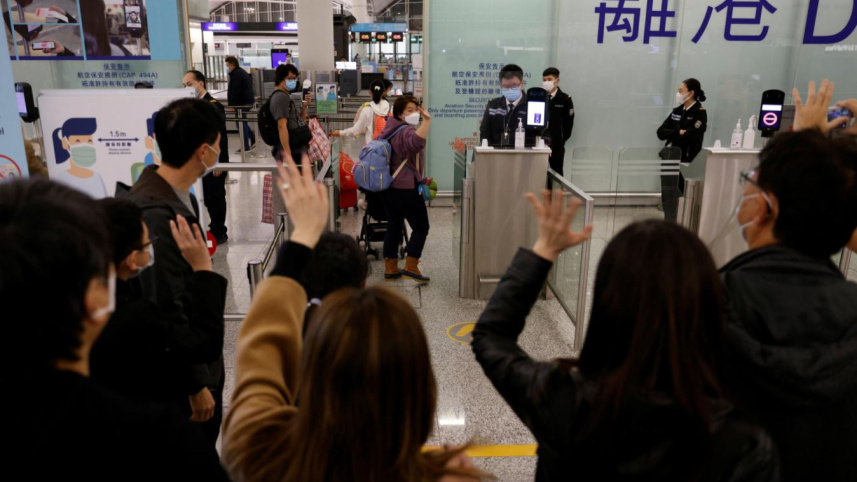
Meanwhile, China yesterday said it will "no longer recognise" the British National (Overseas) passport for Hong Kongers, as Britain prepares to offer millions of former colonial subjects a way to escape Beijing's crackdown on dissent.
Beijing has imposed a tighter grip on the Asian financial hub in the past year, imposing new security laws and arresting political opponents.
The Post, citing unnamed sources, said the Hong Kong Liaison Office's expanded responsibilities included tighter supervision and policy implementation in the semiautonomous city.
 For all latest news, follow The Daily Star's Google News channel.
Comments