


Obama secures his diplomatic legacy
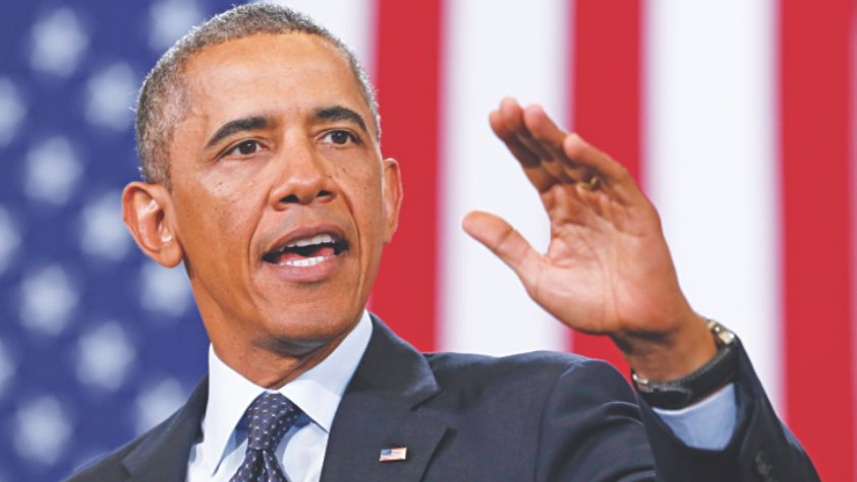
When US President Barack Obama accepted the Nobel Peace Prize early in his first term, he acknowledged the controversy surrounding his win by saying he was only at the beginning of his "labors on the world stage."
Nearly six years later, having secured a landmark nuclear deal with Iran, he has achieved a major diplomatic victory that staves off the threat of a military conflict with unforeseeable consequences in an unstable region.

Even if the US Congress approves the deal, it will be several years -- long after Obama has left office in 18 months -- before its real worth can be measured.
But the 44th president can certainly see in it the tangible results of one of the main tenets of his foreign policy: dialogue, even with America's enemies, must be given a chance.
"For 40 years, our policy was to contain Iran not to work and cooperate with it on any issue. That's a fundamental departure in our policy," said Aaron David Miller, a former State Department official who is now at the Wilson Center think tank.
"Whether you are a fan or not a fan of this agreement, that is significant."
Thirty-five years after ties with the Islamic republic were broken in the aftermath of the revolution and the hostage crisis at the US embassy in Tehran, the two countries -- along with several other world powers -- sat down and hammered out a deal.
Aware that his outreach to Iran is not universally popular, Obama has put all of his weight -- and his legacy -- on the line.
"This deal will have my name on it," he said in late May.
"Nobody has a bigger personal stake in making sure it delivers on its promise."
For Trita Parsi, at the National Iranian American Council, the agreement reached in Vienna to curb Tehran's suspect nuclear program in exchange for sanctions relief "will undoubtedly be Obama's biggest foreign policy achievement."
"Cuba may have been closer to home for most Americans, but Iran and preventing the path for a bomb there and changing the nature of that relationship is far more consequential geopolitically," Parsi said.
 For all latest news, follow The Daily Star's Google News channel.
Comments