


Widen tax net, cut leakages to ease fiscal pressure


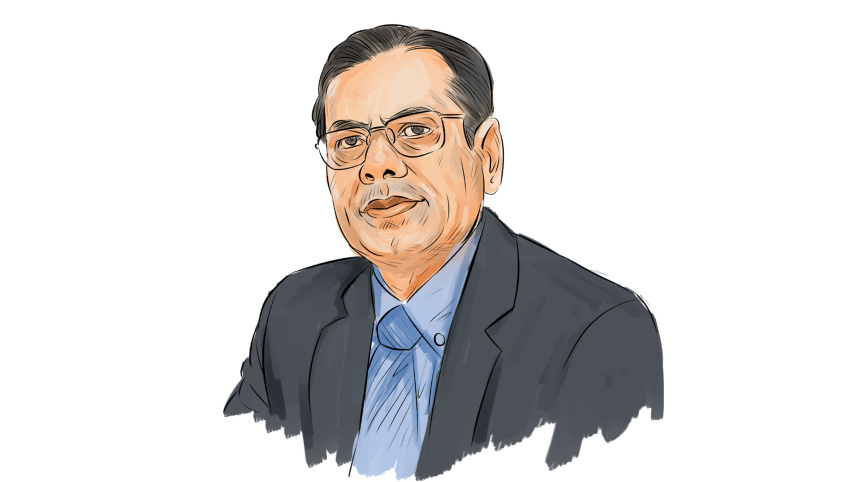
Mustafizur Rahman,
distinguished fellow at CPD, says the revenue sector requires immediate attention

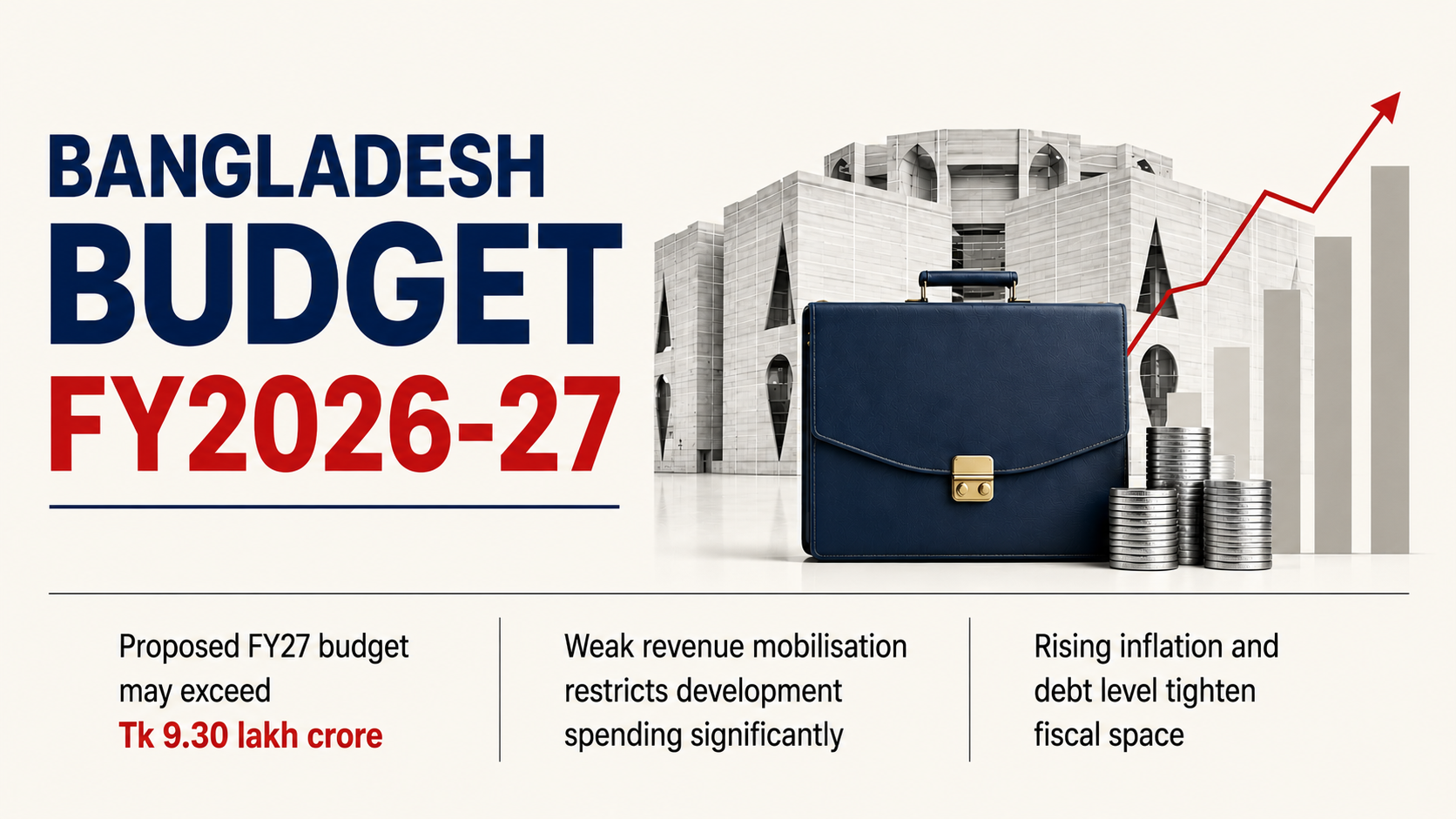
Bangladesh’s upcoming national budget will be one of the most challenging in recent years, as the government grapples with inflation, debt pressure, global uncertainty, and rising public expectations. It will need to address “multi-dimensional challenges” amid persistently high inflation, rising living costs, weak investment, and external vulnerabilities.
Ahead of the fiscal year 2026-27 (FY27) national budget, the government faces mounting fiscal pressure amid high inflation and low investment at a time when the global geopolitical situation remains volatile, said Prof Mustafizur Rahman, distinguished fellow at the Centre for Policy Dialogue (CPD).
In an interview with The Daily Star, he said the revenue sector requires immediate attention, while trade challenges and inefficiencies in the Annual Development Programme (ADP) must also be addressed.
FISCAL PRESSURES MOUNT
Bangladesh’s upcoming national budget will be one of the most challenging in recent years, as the government grapples with inflation, debt pressure, global uncertainty, and rising public expectations, he said.
The FY27 budget will need to address “multi-dimensional challenges” amid persistently high inflation, rising living costs, weak investment, and external vulnerabilities.
He said the government inherited significant economic difficulties that cannot be ignored while preparing the budget. At the same time, it must fulfil election pledges related to healthcare, education, social protection, and employment generation.
“The government is presenting the budget against the backdrop of a difficult global environment,” he said, referring to the ongoing Middle East conflict and its impact on energy prices, import costs, and macroeconomic stability.
Rahman said people expect relief after years of inflation that have eroded purchasing power and living standards, particularly among low-income groups.
“People now expect better public services and stronger social protection from the government,” he said.
To meet those expectations without excessive borrowing, the government must prioritise domestic resource mobilisation, he argued, adding that Bangladesh cannot continue relying heavily on bank borrowing and external lenders to finance expenditure.
THREE PRIORITIES FOR REVENUE
Rahman identified three immediate priorities for the revenue sector: reducing leakages, broadening the tax base, and finding innovative sources of revenue.
He said corruption, weak governance, and inefficiencies continue to undermine tax collection, depriving the government of resources needed for public spending.
Bangladesh must expand the tax net instead of repeatedly burdening the same taxpayers, he argued. Many individuals and businesses remain outside the system, while VAT collected from consumers often does not fully reach the treasury because of leakages and weak enforcement.
“I fully endorse the proposal that rates should remain relatively low but become more universal,” he said while discussing VAT and income tax reforms.
 For all latest news, follow The Daily Star's Google News channel.
 The economist also stressed the importance of technology-driven tax administration. He welcomed moves towards online VAT registration and digitalisation but warned that isolated systems would not be effective unless they are integrated and interoperable.
Drawing comparisons with India, he said tax authorities there can compare declared income with spending patterns through integrated databases. Bangladesh could adopt similar systems to strengthen compliance and reduce tax evasion.
Rahman also suggested gradually introducing new forms of taxation, including wealth and inheritance taxes, to address widening inequality. Fiscal policy, he said, should not only raise revenue but also reduce disparities in income, consumption, and assets.
REPRIORITISE SPENDING, IMPROVE IMPLEMENTATION
On the expenditure side, Rahman said the government would need to reprioritise spending to fulfil commitments related to education, healthcare, and social safety net programmes.
The ruling party has pledged to raise spending on health and education to 5 percent of GDP each and increase social protection expenditure to at least 3 percent of GDP.
Current spending remains far below those targets, meaning resources may need to be shifted from other sectors over time, he said, warning that such decisions would be politically sensitive.
He argued that infrastructure spending could be rationalised by reducing waste, corruption, delays, and cost overruns.
“If we can ensure good value for money, then infrastructure spending as a share of GDP can be reduced without compromising outcomes,” he said.
Rahman stressed that higher allocations alone would not improve public services without better implementation and governance.
He was particularly critical of inefficiencies in the ADP, saying public projects in Bangladesh frequently suffer from inflated costs, delays, and weak oversight. On average, project costs and implementation periods rise by 30 percent to 40 percent, he said.
He called for stronger feasibility studies, tighter monitoring, and greater accountability. Projects nearing completion should receive priority, while approval of new projects should be approached more cautiously given rising debt and fiscal pressure.
The economist also warned against expanding the ADP aggressively without improving institutional capacity, procurement systems, and implementation quality.
INFLATION, TRADE CHALLENGES REMAIN KEY CONCERNS
On inflation and monetary policy, Rahman said Bangladesh faces a difficult balancing act. While high interest rates are hurting investment and job creation, inflation remains too high to justify aggressive monetary easing.
However, he argued that inflation is not driven solely by monetary factors. Weak market management, high logistics costs, inefficiencies at ports and customs, and poor supply-chain governance are also contributing to rising prices.
“If the government can improve market management and reduce the overall cost of doing business, inflationary pressure can ease even without relying only on monetary policy,” he said.
Rahman also discussed Bangladesh’s external trade challenges as the country prepares to graduate from the least developed country (LDC) category.
He said export diversification, free trade agreements, and stronger compliance standards would become increasingly important in the coming years.
Bangladesh still depends heavily on a limited number of products and export markets despite years of discussion about diversification, he noted. Meanwhile, competitors such as India and Vietnam are moving aggressively to secure free trade agreements and attract foreign investment.
To remain competitive, Bangladesh must improve logistics, reduce lead times, strengthen labour and environmental standards, and create a more investment-friendly environment, he said.
He also urged the government to treat any extension of the LDC graduation transition period as an opportunity to accelerate reforms rather than delay them.
Comments