


Leaving banking behind, marketing graduate finds fortune in cattle farming

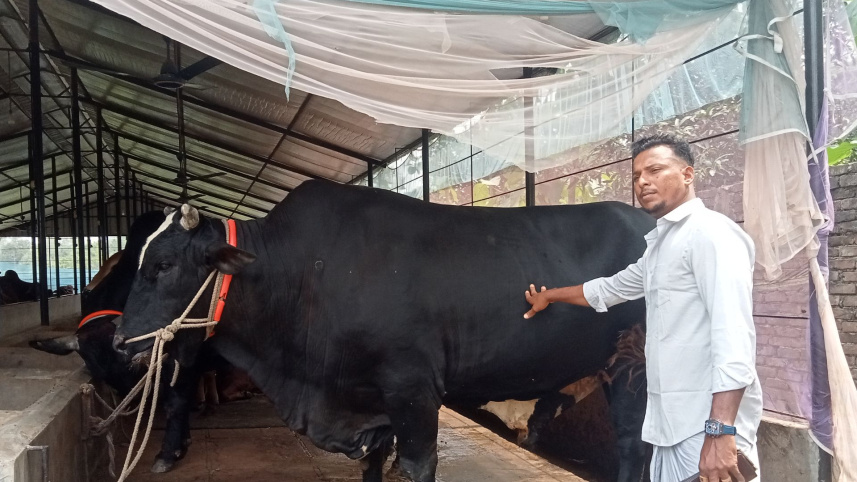
Two years after graduating from the Marketing Department of Rajshahi University, Ahsan Sikdar entered the livestock business in 2013.
While working at a private bank, he gradually built a farm that now sells more than 200 sacrificial cattle a year and helps meet local demand for milk through its dairy operations.

Ahsan started his farm on a small scale in Charmadhua area of Raipura upazila in Narsingdi with just 10 cattle. His initial investment was only Tk 3 lakh. Over the span of a decade, the investment has grown to nearly Tk 3 crore.
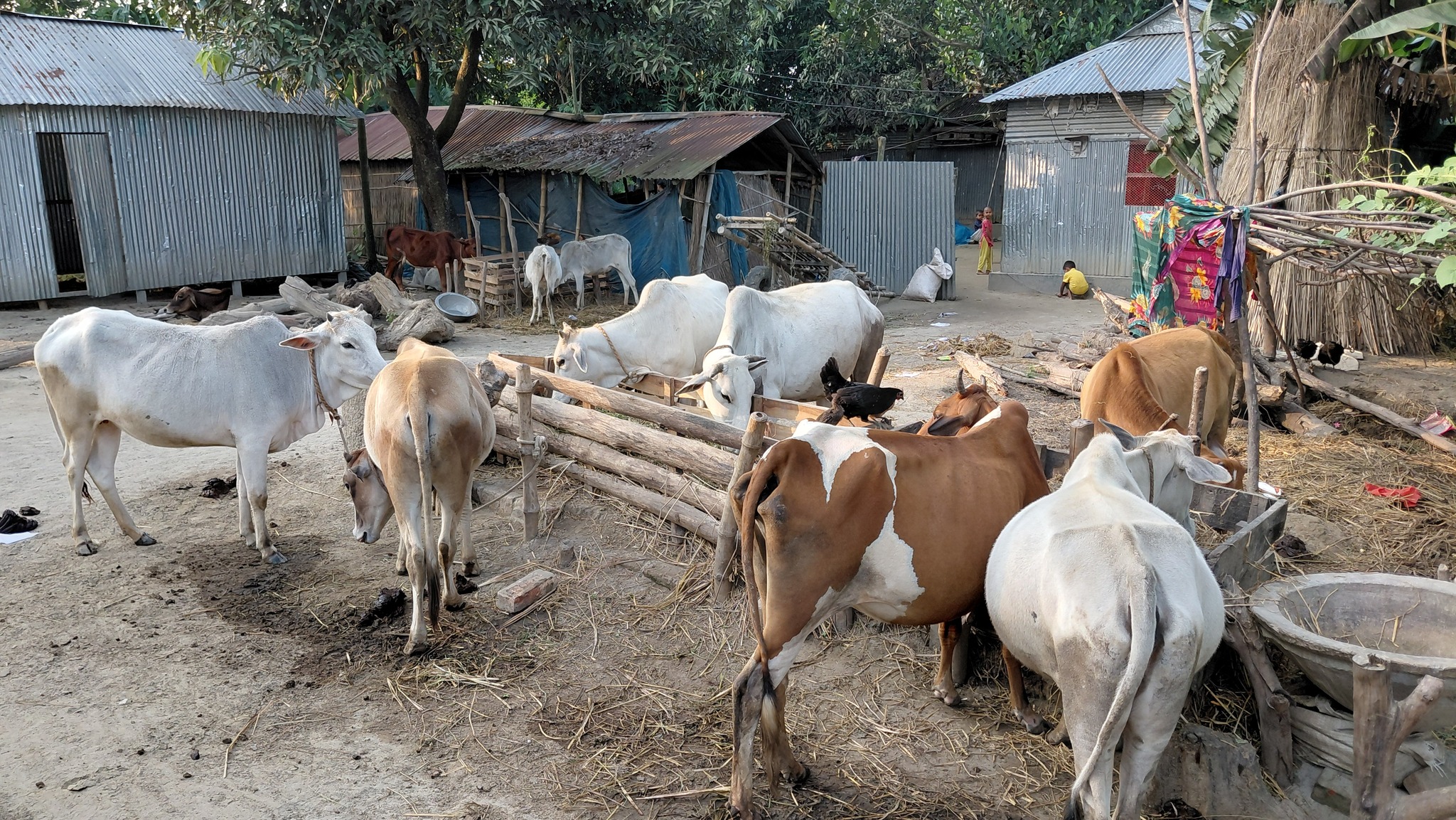
This Eid-ul-Azha, the main attractions of his farm are two bulls -- “Kala Manik,” weighing 10 maunds, and “Ratan,” weighing around 9.5 maunds. Each has been priced at Tk 10 lakh.
In addition, the farm has more than 200 cattle of varying prices, starting from Tk 1 lakh.
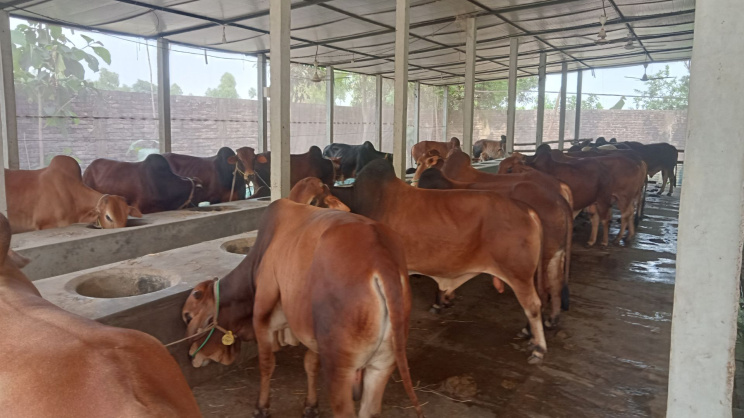
Recently, 39-year-old Ahsan left his banking career behind to focus entirely on dairy and cattle business. He raises cattle at his “Green Agro Farm” mainly for two purposes -- selling sacrificial animals during Eid-ul-Azha and producing milk.
Built on nearly 1,600 decimals of land, the farm uses modern methods for grass cultivation and maintenance. Alongside eight permanent employees, several villagers also work there on part-time basis. A veterinary doctor remains engaged for round-the-clock monitoring of the animals. In 2023, the farm received the “Agro Hero” award from the district livestock department.
A visit to the temporary Eid sales camp set up in Hairmara village of Raipura found crowds of buyers and local residents gathering daily to see the cattle. Ahsan and his team are now spending busy days handling customers.
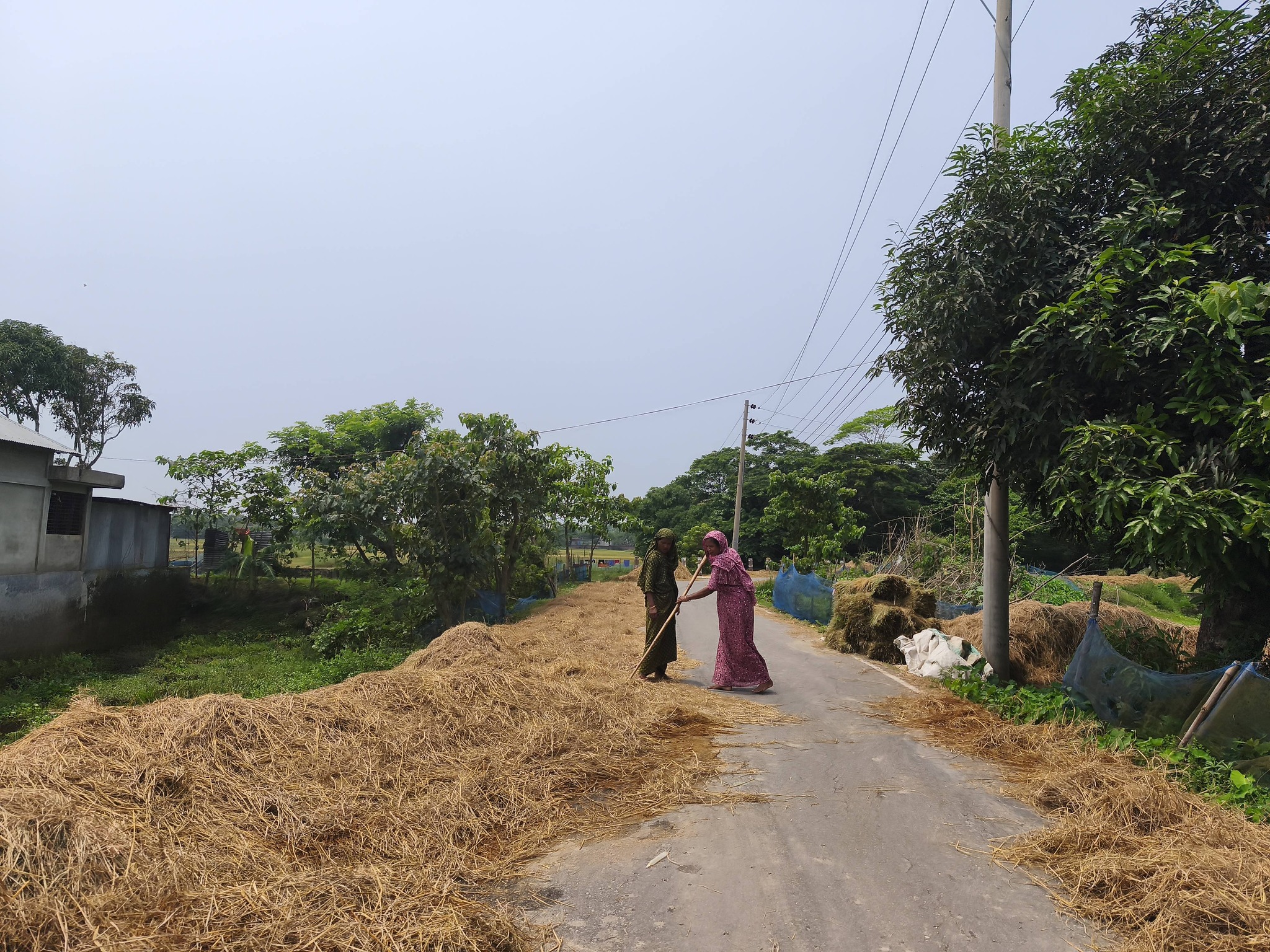
His Green Agro Farm's dairy unit produces around five to six maunds (one maund is approximately 37.32 liters) of milk every day, which is supplied to local markets.
“Although milk is sold in the market at Tk 80 to Tk 100 per litre, I sell it at Tk 40 to Tk 45,” Ahsan said.
He added, “The farm has also created jobs for seven to eight families. If educated youths come forward in agro business instead of only chasing jobs, huge employment opportunities can be created in the country. I hope the government gives more importance to this sector.”
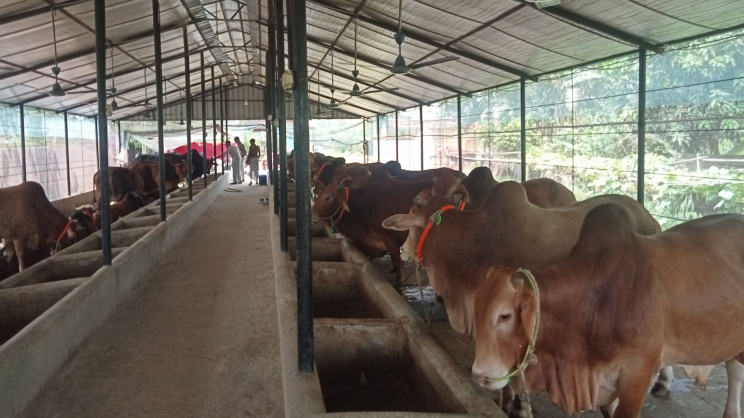
Ahsan said he collects female calves from nearby cattle markets and his own dairy farm to raise them for the Eid market. Depending on quality, these cattle are usually priced between Tk 1 lakh and Tk 1.5 lakh.
“Most of the animals on the farm are raised naturally. This reduces costs and ensures better profit. If more such farms are established, the country’s economy will benefit in the long run,” he said.
According to the Department of Livestock Services office in Narsingdi, a total of 85,905 livestock have been prepared in the district for this year’s Eid-ul-Azha, against a local demand of 78,645 animals.
Md Saiful Islam, deputy director of the district livestock office, said, “There is a surplus of nearly 8,000 sacrificial animals in the district this year. As a result, prices are comparatively lower. However, we are closely monitoring farms to ensure that no harmful chemicals are used.”
 For all latest news, follow The Daily Star's Google News channel.
Comments