


BoP surplus widens 58pc

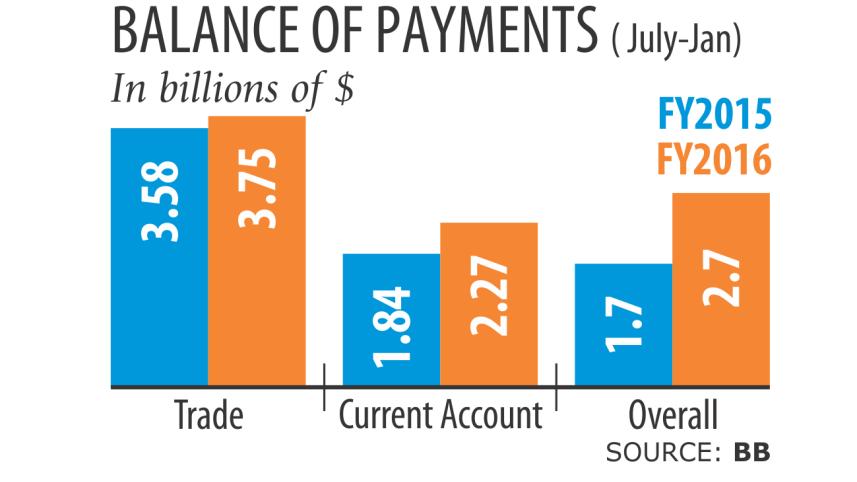
The balance of payments surplus widened about 58 percent in the first seven months of the fiscal year from a year earlier on the back of less spending on petroleum and reduced trade credit for imports.
At the end of January, the overall surplus stood at $2.7 billion in contrast to $1.7 billion a year earlier, according to central bank statistics.

The surplus increased mainly due to slower growth in import compared to exports in the first seven months of fiscal 2015-16. In the same period, exports grew 7.11 percent and imports 6.73 percent.
Typically, Bangladesh spends a large sum on petroleum imports every year. But this fiscal year, petroleum imports dropped almost 30 percent year-on-year in the first seven months, according to LC settlement statistics.
Another cause for the slowing import is the continued sluggish trend in the manufacturing sector, as reflected in raw material imports, which increased only 2 percent during the period.
Central bank officials said one of the causes for the increase in overall surplus this year is that the net credit is in favour of Bangladesh.
The net trade credit in the first seven months of this year stood at $996 million in the negative, down from $2.11 billion in the negative a year earlier.
The officials said the customers made less deferred payment against imports, as a result of which the negative trade credit dropped this year.
Another reason for the increase in surplus is that the net foreign direct investment increased significantly.
During the July-January period, FDI swelled 30.6 percent to $1.23 billion.
As the overall balance increased, so did the foreign currency reserves.
Reserves crossed the $28 billion-mark last year, but it dropped slightly this month. On March 15, it stood at $27.84 billion, enough to honour 7.84 months' import bills.
The bulging reserves have been described as “fat” by an economist at a pre-budget meeting with Finance Minister AMA Muhith last month.
For an economy, reserves equal to 5-6 months' import bill are adequate, whereas Bangladesh now has reserves equivalent to eight months' import bill, he said.
Subsequently, he called for steps to use the reserves to boost investment.
A senior official of the central bank said the businessmen's explanations for the sluggish investment include a high interest rate on loan, non-availability of gas and electricity connections, land-related problems and high costs of doing business.
The lending rate has come down, so the government will have to solve the other problems to boost investment, he added.
 For all latest news, follow The Daily Star's Google News channel.
Comments