


Minimum two years needed to fix power, gas crisis: Khosru
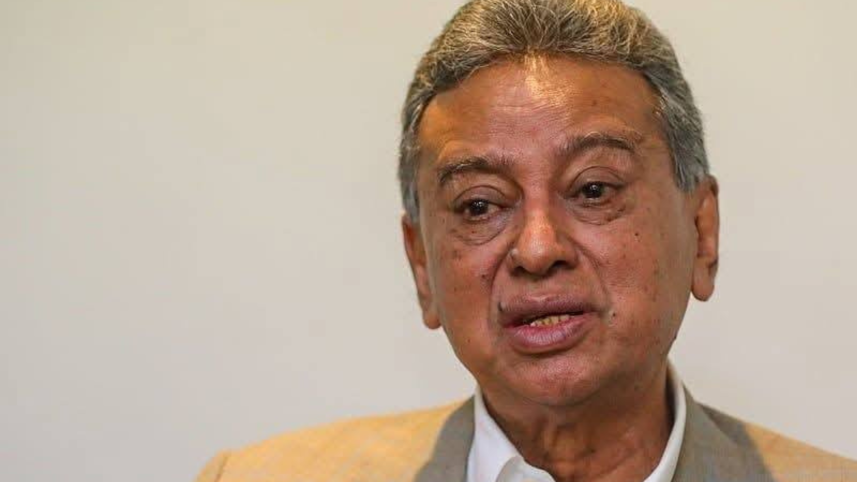
It will take at least two years to fully fix Bangladesh’s power and gas shortages, Finance and Planning Minister Amir Khosru Mahmud Chowdhury said yesterday.
The government had inherited major infrastructure problems in the sector, he said at an event organised by the American Chamber of Commerce in Bangladesh (AmCham) at InterContinental Dhaka.

Resolving the problems would take time, the minister said, but the government was working to address them as quickly as possible. “We are not wasting a single moment on this.”
Khosru said the economy could not move forward without adequate electricity and gas.
“Everyone has talked about the electricity and gas shortages. We are struggling with these problems, and we are dealing with them now. I must admit that these are also problems we inherited from the past,” he said.
Regarding gas supply, he said decisions on floating liquefied natural gas terminals and onshore storage facilities were being finalised and would be announced within the next few days.
According to the minister, Bangladesh can generate a large amount of electricity, but inadequate transmission capacity has become a major problem.
The government is also reviewing its power generation policy and energy mix, he said. The mix would include renewable energy and gas-based power, while coal would remain an option.
“We are moving towards an integrated energy mix, and we have more or less finalised the combination,” he said, expressing hope for major improvements in the electricity and gas sectors.
Khosru also said deregulation was a major priority of the current budget, although implementing it in a highly regulated country like Bangladesh was challenging.
The government has formed a task force to oversee the process and launched a website where businesses and citizens can report bureaucratic obstacles and non-compliance, he said.
On taxation, he said the government was working to address longstanding corruption and harassment. It has decided to separate tax policy-making from tax administration at the National Board of Revenue.
An expert group will develop tax policies based on their impact on taxpayers and revenue collection, he said. The government is also moving towards full automation, including real-time online tax returns and rebates.
Khosru said the banking sector also required urgent attention as many banks are facing severe capital shortages and high levels of non-performing loans, leaving some depositors unable to withdraw their money and businesses struggling to secure working capital.
Recapitalising the banks will be difficult because the losses are too large for the government to cover through the budget alone, he said.
“We are therefore exploring a combination of government support and foreign fund management to stabilise and resolve the problems in the banking sector,” he added.
US INVESTMENT
Also speaking at the event, AmCham President Syed Mohammad Kamal said its members included major businesses and investors in power, energy, financial services, the digital economy, healthcare and information and communications technology.
Together, these companies contribute more than 20 percent of the country’s tax revenue, he claimed.
Kamal said American companies had invested around $5 billion in Bangladesh over the past 20 years.
 For all latest news, follow The Daily Star's Google News channel.
 AmCham members also aim to invest another $5 billion in the country over the next four and a half to five years, he said.
He identified advanced manufacturing, the digital economy, artificial intelligence, cybersecurity, healthcare, life sciences, renewable energy, financial services and semiconductors as sectors with strong investment potential.
The key challenge now, according to him, is to turn Bangladesh’s potential and policy reforms into lasting investor confidence and actual investment.
The AmCham president also said reforms must be implemented consistently to build investor confidence.
He stated that the government had completed its first six months as of yesterday, during which there had been considerable discussion about reforms and deregulation.
He said steps such as creating a more predictable tax regime were positive, but investors needed to see consistent implementation.
Macroeconomic conditions directly affect businesses through financing costs, consumer demand and investment efficiency, he said.
According to Kamal, investors have three key and interconnected priorities: energy, finance and predictability.
Comments