


NBR set to miss tax target for 10th year in a row

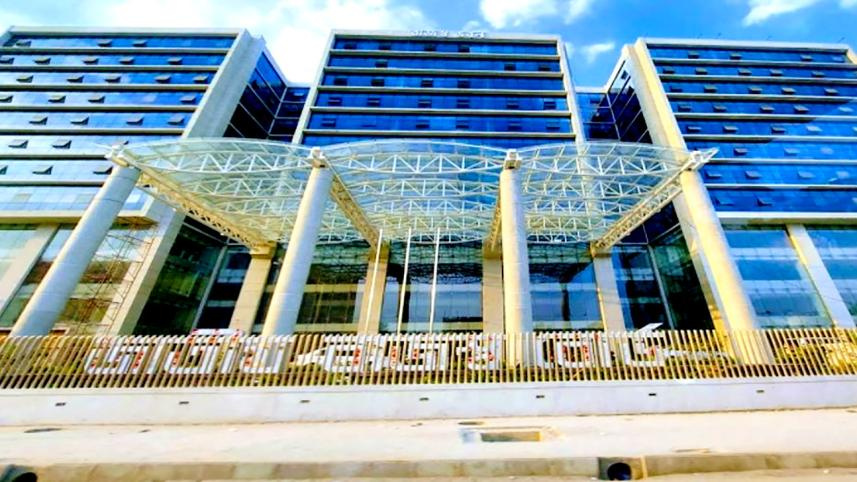
The National Board of Revenue (NBR) is on course to miss its annual revenue target for the current fiscal year, extending its run of shortfalls to a tenth straight year.
Revenue officials blame the shortfall on a slowing economy, ambitious targets and inefficient collection.

In the first 10 months of fiscal year 2025-26, the tax authority collected Tk 3.27 lakh crore, falling Tk 1.04 lakh crore short of the July-April target, according to provisional revenue data released yesterday.
To avoid another shortfall, the NBR would have to collect Tk 2.27 lakh crore in the remaining two months, a goal officials describe as a “herculean task”.
Economists too say that is unrealistic. Collecting nearly half of the full-year target in the final two months would require an unprecedented surge.
“The NBR is set to miss its target this year,” said Towfiqul Islam Khan, additional director (research) at the Centre for Policy Dialogue (CPD). “This will significantly constrain the government’s fiscal space.”
Measured against the original annual targets, the situation looks worse. By that yardstick, the NBR has failed to meet its goal for 14 consecutive years.
As revenues fall short, the government is leaning more heavily on borrowing.
In the July-February period of FY26, net deficit financing rose 67 percent year-on-year to Tk 1.05 lakh crore, up from Tk 63,040 crore in the same period last year. Of that, Tk 88,309 crore came from the banking system, according to Bangladesh Bank data.
Despite the shortfall, the government has set a revenue target of Tk 6.95 lakh crore for the next fiscal year, covering both tax and non-tax income. That implies growth of at least 42 percent over the revised FY26 target.
CPD Additional Director Khan called it a “near-impossible revenue challenge”.
“No historical benchmark supports this,” he said, noting that even the most optimistic compound annual growth rate between FY01 and FY19 was 15.6 percent and would still leave a Tk 1.3 lakh crore shortfall.
“For FY27, the budget deficit and the government’s financing capacity are more likely to become the main anchors of public financial management, rather than expenditure ambitions alone,” he added.
He said much of the country’s foreign borrowing is tied to the Annual Development Programme (ADP), leaving limited flexibility in public spending.
“At the margin, the government’s ability to mobilise domestic revenue will determine the extent of total public expenditure in FY27,” he added.
Last month, Finance Minister Amir Khosru Mahmud Chowdhury told parliament that the tax-to-GDP ratio has dropped from about 11 percent to below 7 percent.
The fallout from the US-Israel war on Iran has added pressure to state finances, as the government has been forced to buy fuel at elevated prices. Bangladesh imports about 95 percent of its energy, and state agencies have increasingly turned to the volatile spot market.
“The mounting costs are bleeding the exchequer,” the minister said on the sidelines of the IMF-World Bank Spring Meetings in Washington last month, citing nearly $2 billion in additional energy import costs following supply disruptions.
“On top of that, the tax-to-GDP (ratio) is not increasing because of business stress; the businesses are in bad shape,” he said, adding that if businesses do not recover, tax receipts will not improve.
He said the government has sought budget support from development partners and is pursuing structural reforms. It has prepared an action plan aimed at building a trillion-dollar economy by 2034, centred on investment, jobs and macroeconomic stability.
 For all latest news, follow The Daily Star's Google News channel.
 INCOME TAX GROWTH OUTPACES VAT
In the July-April period, income tax recorded the strongest growth among major revenue heads. Collections rose 11.59 percent year-on-year to Tk 1.09 lakh crore, accounting for 33.5 percent of the total.
Value-added tax (VAT) remained the largest single source of revenue, contributing 38 percent of the total. Receipts increased 11 percent to Tk 1.26 lakh crore.
Revenue from import duties and supplementary taxes grew more slowly, rising 8.87 percent to Tk 90,762 crore.
In April alone, VAT collection contracted by 3.17 percent year-on-year. Facing mounting pressure, the NBR is considering structural changes for the next fiscal year.
A senior revenue official said yesterday that the board is proposing several fiscal measures in the upcoming budget to expand the tax base.
It is also weighing steps to strengthen collection, including reintroducing a wealth tax, raising rates for the ultra-rich and rationalising existing exemptions.
“We will also strengthen enforcement to curb tax evasion and gradually reduce existing tax exemptions, aiming to raise revenue collections,” he said.
The NBR also plans to raise the top marginal income tax rate for ultra-rich individuals from 30 percent to 35 percent, with the measure tentatively scheduled for FY28.
Comments