


Trump-Xi summit augurs more risk than relief
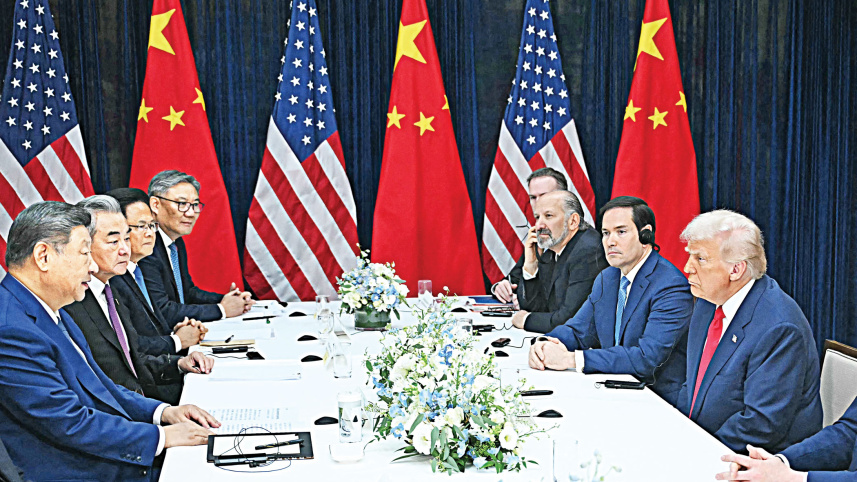
Donald Trump’s message to China is clear: he will not be denied. Specifically, the US president will not be denied a photo op with his Chinese counterpart Xi Jinping during an expected state visit to Beijing next week. But the outcome of Trump’s last such sojourn bodes ill for any big breakthroughs this time round, while more recent events suggest downside risks, however slim, far exceed anything either side might get out of the negotiations.
A full rundown of what the two leaders will discuss on May 14-15 is not available, but America’s $200 billion-plus trade deficit in goods with China will likely top the list even after falling by nearly a third last year, and US Treasury Secretary Scott Bessent on Monday said Iran would also feature. But Beijing is wise to play the welcoming host after last year’s disastrous tit-for-tat squabble briefly pushed tariffs into the triple digits and threatened to torch virtually all bilateral trade. The two camps now stand in uneasy détente after China realised it needs American semiconductors and the US discovered it can’t live without Chinese rare earths.

That might once have provided building blocks for a deal that locks in tentative treaties on all the above as the firm foundation of a less hostile, even functional relationship. But both sides know better because, mere months after telling Xi that “we’re going to do tremendous things for both China and for the United States” at their joint presser in 2017, Trump opened fire in a trade war that has continued in fits and starts to this day and redefined the Sino-American relationship.
So the chief upsides of the coming confab may be limited to Trump getting his photo op, for which America’s leader apparently feels compelled to fly to China first, instead of the other way round as during his first term. But Beijing should be wary of underestimating the threat of renewed tariffs simply because the US Supreme Court struck down broad levies on Chinese goods in February. Since then, the White House has launched a flurry of national security investigations that should allow it to cobble together new levies as needed to replace a temporary 10% global duty expiring in July and further press the People’s Republic.
But China’s top cadres have also been busy, as evidenced by new leverage-enhancing regulations to punish foreign firms for shifting their supply chains elsewhere. And on Saturday, the commerce ministry announced its first injunction under rules from 2021 to block recent US sanctions on Chinese refiners accused of buying Iranian oil.
A commentary published online by People’s Daily, the Communist Party’s official newspaper, described the injunction as a “pivotal step in the real deployment of our country’s foreign‑facing legal arsenal”. This unprecedented disregard dropped days after the US Treasury added to its sanctions list Hengli Petrochemical, one of China’s biggest private refiners, quite possibly to gin up another bargaining chip ahead of negotiations.
The result is that sanctions on Chinese financial institutions which do business with such refiners under Beijing’s auspices aren’t simply now a part of the discussion, they could conceivably feature in the worst-case outcome of next week’s gathering. That is far from the most likely scenario, particularly given Trump’s desire for a positive optics. But the fact that it must be considered at all is a sign of how dire things are, and could yet become. Smile for the camera.
US President Donald Trump is preparing to visit Chinese President Xi Jinping in Beijing on May 14 and 15. The former’s first trip to China in eight years had initially been slated for late March, but was delayed after American forces launched a joint attack with Israel against Iran on February 28.
 For all latest news, follow The Daily Star's Google News channel.
Comments