


Inflation edges down in Jan

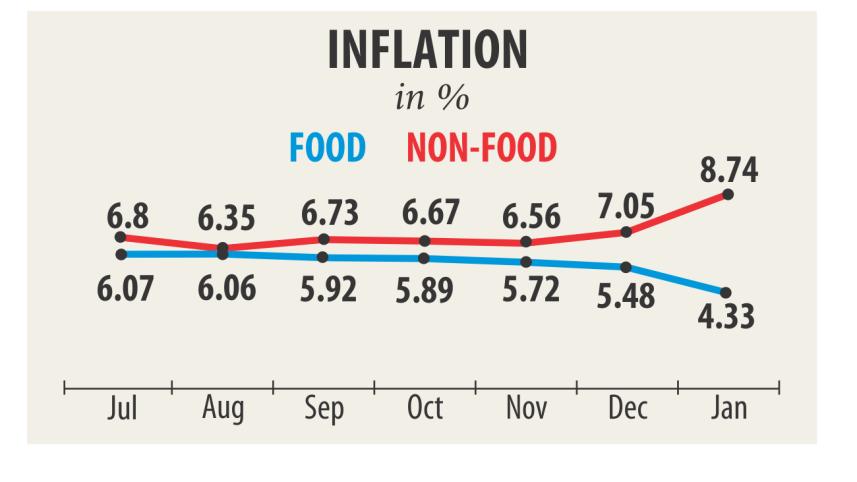
Inflation fell 3 basis points to 6.07 percent in January, propelled by a decline in food inflation, which was the lowest in 38 months.
Food inflation stood at 4.33 percent, down 115 basis points from a month earlier, according to data from Bangladesh Bureau of Statistics.

Non-food inflation accelerated 169 basis points to 8.74 percent, the highest in 36 months.
Planning Minister AHM Mustafa Kamal, while releasing the data yesterday, attributed the spike in non-food inflation to seasonal factors. Food inflation fell because the supply chain was good, he said.
The minister expressed hopes that in future overall inflation will fall further due to successful macroeconomic management.
While the overall inflation is unchanged, there is a major change in the composition of inflation in January, said Zahid Hussain, lead economist of the World Bank's Dhaka office.
Food inflation has declined by more than one percentage point, while non-food inflation increased by the same magnitude.
A good aman harvest and declining international commodity prices contributed to the decline in food inflation, he said.
The increase in non-food inflation perhaps reflects the knock-on effects of electricity and gas price increases and an uptick in domestic demand in January, underpinned by the political stability.
The International Monetary Fund in its recent report said inflation is expected to edge up in fiscal 2016-18 on account of higher public sector wages and a one-off effect from the introduction of the new VAT law.
The report, which was released in the first week of February, also said headline inflation should fall gradually toward 6 percent by fiscal 2019-20, assuming that monetary policy stays prudent and supply bottlenecks eased. About the increase in non-food inflation, the IMF said, amid the general signs of tepid demand this uptick likely reflects one-off factors such as higher minimum wage in the garment industry and recent electricity and gas price hikes.
Despite lower global oil prices, domestic retail fuel prices have not been reduced.
The Bangladesh Bank also keeping in mind the issue of non-food inflation and core inflation kept its latest monetary policy stance slightly cautious.
“Based on the conflicting signals from general inflation and core inflation, we have decided to remain on our partly cautious but generously supportive stance for inclusive, sustainable output growth,” it said in the monetary policy statement.
 For all latest news, follow The Daily Star's Google News channel.
Comments